

2025
Comparably’s Best Company Outlook
* Providing engineering services in these locations through SWCA Environmental Consulting & Engineering, Inc., an affiliate of SWCA.


From the experts we hire, to the clients we partner with, our greatest opportunity for success lies in our ability to bring the best team together for every project.
That’s why:
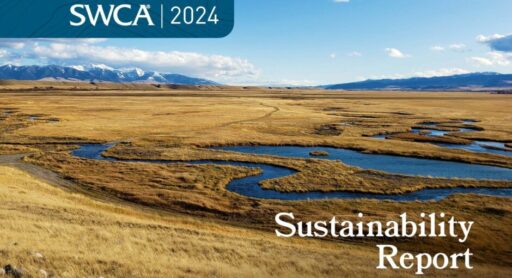
At SWCA, sustainability means balancing humanity’s social, economic, and environmental needs to provide a healthy planet for future generations.
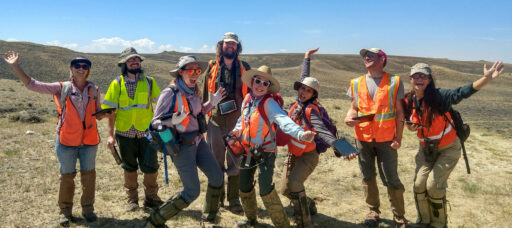
SWCA employs smart, talented, problem-solvers dedicated to our purpose of preserving natural and cultural resources for tomorrow while enabling projects that benefit people today.

At SWCA, you’re not just an employee. You’re an owner. Everyone you work with has a stake in your success, so your hard work pays off – for the clients, for the company, and for your retirement goals.
Embedding Sustainability: The Key to Business Resilience
When sustainability is fully embedded into governance, strategy, and operations, it transforms from a side project into a driver of competitive strength.

Laura Nelson is an experienced leader and trusted advisor with over 18 years of experience in the environmental and sustainability services field. Laura has provided strategic sustainability services to clients in the food and beverage, consumer goods, manufacturing, technology, finance and energy industries. She has particular expertise in sustainability/ESG disclosure frameworks and standards, bolstered by a recent two-year position on the technical staff at the IFRS Foundation. Laura has also served as an Associate Director and facilitator for sustainability coalitions including the Beverage Industry Environmental Roundtable and the ISSB Technical Reference Group. As a Principal Sustainability Consultant, Laura provides clients with solutions that proactively address sustainability risks, recognize opportunities, build internal competency and governance of sustainability matters, and help navigate the complex sustainability disclosure landscape.

John has more than 35 years of business, sustainability, environmental, health and safety leadership experience. His client engagements involve the development and implementation of strategies, plans, and programs that emphasize simultaneous creation of business, environmental, and social value for private sector clients, nongovernmental organizations (NGOs), and multilateral organizations operating domestically and internationally.
John has led projects in more than 40 countries in North America, Latin America, Europe, and APAC. He has been a thought leader and problem solver on topics such as business sustainability/resilience, water security/water stewardship, climate change, circularity/waste management, environmental and social impact measurement/monitoring and operational environmental, health, and safety (EHS) risk and performance management in developed and emerging economies. Additionally, John co-developed the Return on Sustainability Investment (ROSI) model with the New York University (NYU) Stern Center for Sustainable Business, which through business case and monetization tools enable better, more sustainable investment/resource allocation decisions.
Prior to consulting, John served on the corporate environmental staff for Scott Paper Company and Bristol-Myers Squibb and was a facility-level environmental engineer and safety director for a multi-site manufacturing operation. His current clients include Global 1000 organizations in the food and beverage, consumer products, energy, and business-to-business sectors.



Resilience isn’t about bouncing back. It’s about moving forward. Since 2020, we’ve all seen how fast the world can change and how lasting those changes can be. There’s no “back to normal.” Organizations that thrive are the ones that adapt, anticipate, and build resilience into everything they do.
Here’s the truth: resilience and sustainability are inseparable. When sustainability is fully embedded into governance, strategy, and operations, it transforms from a side project into a driver of competitive strength. It keeps companies agile, efficient, and prepared for whatever comes next.
Sustainability creates resilience when it’s not confined to a single team or glossy report, but is owned by the business itself. Embedding it means:
The result? A stronger, leaner, future-ready organization.
Through our client work, we’ve seen a proven path to embed sustainability and build resilience. It comes down to five steps:
1) Assess Readiness
This isn’t about reinventing the business—it’s about enhancing it. Step one is gauging where you stand: Do leaders recognize sustainability risks as business risks? Are governance and decision-making structures strong enough to integrate them? Readiness starts with leadership alignment and a clear framework for action.
2) Onboard Leaders
Resilience starts at the top. Leaders need to understand not just the “what,” but the “why” and the “how.” The key is a clear story: Why embedding matters, what value it delivers, and how to start. Interactive workshops and action plans get leadership aligned and bought in.
3) Build Consensus and Momentum
Once leaders are onboard, it’s time to define the challenges. Cross-functional teams identify material sustainability and resilience issues and distill them into shared objectives. These objectives apply across the company but give each department the flexibility to act in its own way. Leadership governs; operations execute.
4) Identify and Bridge Gaps
Here’s where the business case sharpens. Leaders and experts analyze gaps between current efforts and what’s needed. They monetize the cost of inaction and map the investments required to close gaps. That means better decisions, smarter spending, and clear priorities.
5) Formalize the Transformation
At this stage, sustainability is no longer an initiative—it’s the way business gets done. Accountability lives with the functions closest to the issues. The sustainability team shifts into an advisory role, enabling progress and building new capabilities. Resilience becomes part of the culture.

When sustainability is embedded, companies stop scrambling to respond to crises and start anticipating them. They become proactive, coordinated, and cost-efficient. With collective buy-in, every team pulls in the same direction, using existing infrastructure to deliver real results.
This is resilience in action: fewer surprises, faster responses, and stronger long-term performance.
At SWCA, our Sustainability and Management Consulting team partners with organizations to make this transformation real. We help companies:
Whether you’re just starting out, refining your approach, or scaling up, we’ll help you focus, invest, and act in ways that strengthen your business while making a positive impact on the world.