



2026
Comparably’s Best Company Outlook
* Providing engineering services in these locations through SWCA Environmental Consulting & Engineering, Inc., an affiliate of SWCA.


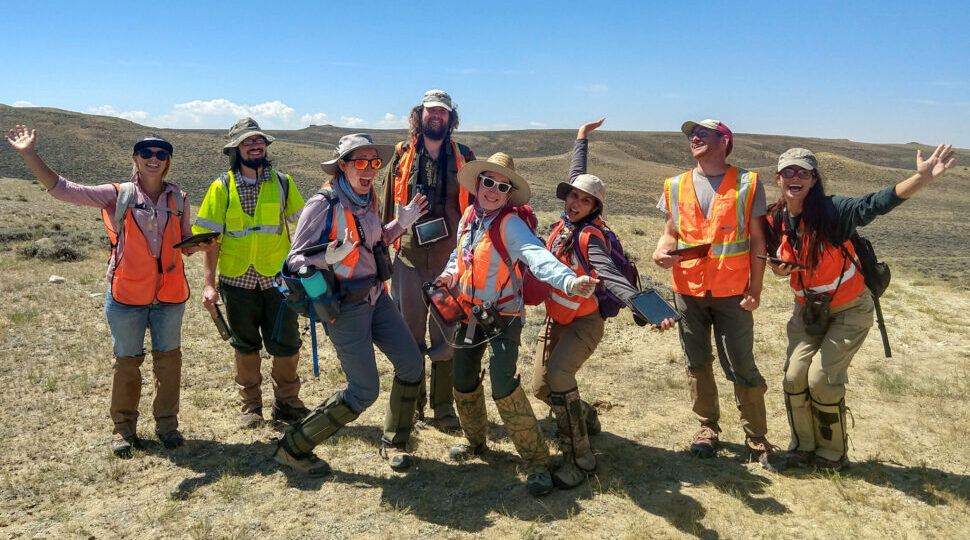
From the experts we hire, to the clients we partner with, our greatest opportunity for success lies in our ability to bring the best team together for every project.
That’s why:

At SWCA, sustainability means balancing humanity’s social, economic, and environmental needs to provide a healthy planet for future generations.
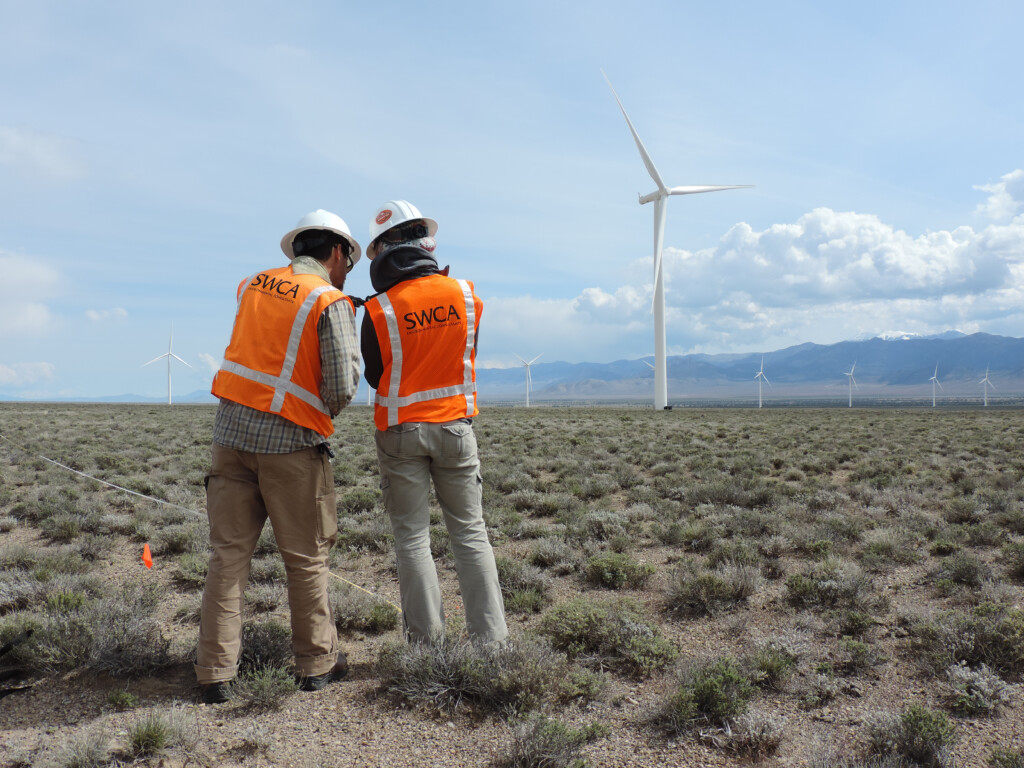
SWCA employs smart, talented, problem-solvers dedicated to our purpose of preserving natural and cultural resources for tomorrow while enabling projects that benefit people today.

At SWCA, you’re not just an employee. You’re an owner. Everyone you work with has a stake in your success, so your hard work pays off – for the clients, for the company, and for your retirement goals.
From Dirt to Data: The Full Lifecycle Playbook for Data Center Permitting
Why early planning defines project outcomes and how to build a permitting strategy that minimizes avoidable risk at every phase.

Ross is a recognized expert in infrastructure permitting with over a decade of experience in project, program, and policy development across federal, state, tribal, and local governments. His work focuses on improving the efficiency and transparency of complex permitting processes while advancing environmental stewardship and meaningful public engagement. Ross helps clients navigate evolving regulatory landscapes by translating policy developments into practical permitting and project delivery strategies.

Kayla Shockley serves as SWCA’s Power and Energy Business Lines Director, steering nationwide energy strategy and driving business growth across renewable energy, transmission, oil and gas, and mining market sectors. With over 17 years of environmental consulting and permitting experience, she has managed complex, multidisciplinary projects across all phases of development. Kayla excels at developing innovative solutions that support client objectives while ensuring regulatory compliance.

Carlos Escalante serves as SWCA’s Senior Generation Business Line Director, bringing over 33 years of experience in renewable energy projects across the nation. His expertise primarily lies in natural resource management, encompassing tasks such as wetland delineations, securing United States Army Corps of Engineers (USACE) 404/Section 10 permits, NEPA compliance, Section 7 coordination, project management, and client engagement.




The data center industry is in the middle of a historic buildout. AI workloads, hyperscale demand, and the scramble for power capacity are driving projects of a scale the sector has rarely seen: 100+ MW campuses, multi-gigawatt portfolios, and co-located generation facilities that blur the line between data infrastructure and power plant.
Yet, for all the capital and urgency behind these projects, permitting remains a consistent source of delay, cost overrun and outright project failure.
The developers who win in this environment are not simply the ones with the best sites or the deepest capital. They are the ones who treat permitting as a strategic function rather than as a compliance formality to be handled downstream, once a site is selected and a design is locked in.
The central insight of this playbook: permitting risk is not created at the permit application. It is created, or partially avoided, in the decisions that precede it.
This playbook outlines the key stages of data center permitting, spanning from initial site strategy through construction and ongoing operations.
It is written for developers, investors, and project teams who want to understand where risk lives, and how an integrated early-stage approach changes the trajectory of a project.
Data centers were once treated as large commercial real estate projects. The permitting model that grew up around them reflected that framing. Zoning approvals, building permits, standard utility hookups, and environmental clearances were handled as checklist items.
That model no longer works, and for a straightforward reason. Data centers are no longer large commercial real estate projects. They are integrated infrastructure systems.
A modern hyperscale or AI campus requires:
Each of these considerations has its own regulatory pathway, its own agency relationships, and its own timeline. The developers who treat them as independent workstreams, to be addressed sequentially, project phase by project phase, routinely find themselves trapped by constraints they could have anticipated and managed.
The permitting challenge is no longer about navigating a single process. It is about orchestrating multiple regulatory systems simultaneously and doing so early enough that their requirements shape the project, not stop it.

Server racks in server room data center
The most consequential permitting decisions are made before a permit application is filed. They are made during site selection.
Site selection for a data center is often framed primarily as a real estate, power, and cost question: Where can we get land? Where is transmission available? What are the incentive structures? These are legitimate factors. But they are incomplete, and projects that optimize for them alone routinely discover, post-commitment, that the site carries permitting constraints that could have disqualified it or significantly altered the project design.
A rigorous site strategy process integrates permitting factors into the go/no-go decision from the outset:
This work is not speculative. It is disciplined risk assessment. The same kind of early diligence that infrastructure developers in energy and transportation have long treated as foundational practice. Data center developers who adopt this posture gain a decisive advantage: they know what a site will require before they are committed to it.
The right question is not ‘can we permit this site?’ It’s whether the site has fatal flaws that preclude permitting altogether and if not, what it will actually take to get it permitted.
Once a site is selected and a project is moving toward development, the permitting process becomes a multi-agency, multi-track orchestration challenge. This is where the absence of early-stage strategy becomes most costly, and where early investment in stakeholder engagement and regulatory intelligence pays its clearest dividends.
Projects that involve a federal nexus, federal lands, federal permits, federally regulated resources, federal funding, etc., may trigger review under the National Environmental Policy Act (NEPA) and a range of other environmental laws. Some of these may apply regardless of whether NEPA is triggered. The Clean Water Act (CWA) governs impacts to waters of the United States, including wetlands, and requires Army Corps of Engineers authorization for many ground-disturbing activities. The Endangered Species Act (ESA) mandates consultation with the U.S. Fish and Wildlife Service or NOAA Fisheries whenever a project may affect listed species or designated critical habitat. The National Historic Preservation Act (NHPA) requires identification and consideration of impacts to historic properties through Section 106 consultation, a process that runs parallel to NEPA. Each of these carries its own timeline, agency relationships, and documentation requirements, and each can become a project-delaying constraint if not engaged early.
Where NEPA does apply, review can range from a Categorical Exclusion (CatEx), the most streamlined pathway, requiring no detailed environmental analysis, to an Environmental Assessment (EA) or a full Environmental Impact Statement (EIS), with timelines ranging from months to years. It is worth noting that Executive Order 14318, signed in 2025 and focused on accelerating federal permitting of data center infrastructure, signals growing federal interest in expanding CatEx eligibility for data center projects. Whether that translates into durable regulatory change remains to be seen, but project teams should monitor this space closely as it could meaningfully shorten federal review timelines for qualifying projects.
The scope and duration of any federal review is substantially influenced by how well-prepared the project team is at the outset: the quality of baseline data, the robustness of alternatives analysis, and the depth of early agency coordination. Projects that enter federal environmental review without a clear regulatory strategy, pre-established agency relationships, baseline environmental data, or a defined public engagement plan, are more likely to experience scope expansion, comment-driven delays, and litigation exposure that a stronger early posture could have reduced or avoided.
State and local permitting processes vary significantly by jurisdiction, and they are evolving rapidly. Several states have enacted or are considering streamlined review processes for data center development, driven by economic development priorities. Others are moving in the opposite direction, tightening water use requirements, adding wildfire resilience standards, or expanding public notice requirements in response to community concerns about the pace and scale of development.
Navigating this landscape requires current, jurisdiction-specific intelligence, not generic permitting knowledge. The developers who get it right are typically those with an environmental partner who has established relationships with state and local permitting staff, a track record of credible environmental delivery, and the ability to anticipate how regulatory posture is likely to shift over the course of a multi-year project.
The variation is not abstract. The Georgia Department of Community Affairs spent much of 2025 in a self-imposed pause on data center reviews before unanimously adopting new rules in November that created an entirely new review category, “technological facilities,” specifically for data centers. The driver wasn’t regulatory philosophy; it was inconsistent application across regional councils and communities in predominantly African American suburbs south of Atlanta organizing against projects they say are reshaping their neighborhoods without meaningful input. In North Dakota, multiple counties, Morton, Mercer, and Oliver, enacted moratoriums driven by residents’ frustration that developers were securing land under NDAs before communities had any opportunity to weigh in.
These examples are not outliers. They are early signals of a regulatory environment that is actively forming in real time and that will look materially different in two years than it does today.
For large-scale projects, the permitting stack frequently involves a layered set of actors: federal agencies such as the Army Corps of Engineers, U.S. Fish and Wildlife Service, FERC, DOE, and federal land management agencies; non-federal entities including State Historic Preservation Offices (SHPOs) and Tribal Historic Preservation Offices (THPOs) acting under Section 106 of the National Historic Preservation Act; federally recognized tribes exercising sovereign authority; and state agencies and local jurisdictions. Each brings its own timeline, process, and decision criteria to the table.
Managing these relationships is not simply a matter of filing the right applications in the right order. It requires a coherent coordination strategy: a clear understanding of which approvals are on the critical path, where agency timelines are likely to compress or extend, and how to sequence engagement to prevent one agency’s process from becoming a bottleneck for all the others.
Cross-agency coordination is not project management. It is a regulatory strategy and it requires the same quality of early investment as any other critical path element.
A common misconception among project teams new to large-scale infrastructure development: permitting ends when the permits are issued. In practice, construction delivery for a major data center project involves ongoing regulatory compliance obligations that, if managed poorly, can trigger stop-work orders, agency re-consultation, and project delays that rival those experienced during the initial approval process.
Key construction-phase permitting and compliance considerations include:
The developers who navigate construction delivery most efficiently are those who treat permit condition management as a first-class project function, not an afterthought handled by whichever team member has bandwidth.
Data center campuses are not static. Hyperscale operators routinely expand capacity over time, adding power, adding cooling, adding buildings, in ways that may trigger new permitting requirements, reopen prior environmental reviews, or require renegotiation of utility agreements.
The developers who navigate expansion most effectively are those who anticipated it during the initial permitting process. This means:
The permitting strategy for a data center campus should not be optimized for the first building. It should be optimized for the portfolio.
Permitting is not a one-time transaction. For hyperscale campuses, it is an ongoing relationship between the development team, the regulatory agencies, and the communities that host the project. Managing that relationship strategically, from the first analysis of critical issues through operations, is what separates the developers who scale from those who stall.

Shot of data center with multiple rows of fully operational server racks.
The data center developers who are winning in today’s market share a common characteristic: they have brought permitting intelligence into the earliest stages of project strategy, not as a compliance function, but as a market access function.
They know which sites are permittable before they commit capital. They have agency relationships in place before they file applications. They have environmental strategies that anticipate regulatory scrutiny rather than react to it. They have infrastructure plans that are aligned with energy, water, and land realities, not aspirational assumptions that unravel in permitting.
This is the upstream advantage. And it is available to any developer willing to invest in the strategic groundwork that makes it possible.
The remainder of this series goes deeper on each of the critical dimensions introduced here: site selection and infrastructure alignment, cross-agency coordination, environmental review strategy, and the lifecycle approach to permitting that positions a campus, not just a project, for long-term success.
SWCA Environmental Consultants supports data center developers, utilities, and infrastructure investors across the full project lifecycle from early-stage site strategy through construction delivery and operations. Our integrated approach combines environmental planning, permitting execution, and infrastructure alignment to reduce regulatory risk and accelerate project delivery. To connect with our data center permitting experts, see the contact information in the author profiles accompanying this article.