

2025
Comparably’s Best Company Outlook
* Providing engineering services in these locations through SWCA Environmental Consulting & Engineering, Inc., an affiliate of SWCA.


From the experts we hire, to the clients we partner with, our greatest opportunity for success lies in our ability to bring the best team together for every project.
That’s why:
At SWCA, sustainability means balancing humanity’s social, economic, and environmental needs to provide a healthy planet for future generations.
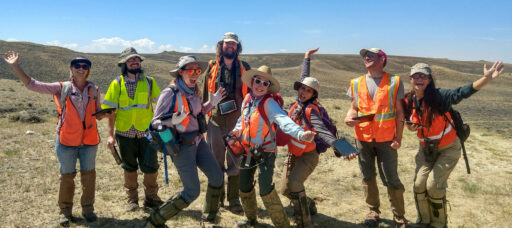
SWCA employs smart, talented, problem-solvers dedicated to our purpose of preserving natural and cultural resources for tomorrow while enabling projects that benefit people today.

At SWCA, you’re not just an employee. You’re an owner. Everyone you work with has a stake in your success, so your hard work pays off – for the clients, for the company, and for your retirement goals.
Endangered Species Act Regulation Changes Proposed
The proposed rules would reinstate several 2019 Endangered Species Act regulations for Section 7 consultations, protections for threatened species, and listing or critical habitat decisions.
Amanda Glen is SWCA’s natural resources technical director for biological services and provides strategic guidance on permitting and compliance for matters involving protected wildlife, plants, and habitats. Currently managing a national practice, she has more than 25 years of consulting experience with an emphasis on the Endangered Species Act (ESA) and how compliance with the ESA influences other regulatory programs. Her wealth of experience pertaining to endangered species issues includes research, permitting, consultations, status reviews, and conservation planning. Her experience includes negotiating compliance solutions for critically imperiled species facing potential determinations of jeopardy or adverse modification of designated critical habitats. She has led efforts to delist species no longer requiring the protections of the ESA when supported by sound science, and has been involved in voluntary conservation planning to help preclude the need to list species. Amanda frequently presents at regional and national conferences on matters related to the ESA, including new listings, regulatory and policy changes, and trends in compliance strategies.

Stephanie brings more than 20 years of experience in natural resource management across the private, nonprofit, and federal sectors, including work at the USFWS and BLM. Her expertise includes fire ecology and ecosystem health, mitigation, post-fire restoration, wildfire communications, and formal facilitation. Her interdisciplinary approach engages agencies, tribal entities, and communities in the development of effective wildfire collaboratives, and she is a known expert in supporting communities pre-, during, and post-fires.

Since joining SWCA in 2015, Nicole’s expertise in ecology, evolution, and conservation biology has led to significant contributions across nearly all service lines and ten states, cementing numerous trusted partnerships.
Nicole’s influence extends to her technical and peer-reviewed publications, with contributions to more than twenty-three scientific meetings. Notable publications include Distance Sampling Underestimates Population Densities of Dune-Dwelling Lizards in the Society for the Study of Amphibians and Reptiles Journal of Herpetology, and a study on Population Variation in Dune-Dwelling Lizards in Response to Patch Size, Patch Quality, and Oil and Gas Development published by the Southwestern Association of Naturalists, addressing impacts of patch size, quality, and oil and gas development.

Drew is one of SWCA’s Midwest lead project managers specializing in renewable energy projects and Endangered Species Act compliance. He is a federally permitted bat biologist with 16 seasons of field survey experience.





The U.S. Fish and Wildlife Service, in part with the National Marine Fisheries Service, published four proposed rules on November 21, 2025, that would change aspects of Endangered Species Act implementation pertaining to:
The proposed rules would, if finalized:
In general, each of these proposed rules revises regulatory language, including reinstating certain 2019 provisions that were reversed or modified in 2024. The changes, if finalized, would apply only to future actions that occur after the effective date of any final rule and would not trigger reconsideration of any prior actions or determinations.
The Services explain that the proposed rules are warranted to align ESA regulations with important recent Supreme Court opinions (Loper Bright and Seven County), other court opinions and case law, and executive and secretarial orders. In each set of proposed rules, the Services assert that the proposed changes are consistent with the best meaning of the ESA, provide needed transparency and certainty for the public, and reflect both agency experience and case law.
These revisions would affect projects that require federal authorization, receive funding, or occur on federal lands. This joint proposed rule by the Services would:
The USFWS proposes to withdraw its “blanket” rule that automatically assigns all ESA prohibitions for endangered species to threatened species. Instead, the USFWS intends to use species-specific rules to assign prohibitions to threatened species, subject to finding that the prohibitions are necessary and advisable.
Notably, to address recent case law, the USFWS would consider economic factors when considering which prohibitions are necessary and advisable for the conservation of threatened species.
The USFWS indicated that it intends to craft a species-specific rule for each threatened species that is currently subject to a blanket rule. Until a species-specific rule goes into effect, threatened species would continue to receive protections under the “blanket rule.”
The NMFS is not proposing changes to its treatment of threatened species because it does not use blanket rules.
The Services jointly propose to revise the regulatory language for determining whether a species should be listed as threatened or endangered and whether critical habitat should be determined. This proposed rule would:
The USFWS proposes to reinstate regulatory language that articulates a framework for critical habitat exclusion analyses. The USFWS proposes the following:
The NMFS is not part of this proposed rule. The NMFS follows separate regulations pertaining to critical habitat designations.
The Services will accept public comments on these proposals for 30 days (through December 22, 2025). Comments will be accepted through the U.S. Mail or online at www.regulations.gov under the Docket Number for each proposal.
SWCA’s ESA experts and project managers are closely reviewing these proposals to help clients understand how the potential changes may influence consultation strategies, listing decisions, critical habitat considerations, and overall project timelines. We can help evaluate project-specific implications, identify potential risks and opportunities, and support the development of effective, substantive public comments. For additional guidance or support, please contact your project manager or one of our ESA experts on the left.


