

2025
Comparably’s Best Company Outlook
* Providing engineering services in these locations through SWCA Environmental Consulting & Engineering, Inc., an affiliate of SWCA.


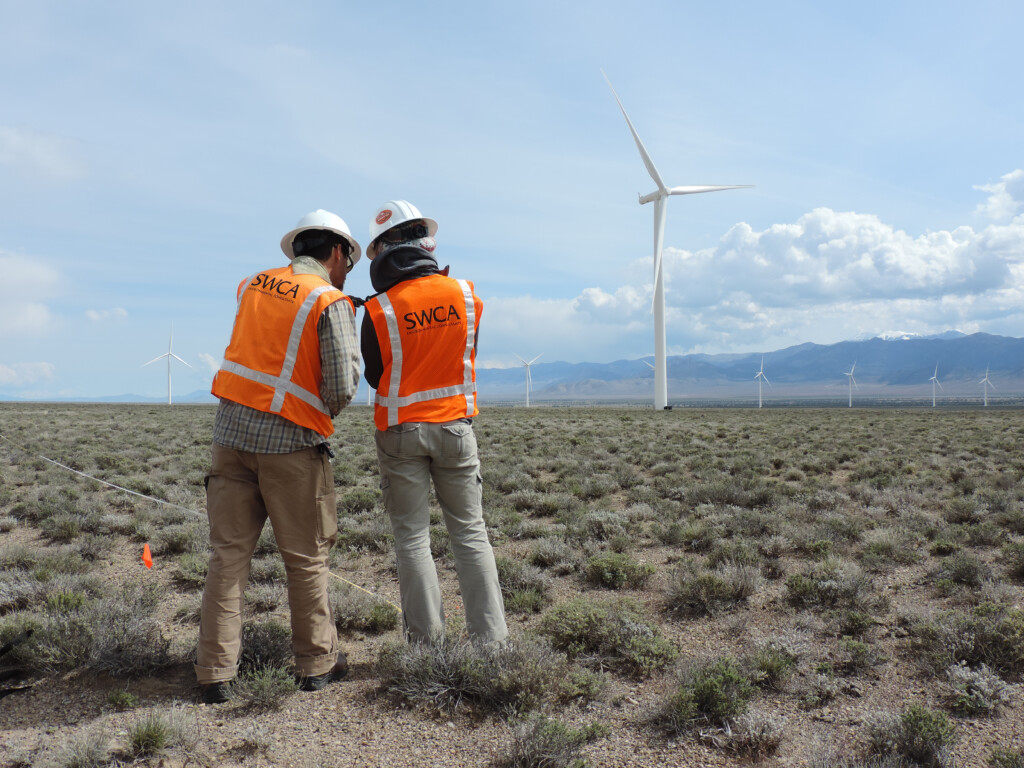
From the experts we hire, to the clients we partner with, our greatest opportunity for success lies in our ability to bring the best team together for every project.
That’s why:
At SWCA, sustainability means balancing humanity’s social, economic, and environmental needs to provide a healthy planet for future generations.
SWCA employs smart, talented, problem-solvers dedicated to our purpose of preserving natural and cultural resources for tomorrow while enabling projects that benefit people today.
At SWCA, you’re not just an employee. You’re an owner. Everyone you work with has a stake in your success, so your hard work pays off – for the clients, for the company, and for your retirement goals.
Lindsay Teunis Featured as Society for Ecological Restoration’s “Member in Action”
SWCA’s Lindsay Teunis was recently featured in the Society for Ecological Restoration’s (SER) Members in Action profile. Originally published here, you can also read the Q+A below.
SER’s Members in Action program spotlights the work of their members – individuals, groups, student associations, and chapters – and helps to communicate ecological restoration initiatives and projects to other members and new audiences.
Based in Denver, Colorado, Lindsay works for SWCA Environmental Consultants, where she is the Ecological Restoration Technical Director for the West Region. With 23 years of experience in environmental consulting, Lindsay specializes in ecology, restoration, aquatic resource assessments, and mitigation program development. While managing complex multi-benefit natural resource projects throughout California and across the West, she has participated in SER in a variety of roles ranging from member to her current role as a returning board member of SER’s Large-scale Ecosystem Restoration Section (LERS).
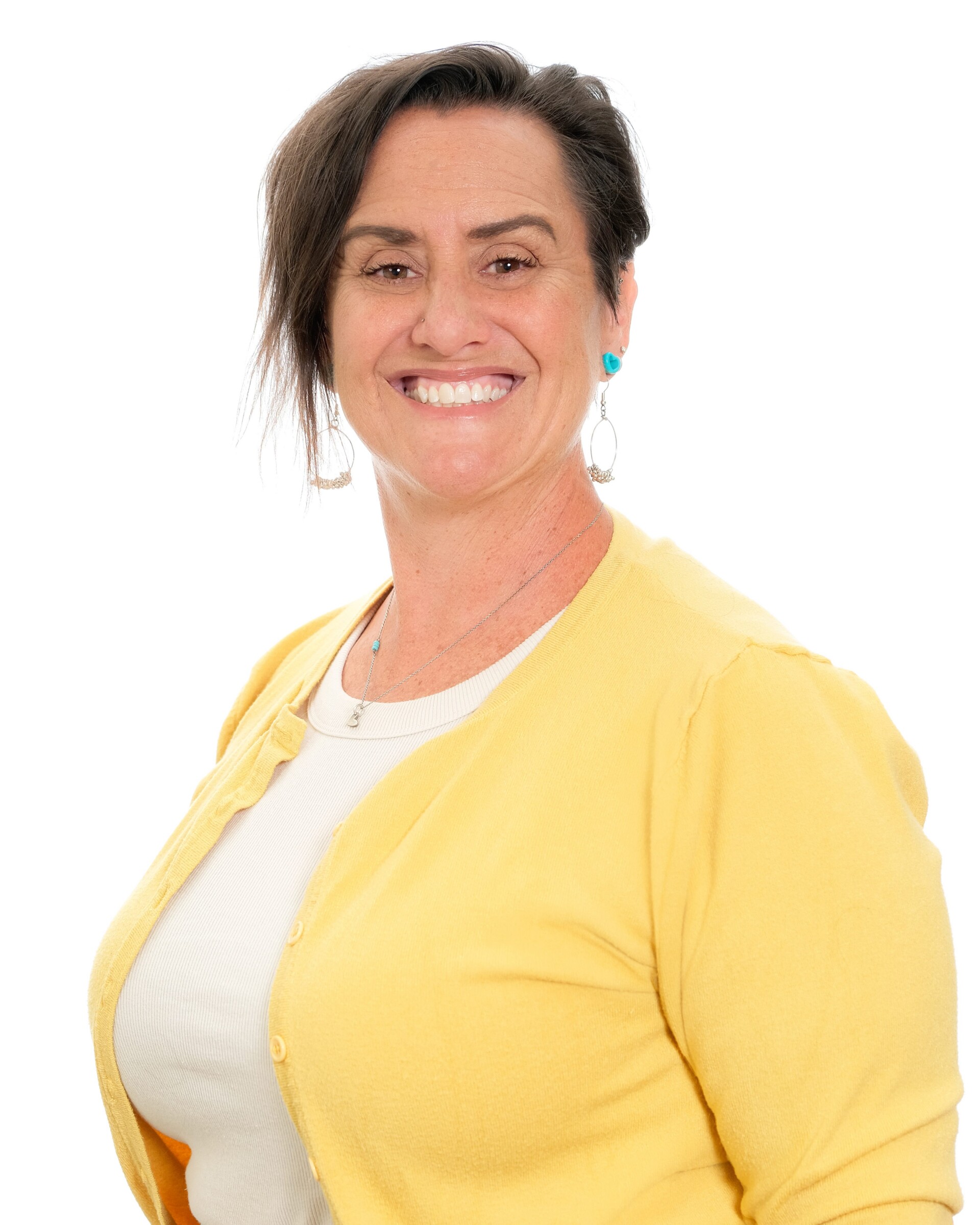
Lindsay Teunis, Ecological Restoration Technical Director for the West Region at SWCA Environmental Consultants.
I’m Lindsay Teunis, and I’ve recently taken on the role of West Regional Director for SWCA’s Ecosystem Restoration practice. I’ve been an environmental consultant for 23 years. Environmental consulting was pretty much my first job out of graduate school. I was lucky enough in graduate school to get experience with a consulting firm, so I was familiar with the industry. I think many leave school without really being aware of it.
I did my undergraduate and graduate work at San Diego State University, where I studied marine ecology. My graduate thesis was on eelgrass, and how habitat complexity influences the marine community that depends on it. As part of that work, I partnered with another member of my cohort on an eelgrass restoration project that was funded by the Port of San Diego, exploring fragmentation associated with eelgrass harvesting and different planting techniques and spacing. That was my first exposure to ecological restoration and mitigation.
For quite a few years, I worked in Los Angeles at a small consulting firm and formally made a transition from water to land, which was a learning curve for sure. Luckily, most ecological concepts cross these ecosystems. Working at a small firm provided exposure to a variety of related topics including CEQA, NEPA, planning documents, permitting applications, wetland delineations, and other aspects of environmental consulting.
It was during this time of learning that I had my first opportunity to support the management, monitoring, and implementation of a restoration project. It was 2+ miles of urban restoration located in the City of Laguna Niguel. I loved the challenge of bringing back as much of the ecology of the degraded system as possible within this very urban setting, surrounded by traditional development, lots of manicured lawns, invasive species, trails, and people. Even in this heavily constrained area, we were able to do some really powerful work… So, that project really set me down my career path.
I’ve been a member of SER on and off for many years. When you’re younger, it’s always harder to justify paying for memberships, but I was definitely reading the articles and journals the whole time. About ten years ago, I joined SER and I have stayed a member since. I moved from California, where I had spent my whole career, to Colorado, so it was helpful to engage people in the Rocky Mountain chapter as I started to work within a new geography.
A couple years ago, I was fortunate enough to join SER’s Large-scale Ecosystem Restoration Section (LERS) board. I love this group and have been re-elected for a new term. Seeing the work that people across the globe are doing makes me feel hopeful and encouraged as it fosters a sense of connection.
This year’s World Conference on Ecological Restoration (SER2025) was in Denver, near my home, so I was able to facilitate a field trip. We brought almost 25 conference attendees down to the San Luis Valley in southern Colorado. I was not familiar with the area, so it was amazing to learn about it with people from all over the world.
In the coming year, I’m excited to continue working with the LERS board, to attend SER’s 2026 North America conference, and to begin preparing to attend SER2027 in Portugal.
Beyond being able to connect to other restoration ecologists, I also find a lot of value in SER’s publications, including its journals, tools, and restoration standards. I went through the process of becoming a Certified Ecological Restoration Practitioner (CERP), and I appreciated that it provides a rigorous, objective form of accreditation and an ongoing commitment to continuing education and integrity from practitioners.
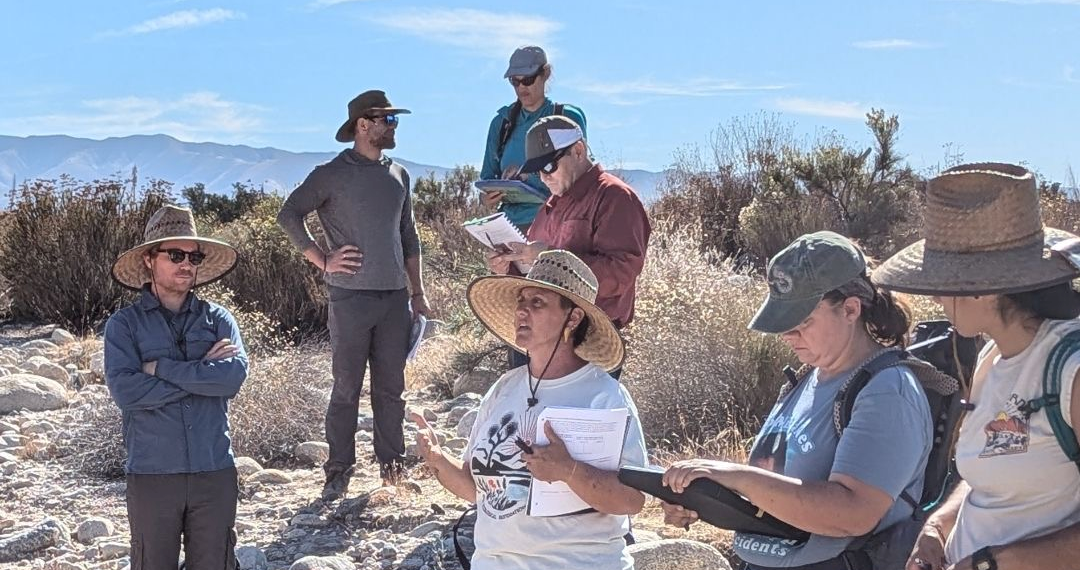
Lindsay teaching in the field.
A few years ago, someone pointed out to me that the restoration industry really wouldn’t exist if it were not for the past and ongoing impacts of colonization—in addition to our excessive overuse and disconnection from the environment that we are in fact a part of. I continue to reflect on this and remind myself that the reason I do this work is not only to restore harm done to the environment, but also the harm to humans as well. So, the restoration projects that I particularly like work to not only bring as much ecological value back to a degraded system as possible, but they emphasize the connection between people and the environment.
For the last few years, I’ve been working on the interface between the environmental market space and public lands as I believe this represents an important opportunity to expedite large scale restoration. Public lands are often degraded, with inadequate or unreliable funding for management (much less improvements). However, these areas often represent critical opportunities for broader ecosystem recovery. So, the question is about how can we facilitate a connection between these public lands and funding from private markets in a way that is mutually beneficial. It’s a complicated conversation, but it has only become more urgent over the last 12-18 months, as threats to public land have increased.
I recently joined California’s 30×30 Partnership Coordinating Committee—to support the effort to conserve 30% of the state’s land and coastal waters by 2030. This work aligns with the larger international goals set forth by the United Nations. I’m excited to work on this program as it is the intersection between current and future public lands, the critical need to monitor, improve, and care for it, all with the need for funding.
It’s us. Humans, I mean. The complex procedures and perspectives that we bring to the table. We often create conflicts or limit creativity by striving for perfection or perhaps a single goal to the detriment of the bigger picture. I don’t think anything happens fast enough; it all feels urgent. Of course, the inverse could be true. If everything happened too fast, the results probably wouldn’t be good.
But we need to strike a balance. Our ecological problems are on a scale that requires collective action. We need to find ways of fostering that. In part, that’s by assuming that our partners are acting in good faith and by recognizing the diversity of strengths that people bring to the table. Collective problem solving depends on that.
There is a strong role for SER in this. As a large, international organization, it is a place where we can share information, test ideas, and demonstrate what effective collaboration looks like.
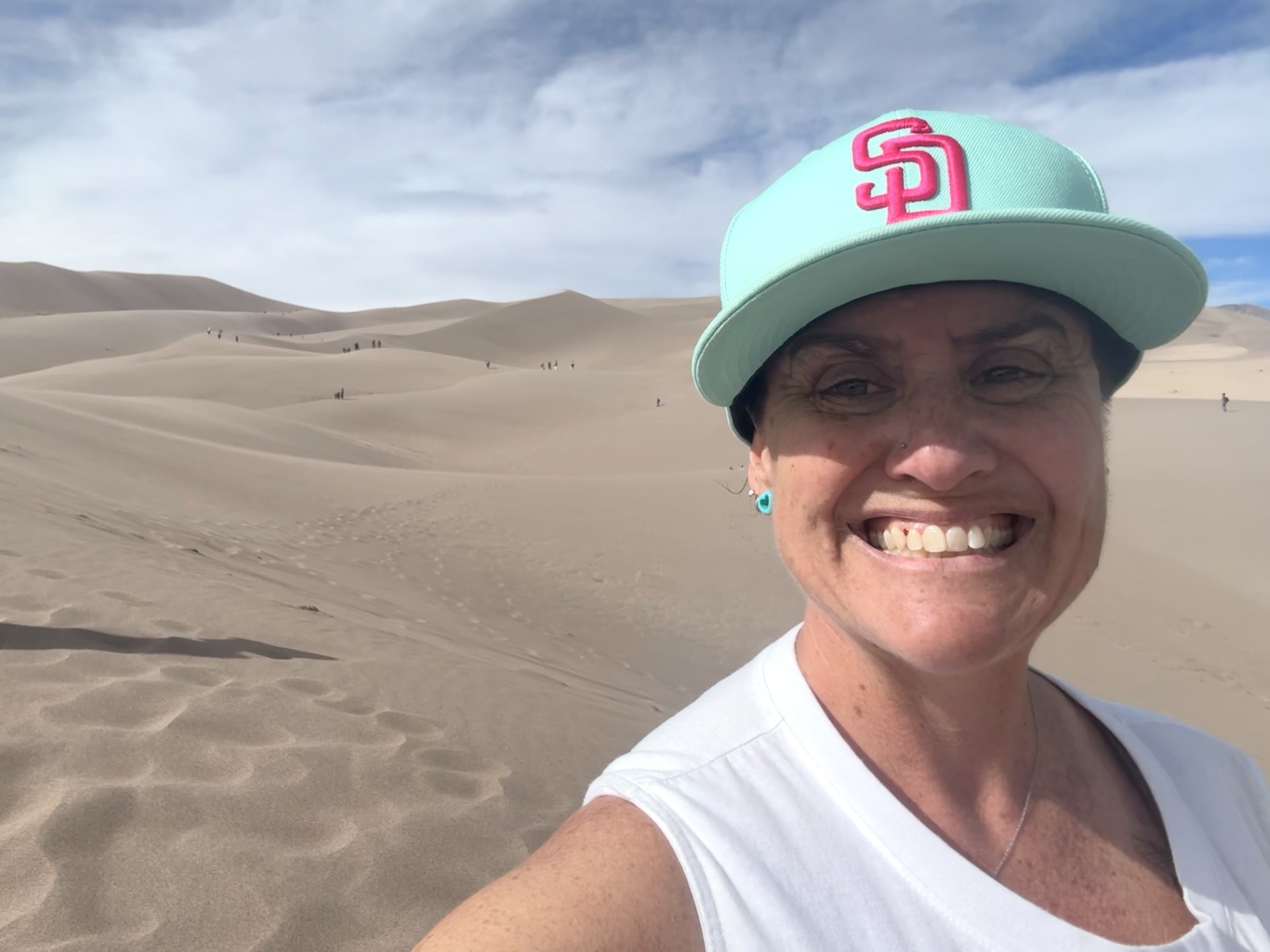
Lindsay at the Great Sand Dunes landscape in Colorado.
Yes, I would encourage people not to fear trying new things. Years of experience in this industry are great, but new practitioners are always joining us and bringing new perspectives that can add significant value to our work. So, I think those of us who’ve been in the industry longer—I include myself in that group—need to continue to stay open to new ideas and practices, especially coming from those who are new to the industry. We must keep learning from each other.
For me, I look at my job as helping to jumpstart an ecological process. That means it’s also important to step back and allow the site to do as much of the work as it can. I think this really requires listening to the site. So, I talk with my staff a lot about strategies for planting and seeding. One of our biggest challenges in the southwestern United States—and elsewhere—is managing non-native species, especially after intensive earthwork. The standard approach after earthwork is, “okay, I graded, and now I’m going to plant and seed, and cover everything.” As much as I speak to expediting work, there is some value in pausing at that point. I like to wait a few years before I really do any kind of seeding or intense planting and instead really focus on maintenance and allowing the natural seed bank to emerge. It’s been amazing to see seeds germinate that have been in the ground for years or even decades… Seeds on a shelf have a shelf life, but seeds in nature have a much different capacity to germinate under the right conditions. It’s important to see what the site has to offer rather than making assumptions about what should be there. So, I like to see what emerges and then build upon that.
This may involve taking more time or extending the monitoring period, which runs the risk of costing more, so it’s important to be strategic about where you put your money. But there are ways to stretch your resources for the betterment of the ecosystem and ultimate outcomes.
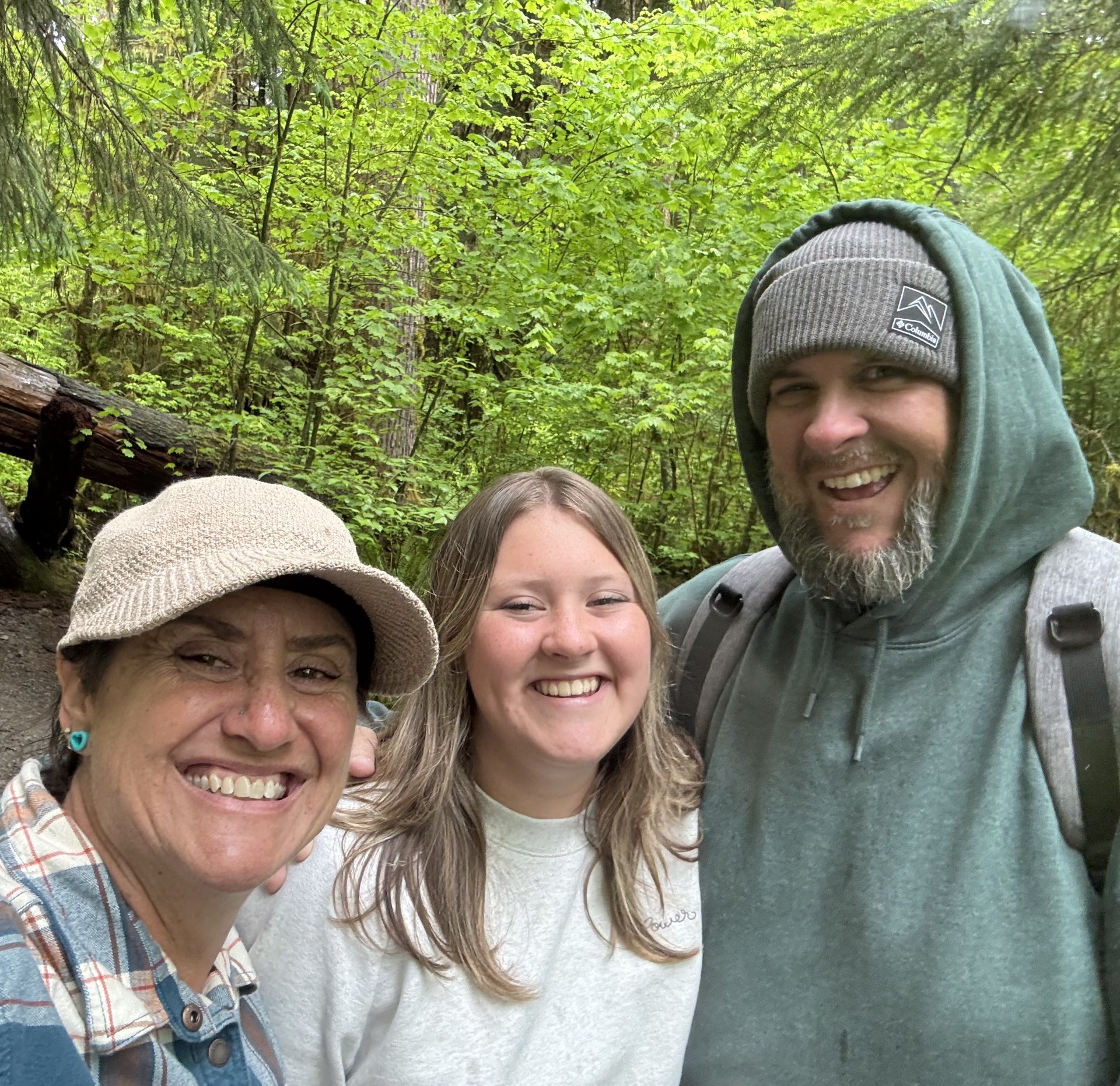
The Teunis family exploring landscapes in Washington.
Most of my work is in the Southwest, Southern California, Colorado… The big issue across the region is unpredictable, unreliable water. That’s the big constraint that you have to design around when you’re trying to reestablish a resilient system. In this situation, seeding often results in better outcomes than planting, because it requires less water. We have observed that a seed that grows on a site is more likely to survive than one that I’ve decided to plant. So, again, this comes back to that issue of listening to the site and being smart about what we put in the ground.
We’ve also had a lot of conversations—and I don’t have a final opinion on this—about a kind of supported range expansion (or even genetic expansion) of particular species that are adapted for environments that resemble the future we anticipate for a site. So, if Colorado is dry, and getting drier, and I want to talk about planting a cottonwood, maybe I collect cottonwood seeds from farther away, where it is already surviving in drier, hotter temperatures…
The question about human involvement in this kind of selection process is complicated, and it feels at odds with traditional land stewardship. But we are living in a time when we may have to explore these types of ideas and determine if and when they make sense. SER can play a critical role in facilitating discussions and informed recommendations.
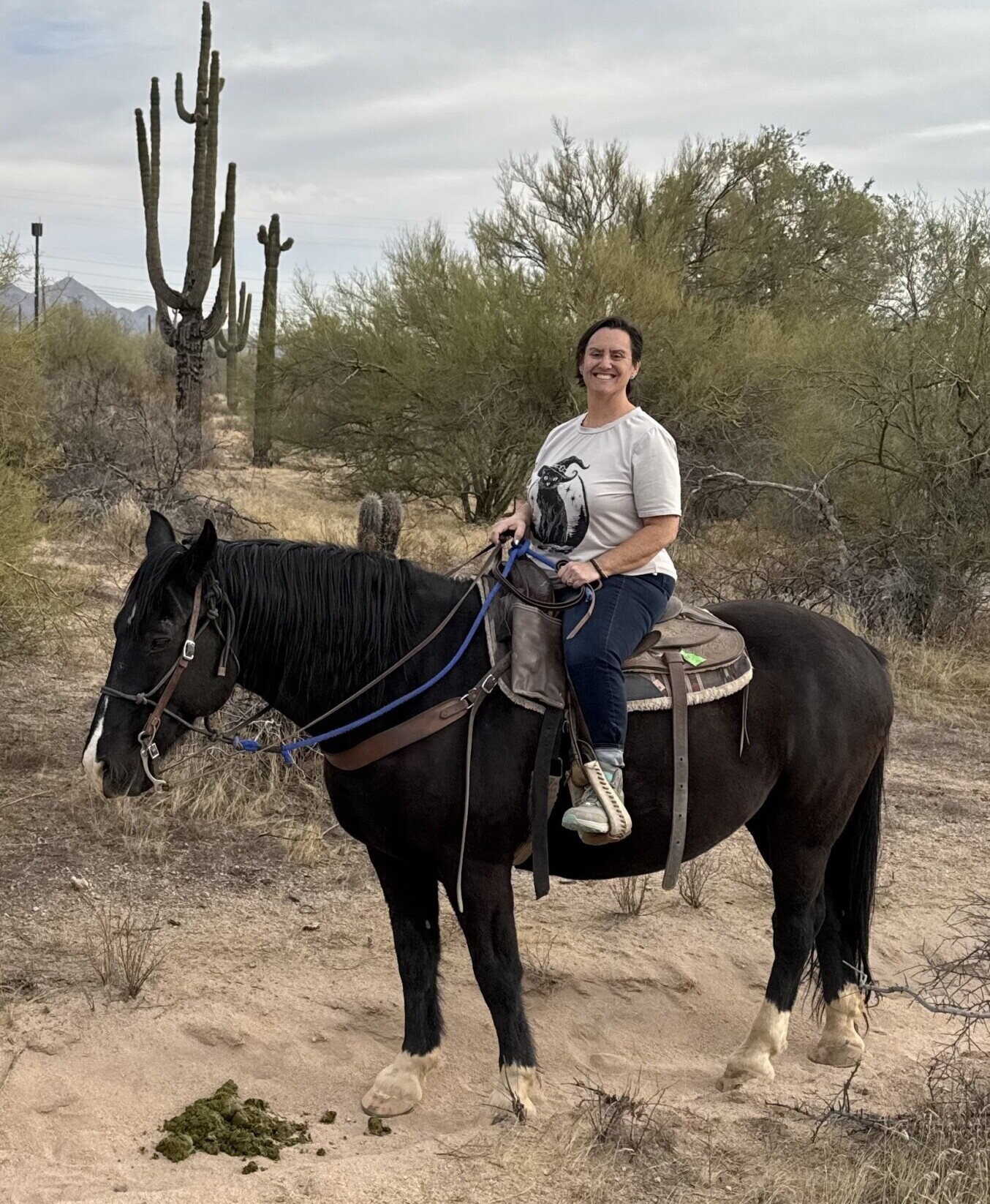
Lindsay riding on one of her farm animals.
There are a few things I always try to say to people who are early in their career:
First, don’t try too hard to define where your career is going. If your vision is too rigid, it can prevent you from pursuing opportunities that will enrich your work and overall skillset. Really, I encourage people to try anything, even when it doesn’t sound like restoration. Just get as much experience in and around restoration as you can.
I have done everything from working on environmental compliance documents to construction monitoring to planting to designing restoration plans to community engagement and a whole host of other things. At times, it might not feel like they’re part of restoration. But I regularly lean on skillsets that I learned through those experiences (and even in my younger life, as I spent 10 years working in the copy shop, Kinkos, anyone?). You know, you are made up of all of those pieces, and you’ll find ways that they will benefit your restoration work.
Also, realize that restoration is a large, complex process. Getting to the point of being able to get plants in the ground can take a long time, but it’s all part of the process. If you don’t have that perspective going in, it could be frustrating rather than rewarding.
Finally, find good mentors and maintain your network. People that you worked with 20 years ago, you’ll run into again, and they’ll be in a different place in their career, and you’ll be able to support each other.
Going back to something I said before, I hope we will find a way to move faster, and that more people will appreciate the value of ecosystems. I also hope that people start to understand that we are part of the ecosystem.
We need to help nature get back to helping itself, not because nature isn’t good at recovering on its own (it is), but because of the human-made constraints that make current recovery difficult. So, really, our role in supporting nature’s recovery is also a way of caring for ourselves and our place within the natural world.
So, give nature a boost; listen to what it’s telling you; and move the ego out of the way.
I have a ridiculous number of animals. It’d be easy to blame my daughter and say it’s all her fault, but it’s not. I really enjoy having animals around. We have pigs and goats and chickens and ducks, and lots of critters inside. And so, I have a tiny farm that makes no money and has no purpose other than making us all happy.
Subscribe to The Wire, SWCA’s quarterly newsletter that delivers the latest industry news, important regulatory updates, local events, and more straight to your inbox.
Original Article Link (may require registration):
https://www.ser.org/news/720957/Member-in-Action-Lindsay-Teunis-CERP-SWCA-Environmental-Consultants-.htm