
2026
Comparably’s Best Company Outlook
* Providing engineering services in these locations through SWCA Environmental Consulting & Engineering, Inc., an affiliate of SWCA.


From the experts we hire, to the clients we partner with, our greatest opportunity for success lies in our ability to bring the best team together for every project.
That’s why:
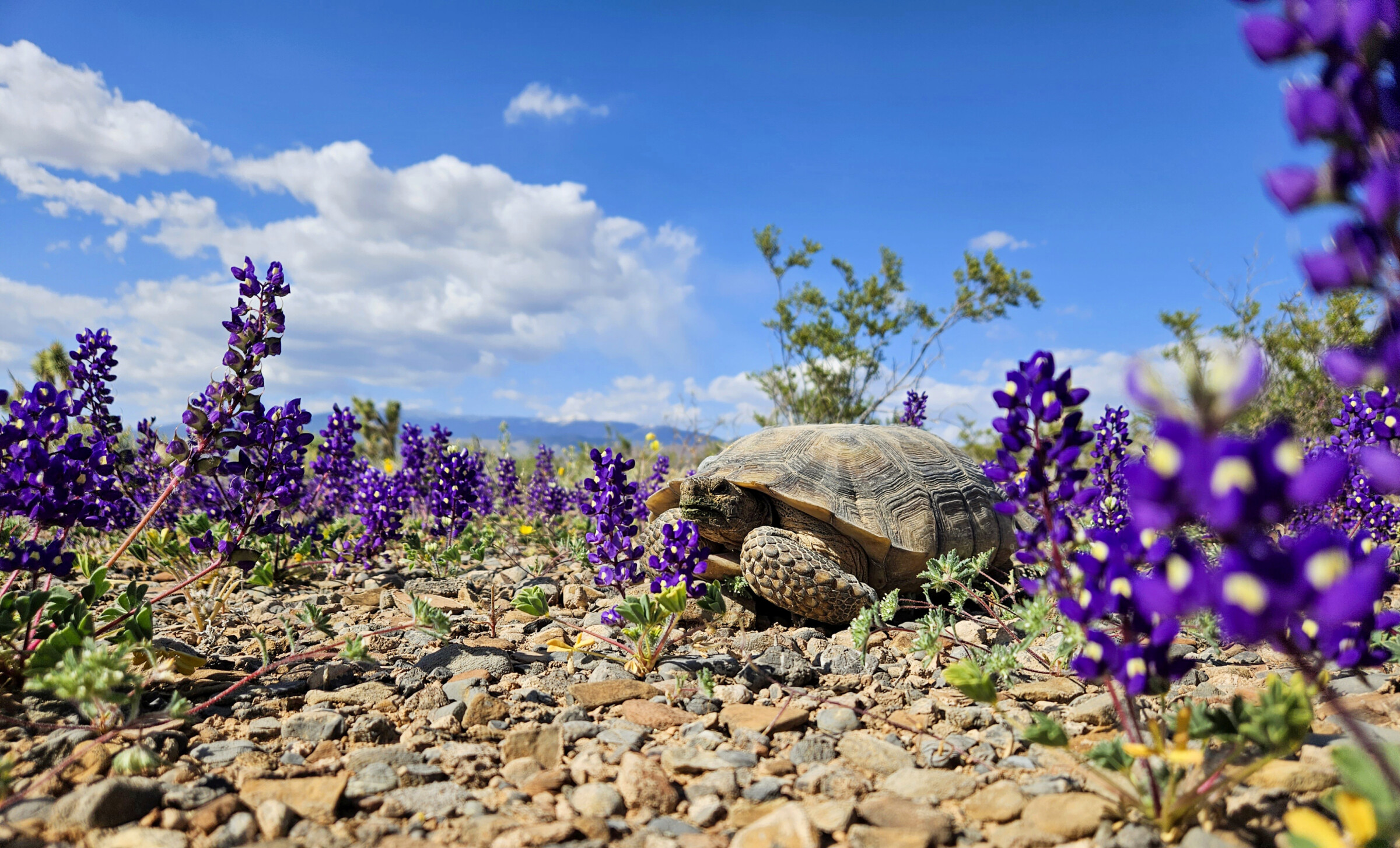
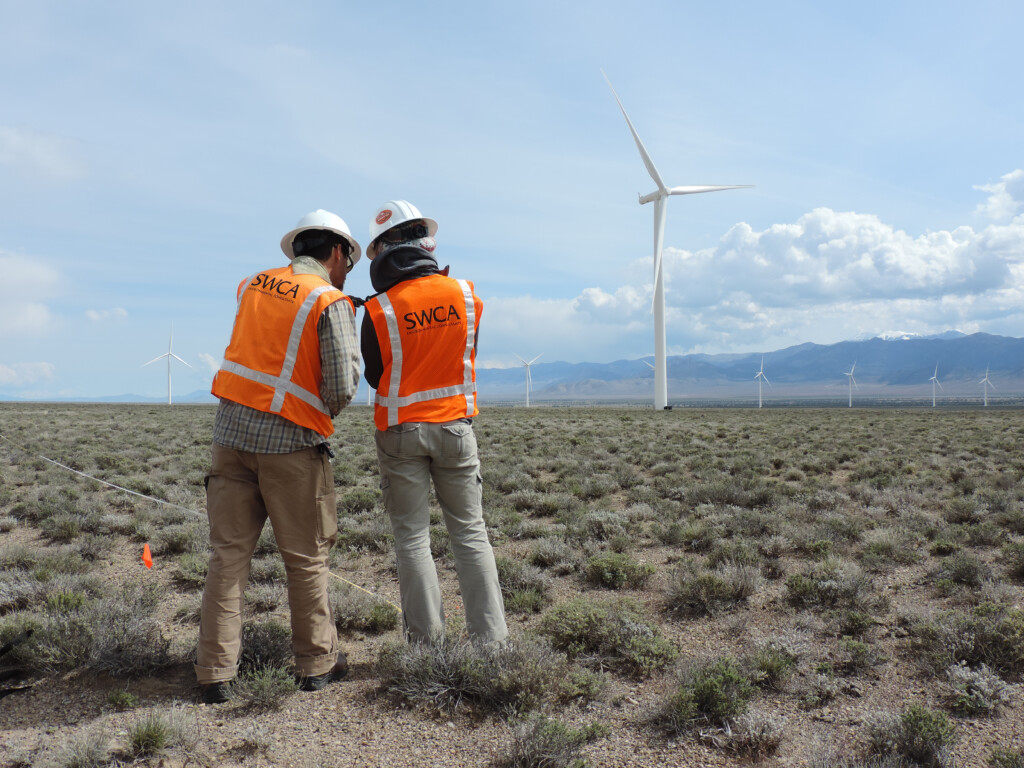
At SWCA, sustainability means balancing humanity’s social, economic, and environmental needs to provide a healthy planet for future generations.
SWCA employs smart, talented, problem-solvers dedicated to our purpose of preserving natural and cultural resources for tomorrow while enabling projects that benefit people today.
At SWCA, you’re not just an employee. You’re an owner. Everyone you work with has a stake in your success, so your hard work pays off – for the clients, for the company, and for your retirement goals.
Unearthing Opportunity in the Uinta Basin: Environmental Permitting and Energy Development on Paleontological Sites
Jason Adams is a Lead Paleontologist at SWCA, directing paleontological resource projects and leading field teams in survey, monitoring, and mitigation. With more than 15 years of experience, he specializes in paleontology, sedimentology, and resource assessments across the western United States, supporting environmental compliance and infrastructure projects with sound science and practical solutions.
Vince is a content developer at SWCA, where he helps subject matter experts tell their stories. An engaging storyteller and translator of technical information, he loves communicating the significance of his colleagues’ work.


With an estimated 30,000 active oil and gas wells, the Uinta Basin is the heart of Utah’s energy sector. It is also one of the most important paleontological regions in the United States, preserving a rich record of early life within its 12,000 square-miles. For companies operating here, that creates a unique challenge. Projects must move forward efficiently while protecting resources that cannot be replaced.
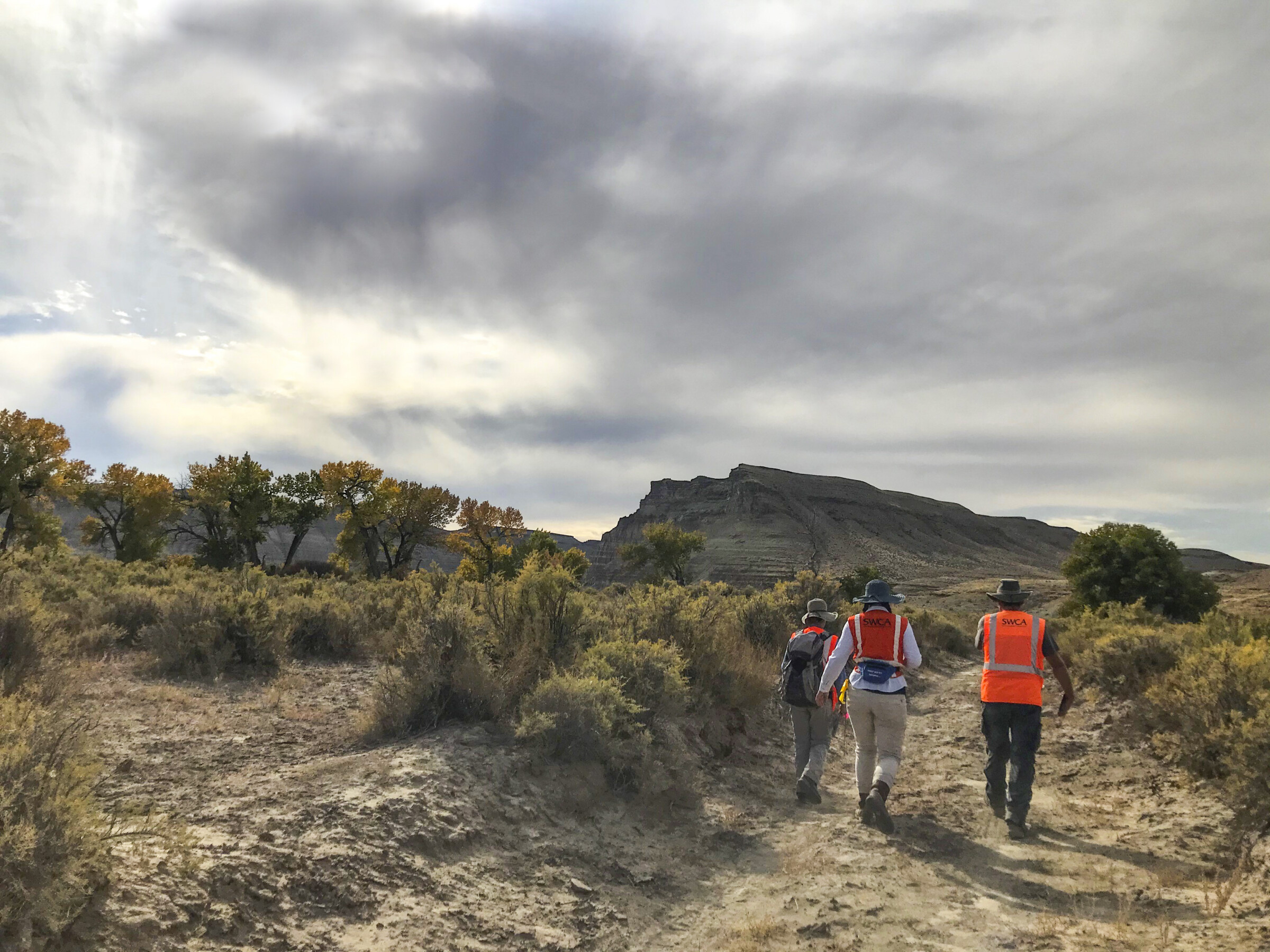
To understand that challenge, we talked to SWCA lead paleontologist, Jason Adams. A former oilfield geologist and “roughneck,” Jason describes himself as “one of those kids who never let go of his love of dinosaurs.” As Technical Lead for the SWCA West Region, Jason has extensive experience with environmental permitting and paleontology in the Uinta Basin.
The Uinta Basin is primarily in northeastern Utah, south of the Uinta Mountains, although it extends into Colorado. It formed during the Paleocene and Eocene epochs and was home to several large lakes with major river systems that fed into them. Over time, those lakes expanded and contracted.
The rivers that fed into the Uinta Basin brought huge quantities of well-sorted, fine-grained sediments into the lake system. The result is a thick accumulation of sedimentary deposits across the basin, which are ideal for preserving fossils.
What makes the basin particularly important is the nearly complete stratigraphic record as well as the diverse and abundant fossil record it preserves. You can compare fossil assemblages between nearby basins and see how the ecosystems differed and how they changed over time. These fossils show that this semi-arid region was once filled with wetlands, forests, and diverse flora and fauna. It also paints a detailed picture of early mammalian evolution, including primate evolution. So, it has a lot to teach us about the history of life.
The Uinta Basin accounts for 90% of the oil and gas wells in Utah. Most of those resources are developed within the same sedimentary layers that contain fossils.
We work almost exclusively on oil, gas, and energy transportation projects—well pads, pipelines, and associated infrastructure. There is some mining, but it’s minimal by comparison. This is a strategically important basin, and many companies have invested significant capital in developing the area.
Instead of seeing this as a conflict, SWCA and our clients generally look at energy development as creating new opportunities to find and preserve those paleontological sites and resources. It’s the initiative and resources of our energy clients that are mobilizing paleontologists and bringing us out there to preserve the fossil record.
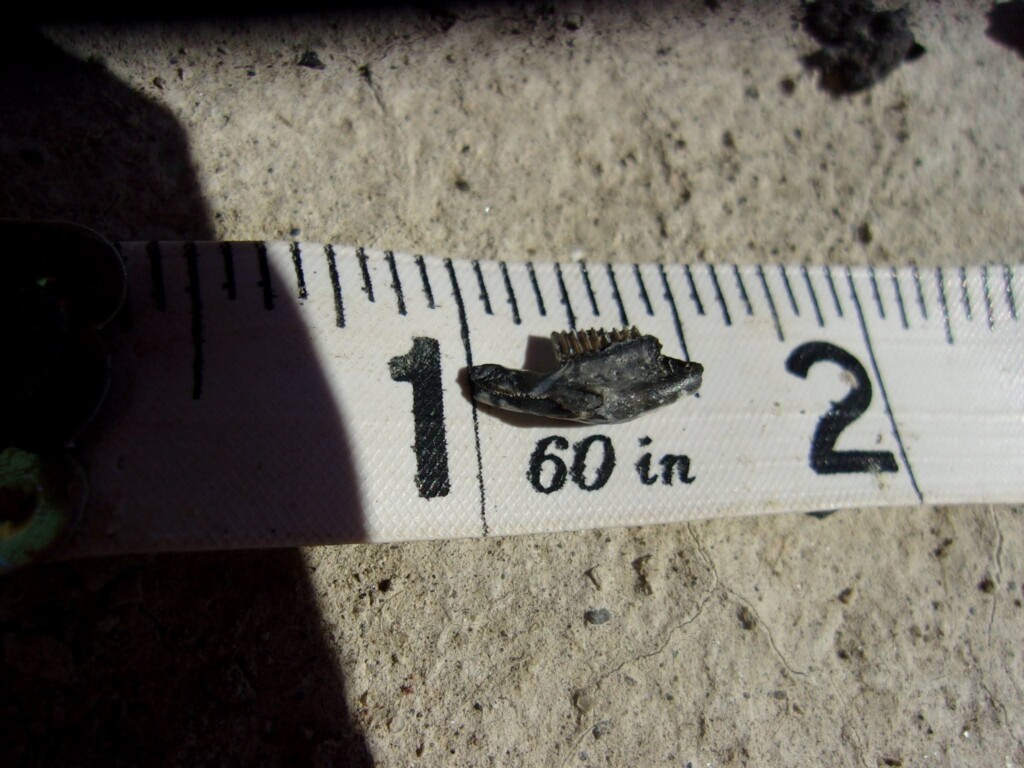
Tiny Pleistocene mammalian jaw
Much of the land in the Uinta Basin is federally managed or state-owned, so there are a lot of environmental permitting requirements, including those that protect paleontological sites and resources. At the federal level, those requirements were significantly strengthened with the 2009 Paleontological Resources Preservation Act. Whenever a project is closely tied to federal authority (through land, permitting, etc.), it requires environmental review. And part of that is paleontological work.
For our clients, projects must be planned and executed in a way that keeps them compliant while also maintaining schedule and efficiency. Our role is to help clients navigate those demands with confidence. Most projects contain three phases:
This sequence applies to about 90% of our Uinta Basin projects and allows projects to move forward while minimizing risk and avoiding unnecessary delays.
So much of it comes down to coordination.
Construction plans can change quickly, so we need to make sure that we stay aligned with project teams, construction teams, and field crews to ensure we have the right people in the right place at the right time. That requires having the most up-to-date information and effective communication, both internally and with our clients.
There is also the added complexity of working across jurisdictions. Projects often involve multiple agencies, each with different requirements. Fortunately, SWCA has a lot of experience and long-standing relationships with agency staff, which makes it easier to streamline the process and resolve issues quickly.
Typically, we’ll have one or two monitors on-site. They coordinate closely with construction crews, starting with safety meetings and morning debriefs to understand where work will occur and which equipment will be operating.
A lot of our job is directly observing excavation equipment to see what’s exposed. Coordination is critical, especially on large construction projects like pipelines, where a lot is happening in different locations.
Knowing what’s coming next and having enough monitors in the right locations is a major logistical challenge, especially in remote areas like the Uinta Basin.
Yes, all the time. My favorite find was a full, intact fossilized turtle. I was monitoring a trench ripper when it just popped up out of the ground. Our finds are not usually that dramatic, but it happens.
When a fossil is encountered, the priority is to stop work in that area to prevent further damage. We then assess the material to determine if it’s scientifically important and if there’s potential for more fossils in the surrounding rock. Based on that assessment, we determine whether it needs to be collected and sent to a museum for curation. If it does, we send it to the local Utah Field House of Natural History State Park Museum in Vernal, Utah.
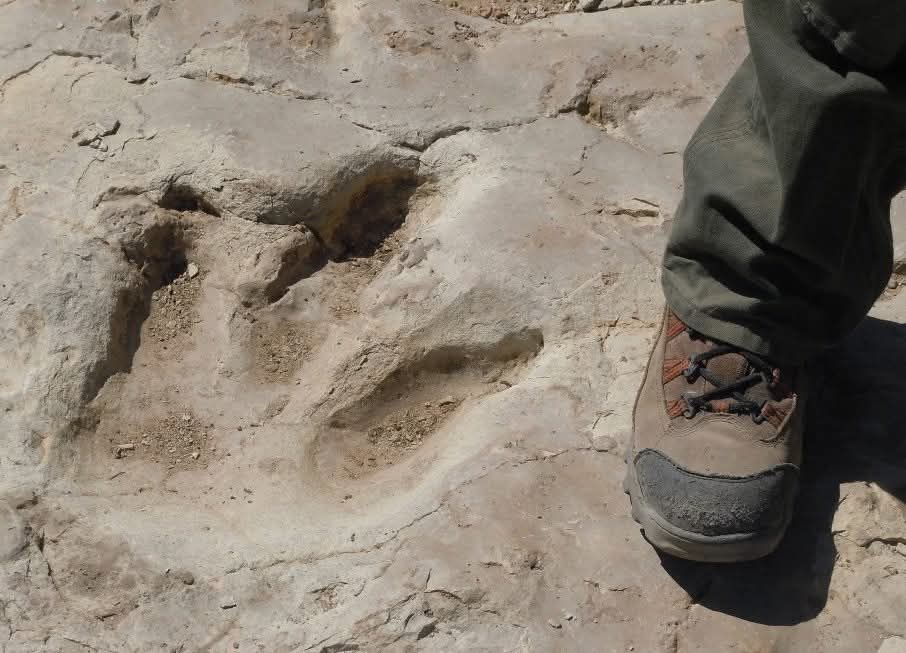
Theropod dinosaur track (boot for scale)
It comes down to experience.
Our field staff are trained to make quick, accurate assessments of fossil discoveries and to communicate those findings to the project teams. Beyond being able to identify fossils, there are nuances about which are scientifically important and need to be collected.
For example, some fossil species may be very common in certain geologic units and don’t warrant collection, but they might be rare and important in others. Making those determinations and then quickly conducting collections is important to reducing potential impacts on our clients’ schedules. Of course, all this needs to be done with scientific integrity at the forefront of our actions.
GIS (Geographic Information System) and updated communications/data sharing platforms play a major role in how we plan and execute projects.
Good mapping helps us define survey boundaries, understand geologic formations, and communicate clearly with compliance and construction teams and regulatory agencies. Having accurate, well-organized data makes a significant difference in efficiency and compliance.
There have also been attempts to use ground penetrating radar to detect fossils in the subsurface, but its application remains limited. Fossils are often fragmented and too small to be reliably detected. 3-D Modeling applications are also helping paleontologists understand the fossil record.
One reason is scale. Compared to our competitors, we have a large in-house paleontology team, including local and seasonal field staff, which allows us to support large projects without the need for subcontracting. This flexibility is especially important in remote locations like the Uinta Basin or on fast-moving construction environments where responsiveness and speed are essential.
We also bring deep experience working across agencies and jurisdictions, which helps streamline permitting and resolve issues more efficiently. Our leadership team members and project managers each have 10+ years of paleontology and environmental permitting experience. And we hold federal permits across the western United States, making it easier to support projects in multiple locations.
It’s about more than fossil identification—it’s our scale and level of experience that sets us apart. For our clients, that translates into a reduced risk, fewer delays, and greater confidence that their projects will stay on track.
For me, what’s most meaningful right now is mitigation paleontology. My focus is on ensuring fossil resources are preserved, so they’re available for future scientific research.
I also see value in helping agencies that are often understaffed meet their legal obligations. Supporting our clients and contributing to that larger, scientific endeavor is what motivates me.
See Beyond Policy Change to What Matters for Your Project
Regulatory Radar is a subscription intelligence service that scans the policy horizon for changes that could affect planning, permitting, schedules, and risk, then turns those signals into clear takeaways and practical next steps.