
2026
Comparably’s Best Company Outlook
* Providing engineering services in these locations through SWCA Environmental Consulting & Engineering, Inc., an affiliate of SWCA.


From the experts we hire, to the clients we partner with, our greatest opportunity for success lies in our ability to bring the best team together for every project.
That’s why:

At SWCA, sustainability means balancing humanity’s social, economic, and environmental needs to provide a healthy planet for future generations.
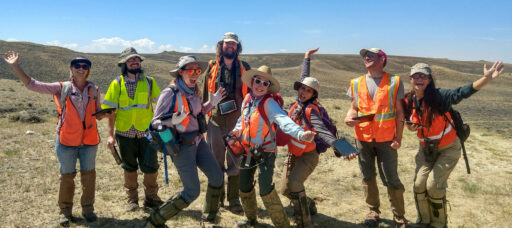
SWCA employs smart, talented, problem-solvers dedicated to our purpose of preserving natural and cultural resources for tomorrow while enabling projects that benefit people today.

At SWCA, you’re not just an employee. You’re an owner. Everyone you work with has a stake in your success, so your hard work pays off – for the clients, for the company, and for your retirement goals.
Critical Habitat Designation for the Rusty Patched Bumble Bee
The critical habitat designation adds an adverse modification analysis but is unlikely to operate as an independent trigger for consultation.
Drew is one of SWCA’s Midwest lead project managers specializing in renewable energy projects and Endangered Species Act compliance. He is a federally permitted bat biologist with 16 seasons of field survey experience.

Griffin has completed projects focused on power generation, transmission, oil and gas, Departments of Transportation, and residential and commercial land development throughout the Midwest and in central and western states. His work has recently been heavily focused on all facets of preconstruction renewable energy development in the wind and solar industries, including natural resources reporting, permitting, wetland delineation, ecological and threatened and endangered species assessments, and due diligence. As part of his work in renewable energy development, he has supported several Public Utilities Commission/Public Service Commission site permit applications for large-scale wind farms in Minnesota, North Dakota, South Dakota, and Iowa.

Kely Wabnitz is a biologist and principal project management team lead specializing in complex permitting issues, is an Endangered Species Act (ESA) regulatory practitioner, and has worked throughout the country, specifically the Midwest and Great Plains, for more than two decades. Kely has outstanding experience in ESA compliance and National Environmental Policy Act (NEPA) review documentation, a thorough knowledge of the biology and conservation of listed species in the Midwest, and extensive experience assisting clients with regulatory issues throughout the country. She routinely manages challenging compliance and permitting issues related to large-scale, regional, and multistate development projects. Kely has robust experience navigating related discussions, coordination, and consultations with the U.S. Fish and Wildlife Service (USFWS), specifically in Regions 2, 3, 5, and 6, and with state public siting commissions and natural resources agencies. She has worked with clients throughout the United States and has supported the successful acquisition of state and local siting permits through development of statutorily complete applications, preparation of written testimony requiring subject matter expertise, and support during public hearings.




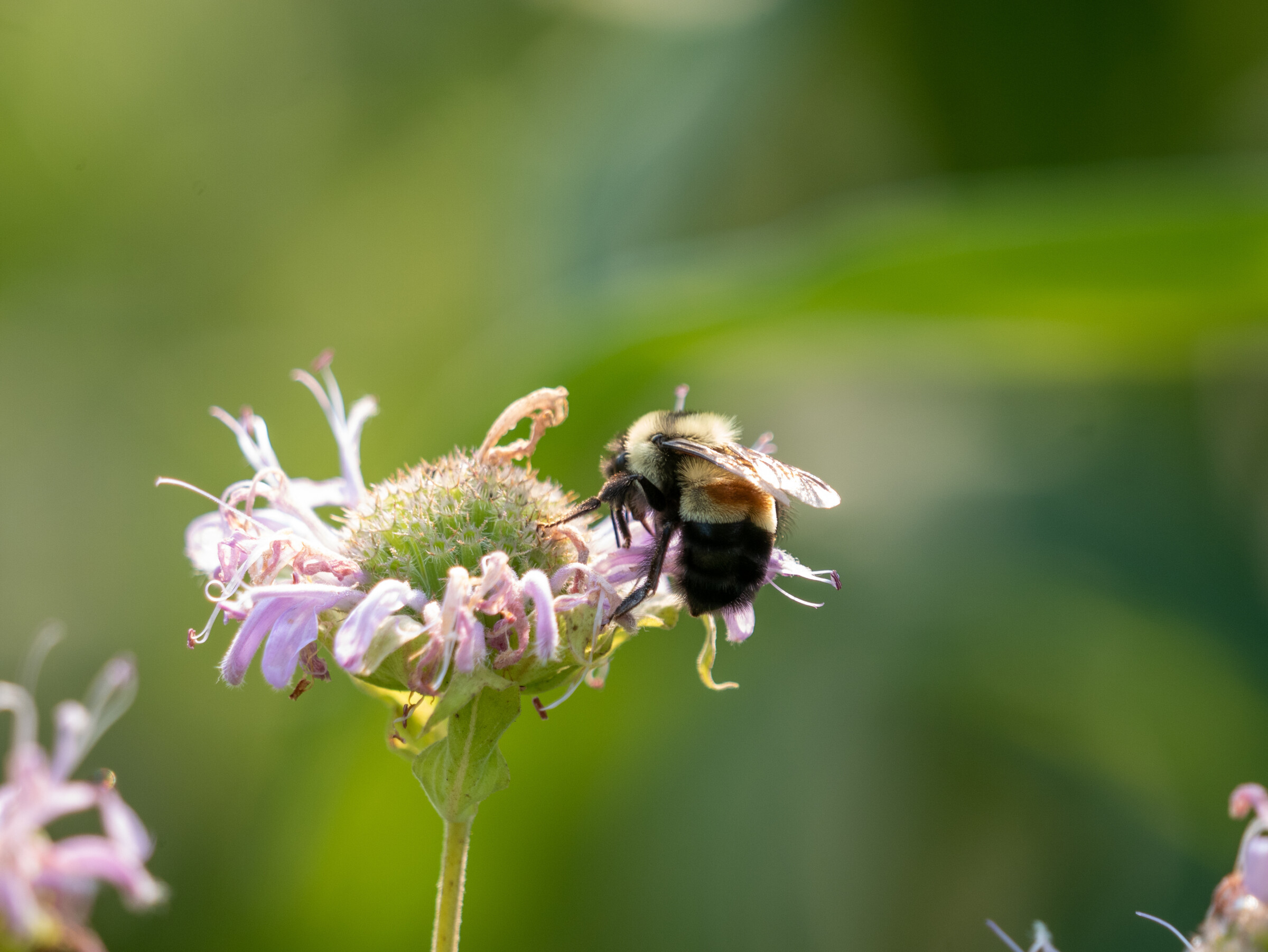
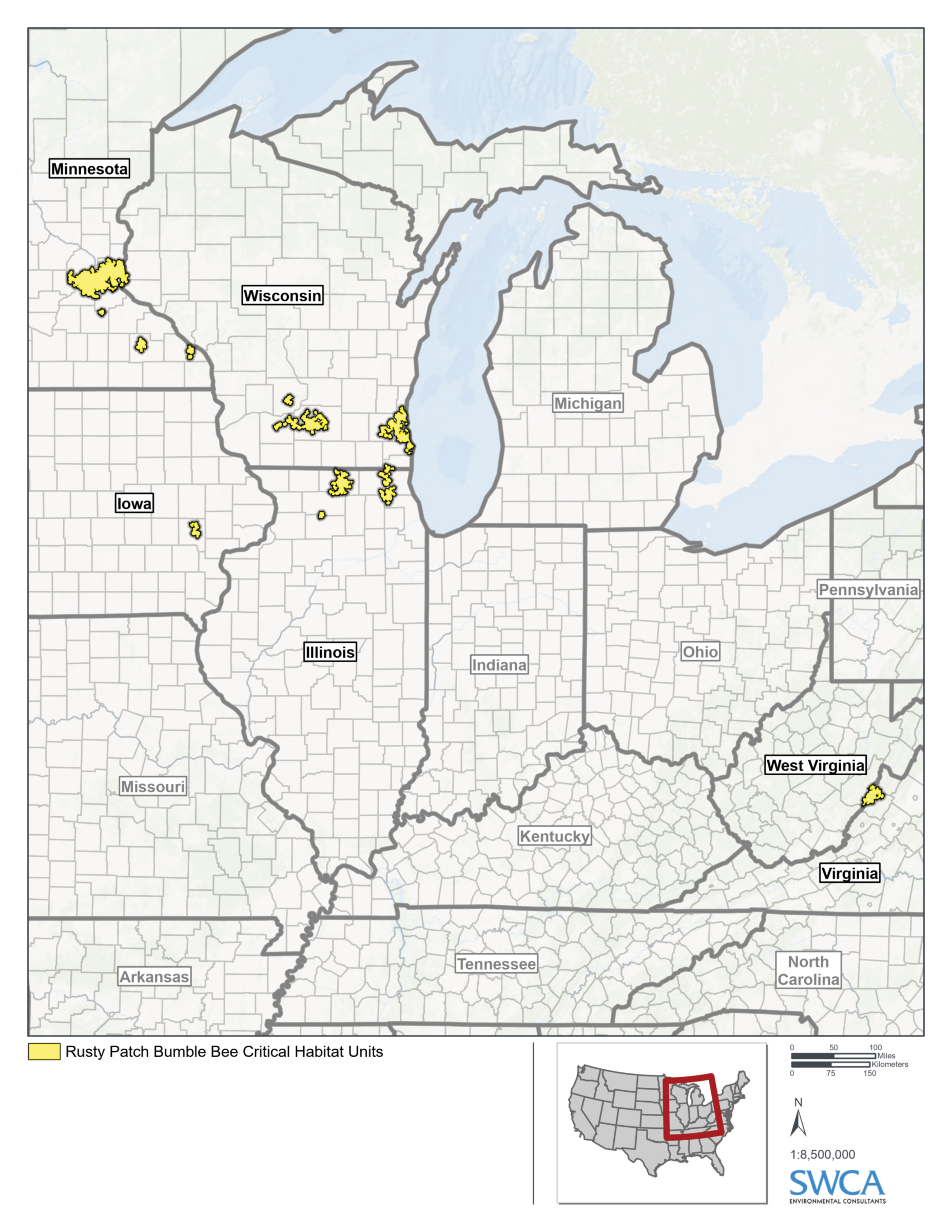
On June 1, 2026, the U.S. Fish and Wildlife Service finalized critical habitat for the rusty patched bumble bee (Bombus affinis) across approximately 1,534,951 acres in 14 units across six states. The designation becomes effective July 1, 2026.
All designated units were occupied at the time of listing in 2017. As a result, federal actions that may affect newly designated critical habitat already require consultation under Section 7 of the Endangered Species Act (ESA). The critical habitat designation therefore adds an adverse modification analysis but is unlikely to operate as an independent trigger for consultation.
Recent court decisions have introduced uncertainty in how adverse modification is evaluated, including potential shifts away from a rangewide “as a whole” standard. This increases the importance of evaluating impacts at the unit or action-area scale.
Interior forest is a limiting habitat feature, particularly in fragmented landscapes. Actions that remove forest or increase fragmentation are most likely to raise adverse modification concerns.
Energy, transmission, transportation, and development projects in the Upper Midwest and Appalachians with a federal nexus should anticipate focused review of forest clearing, fragmentation, soil disturbance, and connectivity among habitat patches. Habitat fragmentation and loss of interior forest conditions are primary risk drivers.
SWCA provides integrated ESA support, including habitat assessments, effects analysis, and permitting strategy development. Contact your project manager or one of our nationwide experts today.
See Beyond Policy Change to What Matters for Your Project
Regulatory Radar is a subscription intelligence service that scans the policy horizon for changes that could affect planning, permitting, schedules, and risk, then turns those signals into clear takeaways and practical next steps.