

2026
Comparably’s Best Company Outlook
* Providing engineering services in these locations through SWCA Environmental Consulting & Engineering, Inc., an affiliate of SWCA.


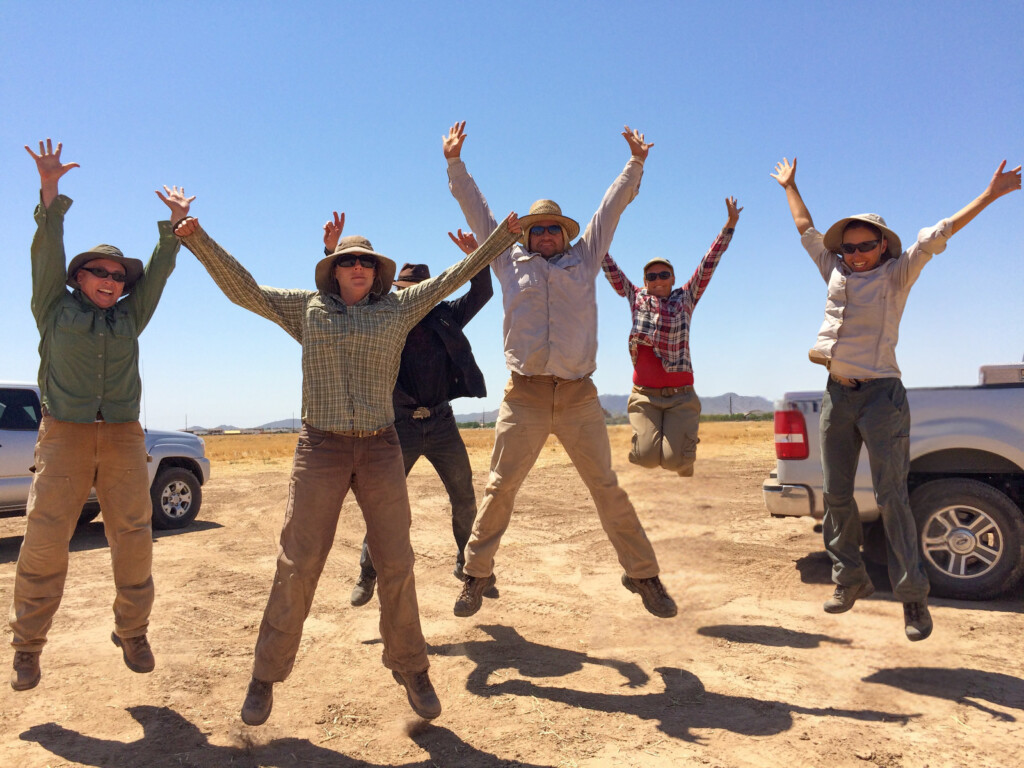
From the experts we hire, to the clients we partner with, our greatest opportunity for success lies in our ability to bring the best team together for every project.
That’s why:

At SWCA, sustainability means balancing humanity’s social, economic, and environmental needs to provide a healthy planet for future generations.
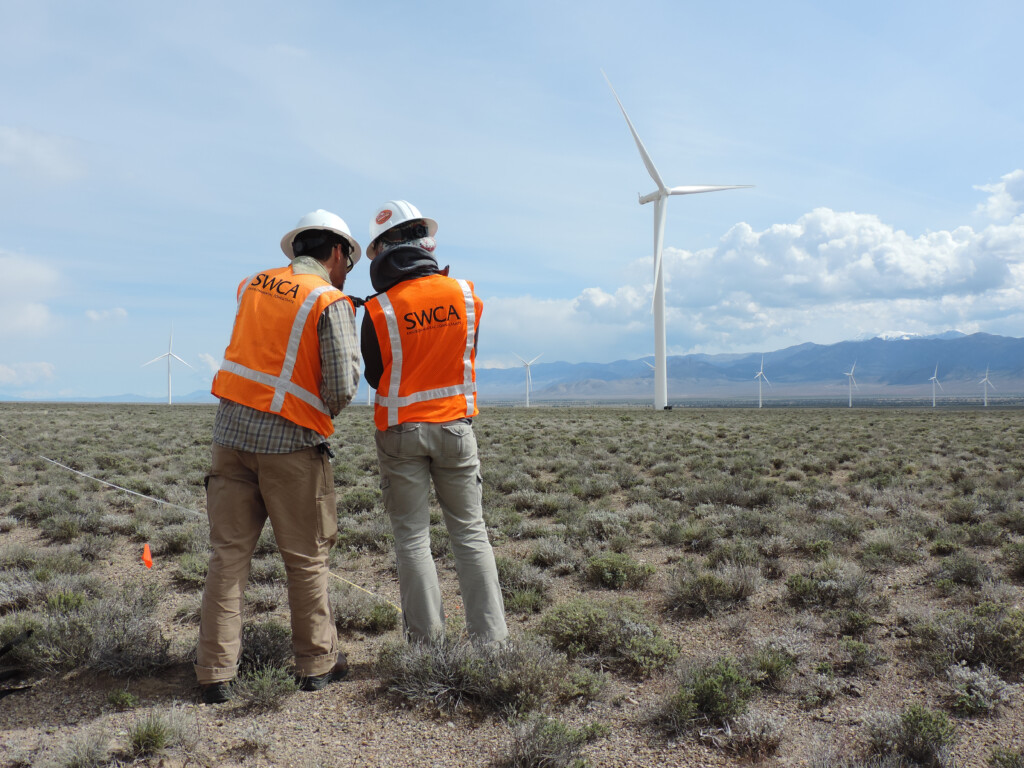
SWCA employs smart, talented, problem-solvers dedicated to our purpose of preserving natural and cultural resources for tomorrow while enabling projects that benefit people today.

At SWCA, you’re not just an employee. You’re an owner. Everyone you work with has a stake in your success, so your hard work pays off – for the clients, for the company, and for your retirement goals.
Historic Preservation Meets Affordable Housing in San Luis Obispo
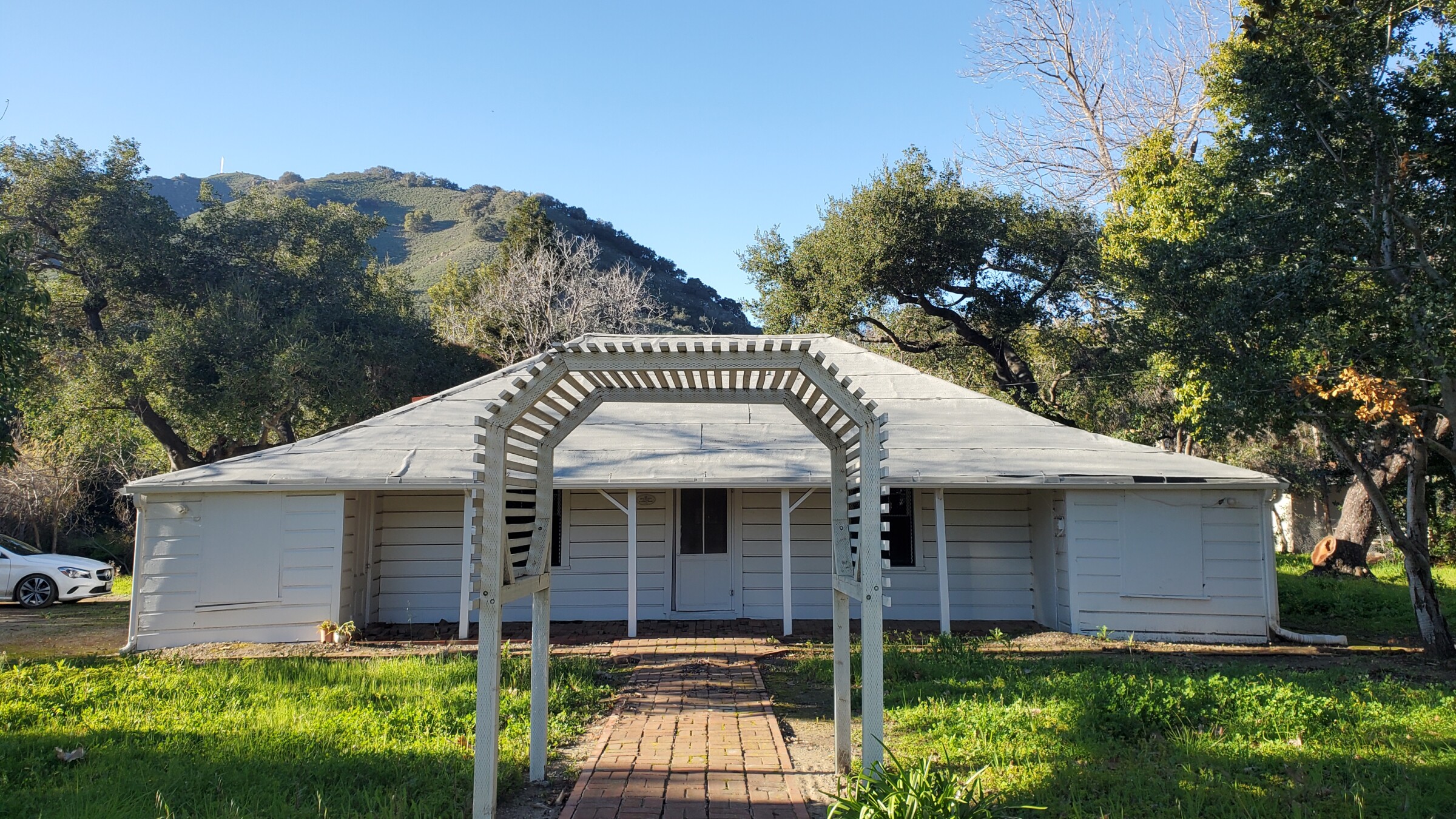
After more than three decades of vacancy, a historic adobe home on the edge of San Luis Obispo’s Downtown Historic District is about to find a new life as part of an affordable housing development. Named for a former resident, Waterman Village will create 20, 200-264 SF tiny homes for the city’s low- to very-low-income residents while restoring the adobe for use as a community center.
Formed through a partnership between the City of San Luis Obispo and Smart Share Housing Solutions, the project will not only provide much needed affordable housing, but it will extend the life of the long-vacant adobe through its adaptive reuse. SWCA Environmental Consultants prepared technical studies for the project, including a robust Historic Resources Evaluation Report and documentation related to the California Environmental Quality Act (CEQA).
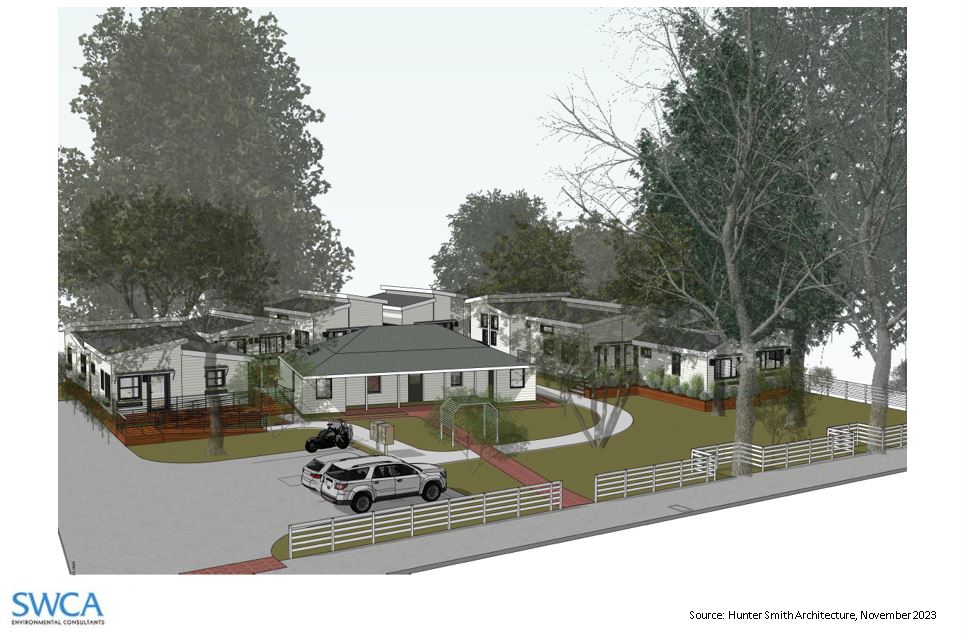
An architectural rendering of the affordable housing development shows tiny homes arrayed around the historic adobe.
Located at 466 Dana Street, the many names of the Rosa Butrón de Canet y de Simmler Adobe—now at the center of Waterman Village—echo its long history.
Although it does not look like the iconic earth-toned adobes of California’s missions, the wood-clad house on Dana Street reflects its historical context. Built in 1860, shortly after the United States’ annexation of California from Mexico, its wood cladding is characteristic of a transitional style that combined older architectural styles rooted in the area’s Mexican, Spanish, and Indigenous past with elements more typical of the eastern United States.
“Very few buildings of its style survive with this level of integrity,” says SWCA Senior Environmental Planner Cassidy Bewley, “and, of course, that rarity contributes to its historic significance.”
In addition to its architectural significance, the adobe is significant as the long-time home of John Simmler, who was the city’s first postmaster and an early justice of the peace. Simmler’s wife, Rosa Butrón de Canet—herself a member of an important, 19th Century California family—is the person for whom the adobe is named.
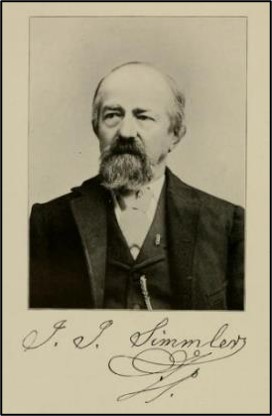
Portrait and signature of John Jacob Simmler, taken around 1903

Studio portrait of Rosa Butrón, probably from the 1870s during her marriage to Simmler
Other notable residents include Mildred Waterman, who was a long-time occupant of the home, a county employee, and a civic-minded resident of San Luis Obispo, and Mary Gail Black, who lived with Waterman and was a notable journalist when few women worked in that profession.
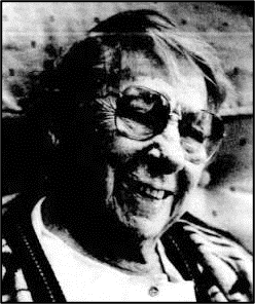
Mary Gail Black deeded the property to the city to honor of her partner, Waterman.
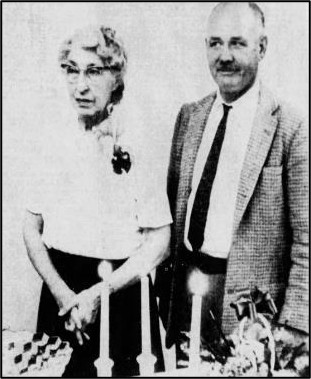
Mildred Waterman with former San Luis Obispo County Registrar, Dr. H. O. Swartout
While SWCA’s cultural resources team determined that the adobe’s primary period of historical significance lay in its early years (1860-1926), Black’s use of the space to organize a successful push for the County of San Luis Obispo to establish a Committee on the Status of Women and Girls is responsible for a second period of historical significance (1974-75). This was a common tactic of Second Wave Feminists for raising women’s issues with local and regional governments. It was Black who deeded the property to the city in 1989 with the stipulation that it be named in honor of her partner, Mildred Waterman.
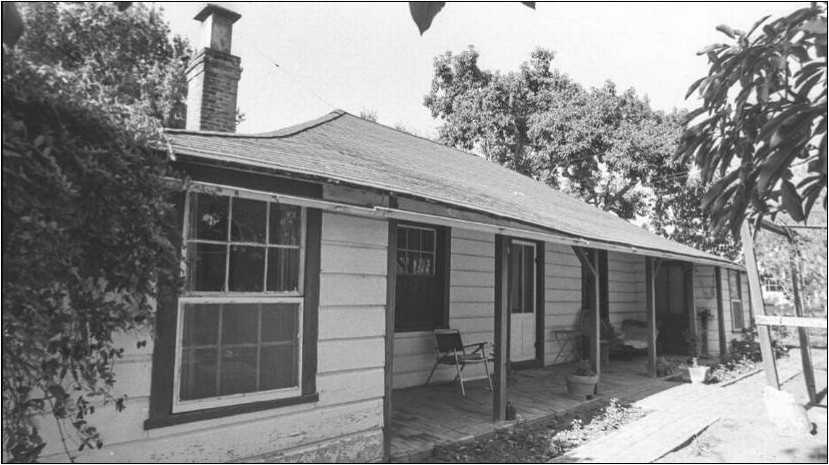
An image of the house from 1988, featured in the San Luis Obispo Telegram-Tribune
The Historic Resources Evaluation Report that SWCA prepared combines archival research into the events and people whose lives intersected with the Rosa Butrón Adobe with analysis of the building’s architectural style (its historical significance and alterations over time), documentation of the property’s current conditions, and careful consideration of the Secretary of the Interior’s Standards for the Treatment of Historic Properties, which guide preservation efforts nationwide.
“The property has changed a lot over time,” says Bewley. “The original portion of the house was built in 1860, but outbuildings were built and demolished later, gardens and trees were planted…. and additions were added over the course of its life.”
“The big question from a historical preservation perspective,” according to Bewley, “was ‘which portions of the property are historically significant?’ And can the property still retain its significance with the changes that are being proposed?”
Accommodating 20 units of affordable housing on site required the demolition of a portion of later, rear additions to the building. So, a lot depended on the answer to this question.
SWCA’s architectural historians concluded that both periods of historical significance (1860-1926 and 1974-75) centered on the original adobe structure. The relevant local and state authorities agreed. This allowed the later additions to be demolished as part of the property’s rehabilitation while making room for affordable housing units along the back and side of the property.
“The placement of the tiny homes on site was important,” Bewley adds. “The adobe is set back from the street with old oaks growing around it. The tiny homes are largely hidden behind or to the side of the house, so the project is able to preserve the bucolic atmosphere that historically surrounded the house.”
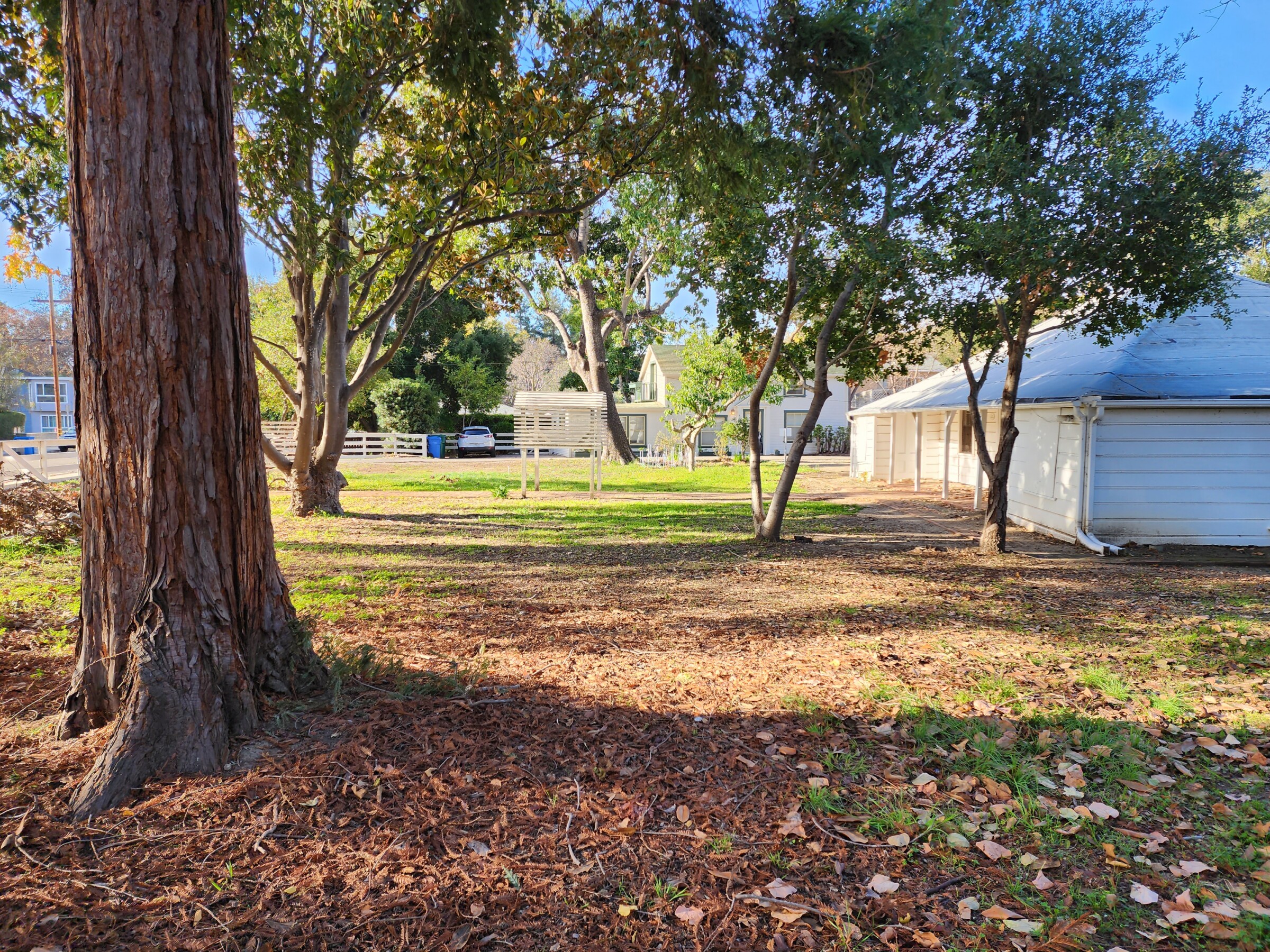
A view from the front corner of the property shows a large, tree-shaded setback between the street and the historic house.
Ultimately, SWCA’s technical reports supported a Mitigated Negative Declaration, which found that, with the implementation of certain measures, the project would not result in significant environmental impacts. Under CEQA, this finding allows a project to undergo a streamlined review process that is less expensive and time-consuming than the effort involved in conducting an Environmental Impact Report (EIR).
“The city didn’t take this finding lightly,” observes Bewley. “There was some opposition to the project, so we knew that the findings would be closely scrutinized – and potentially subject to legal challenges. But under CEQA, just because a project is controversial, doesn’t mean that you need to prepare an EIR. The analysis should drive that decision. So, we leaned into our technical expertise and our understanding of the regulatory guidance, and we collaborated closely with city staff until everyone was comfortable with the findings.
One of the final milestones for advancing the project was its review by San Luis Obispo’s Cultural Heritage Committee, where the project advanced by a vote of four to three.
“I think my favorite moment from the project was in that hearing, because usually the people who show up are against a project,” Bewley says. “That happened there too. But there were also a lot of people who showed up to support the project – and their testimony was moving.”
“A lot of the testimony came from long-time residents of San Luis Obispo who were elderly or disabled or who had lost a partner and were at risk of losing their home,” Bewley says. “And they were not only excited to have a space of their own, but they were excited to build a community here. It was really powerful.”
Some of those stories are shared here.
See Beyond Policy Change to What Matters for Your Project
Regulatory Radar is a subscription intelligence service that scans the policy horizon for changes that could affect planning, permitting, schedules, and risk, then turns those signals into clear takeaways and practical next steps.