
2026
Comparably’s Best Company Outlook
* Providing engineering services in these locations through SWCA Environmental Consulting & Engineering, Inc., an affiliate of SWCA.


From the experts we hire, to the clients we partner with, our greatest opportunity for success lies in our ability to bring the best team together for every project.
That’s why:

At SWCA, sustainability means balancing humanity’s social, economic, and environmental needs to provide a healthy planet for future generations.
SWCA employs smart, talented, problem-solvers dedicated to our purpose of preserving natural and cultural resources for tomorrow while enabling projects that benefit people today.

At SWCA, you’re not just an employee. You’re an owner. Everyone you work with has a stake in your success, so your hard work pays off – for the clients, for the company, and for your retirement goals.
Oyster ROCKS: Science-backed, Community-led Oyster Reef Restoration
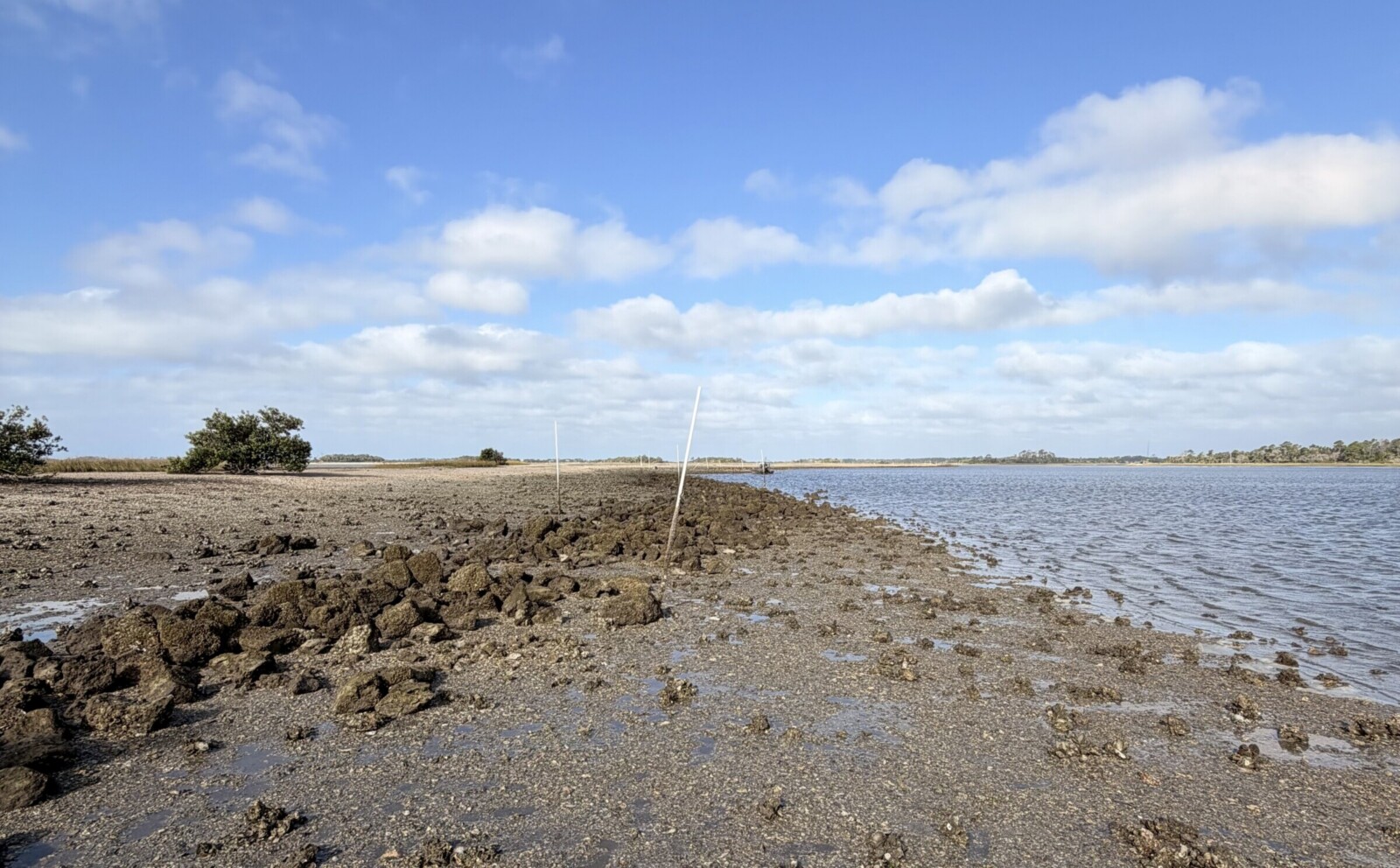
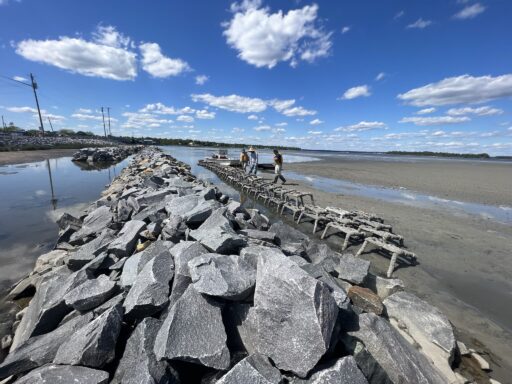
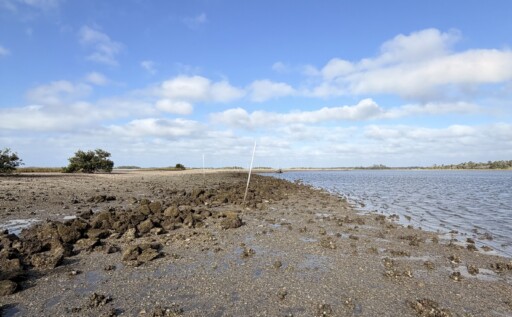
A promising oyster reef restoration project is taking shape in the Big Bend region of Florida’s Gulf Coast. Oyster ROCKS (Restoration of Oyster Cultch and Knowledge Systems) is a community-led coastal restoration initiative focused on restoring degraded portions of Corrigan’s Reef in Waccasassa Bay.
This comes in the wake of decades of habitat loss. Between 1982 and 2011, the Florida Fish and Wildlife Conservation Commission estimates that the Big Bend region had lost roughly 66% of its oyster reefs.
A collaboration between Levy County, the Cedar Key Oystermen’s Association, several state and federal agencies and SWCA Environmental Consultants, the project joins SWCA’s scientific and technical expertise to the oystermen’s intimate knowledge of the bay.
“A unique thing about this project, is that we’re actually employing local oystermen to install the rocks,” says SWCA Natural Resources Director for Florida, Christina Pilla. “So, the funding isn’t going to a firm that is bringing in outside workers. It’s actually going back into the community.”
By employing local oystermen, the project is turning a long-term investment in ecological and economic resilience—restoring oyster reefs and industry that depend on them—into an immediate, economic boon for the community.
The team anticipates that 80% of the $1.89 million budget will be spent locally, employing oystermen, truck drivers, and various monitors and helpers throughout the project. The project is also sourcing local dolomitic limestone to rebuild the reef. The near-term impact of that local investment is expected to triple as local wages generate additional economic activity.
Oyster ROCKS is relatively small in terms of oyster reef restoration projects, but it’s important, because it points to a different way of doing restoration work.
“It’s really a demonstration project to show the community can lead a project like this and take on a larger restoration effort,” says SWCA Southeast Director of Mining and Water, Dave Kelly. “And that’s one of the goals: to continue this work on a larger scale.”
“It’s not only the county that’s looking at it,” Pilla adds, “it’s also the state and federal agencies who are very interested in the success of this project.”
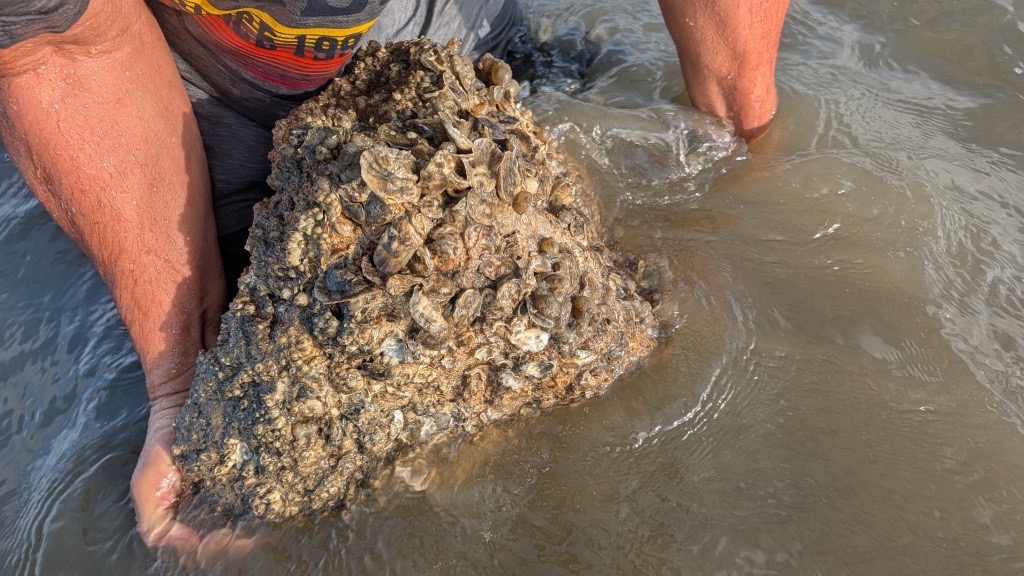
Three months after restoration work began, oysters were already growing on the cultch substrate.
While SWCA formulated the initial project approach, it is the community—guided by Levy County and Cedar Key Oystermen’s Association—that has taken the lead.
“We are certainly providing technical assistance, expertise in the permitting process, upfront training, and marking where to place the rock (so it creates the proper depth of substrate for oyster larvae to attach to),” says Kelly, but it is local stakeholders who are moving everything, rebuilding the reefs and even consulting on the locations to restore.
The oystermen bring invaluable local knowledge to the project.
“They know these waters,” Kelly says. “Even just navigating to the reef sites in different tides with 18-, 20-, and 22-foot skiffs, loaded with a couple thousand pounds of rock material is a challenge. Their expertise is what really pulls through in that.”
The limestone substrate is typically placed during higher tides when the area is navigable to rock-filled skiffs, then inspected during lower tides when the water levels allow the team to see how the rocks have settled. This requires a lot of on-the-fly, adaptive management, adjusting the reefs here and there to create the proper elevation profiles.
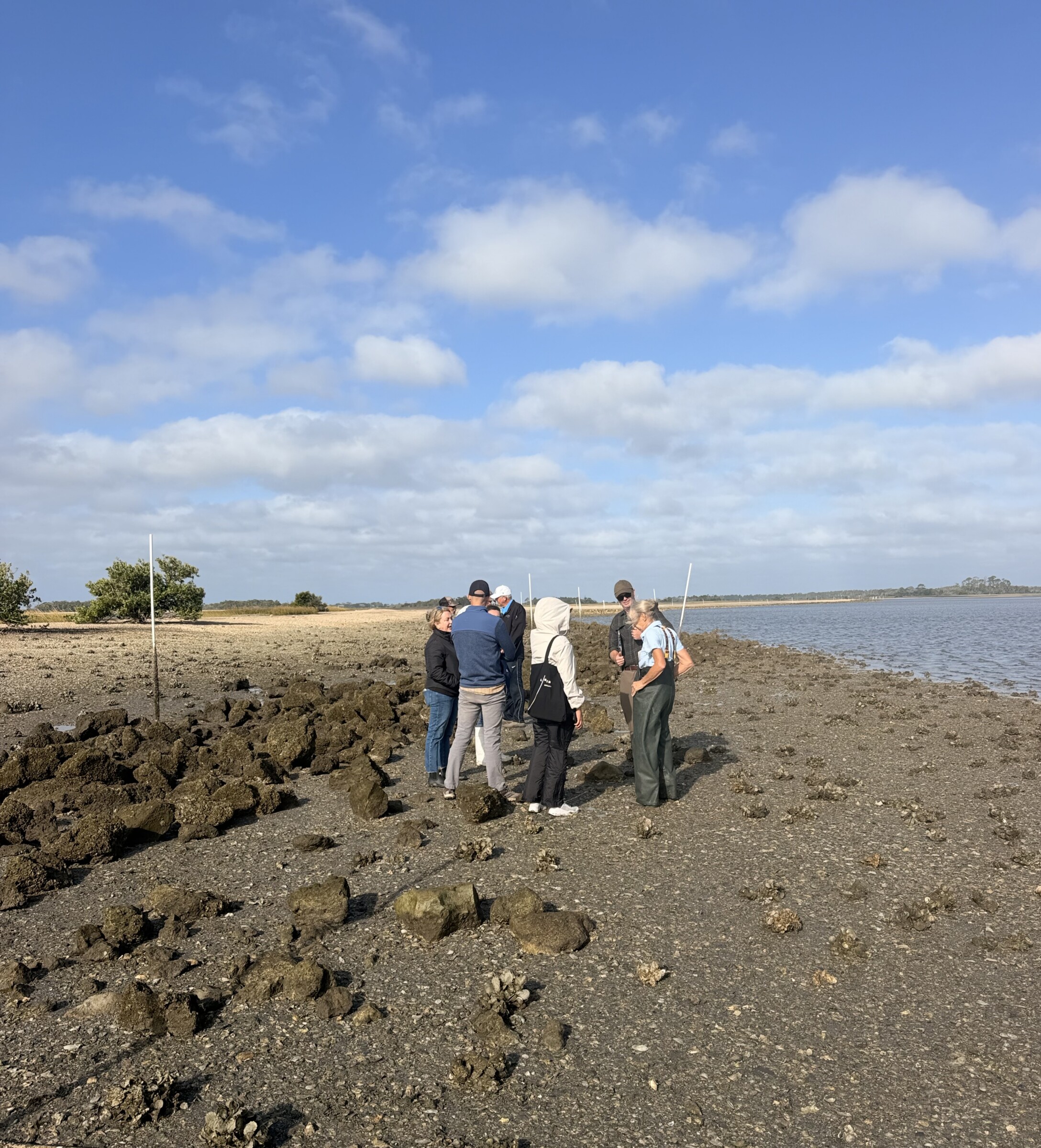
Members of the Gulf Coast Consortium visit the Cedar Key oyster restoration project site at Corrigan Reef.
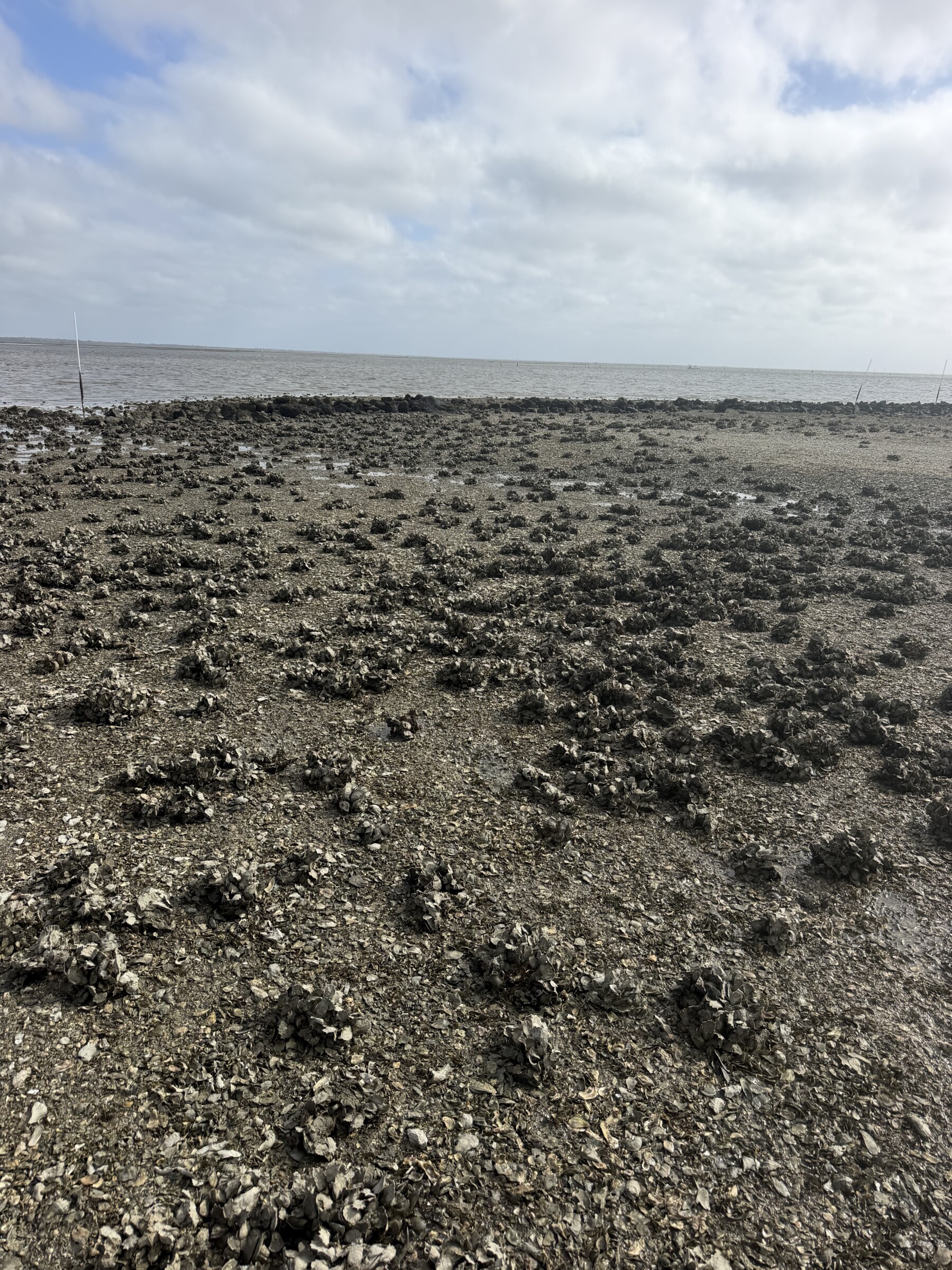
Restored sections of Corrigan Reef show early signs of oyster recruitment.
Oyster reef restoration is undeniably challenging. “There has only been one successful oyster reef restoration project in the Big Bend region before,” says Pilla. “So, we’re trying to replicate its success.”
That was the restoration project at Lone Cabbage Reef in Suwannee Sound, where “adding limestone at the appropriate reef elevation was followed by a large increase oyster (density),” some areas going from “very low levels to more than 200 oysters per square yard within five years.”
The debate over what makes oyster reef restoration fail or succeed is not settled, but some argue that the substrate is key. Oyster ROCKS is following the lead of the Lone Cabbage Restoration in using dolomitic limestone, which also mimics the natural geology of the region. The thinking is that this provides a hard, stable surface that oyster larvae can attach to and grow on.
Having wrapped up the installation, SWCA will monitor the restoration sites in late 2026 and late 2027 to evaluate the project’s success with “spat recruitment,” the process in which oyster larvae begin to attach the surface of the rock.
Ecosystem Services. If the project succeeds in restoring the reef, it will deliver important ecosystem services. Filtering up to 50 gallons of water a day, oysters are known to increase water clarity and quality by removing sediment, potentially harmful microorganisms, and chemicals from the water. The reef will also act as a wave break, reducing the energy of incoming waves and protecting the shoreline from erosion.
Sustainable Fisheries. Beyond improving the habitat for fish and aquatic wildlife, the project also hopes to replenish the oyster population in a way that facilitates long-term harvest opportunities for shoreline communities.
It will take some time to measure the project’s success.
However, one thing is certain: Oyster ROCKS has already made a meaningful impact on the lives of the people involved in the project. With an estimated $870,000 in direct payments to the oystermen and others involved in the project, Oyster ROCKS will generate more income than recent oyster seasons.
“We’ve heard through our client and by word of mouth that it’s been life changing for many of the oystermen involved,” says Pilla. “This community has been hard hit with the closing of various oyster seasons and hurricanes. So, it’s nice to hear that the work is already making a difference.”
See Beyond Policy Change to What Matters for Your Project
Regulatory Radar is a subscription intelligence service that scans the policy horizon for changes that could affect planning, permitting, schedules, and risk, then turns those signals into clear takeaways and practical next steps.