

2026
Comparably’s Best Company Outlook
* Providing engineering services in these locations through SWCA Environmental Consulting & Engineering, Inc., an affiliate of SWCA.


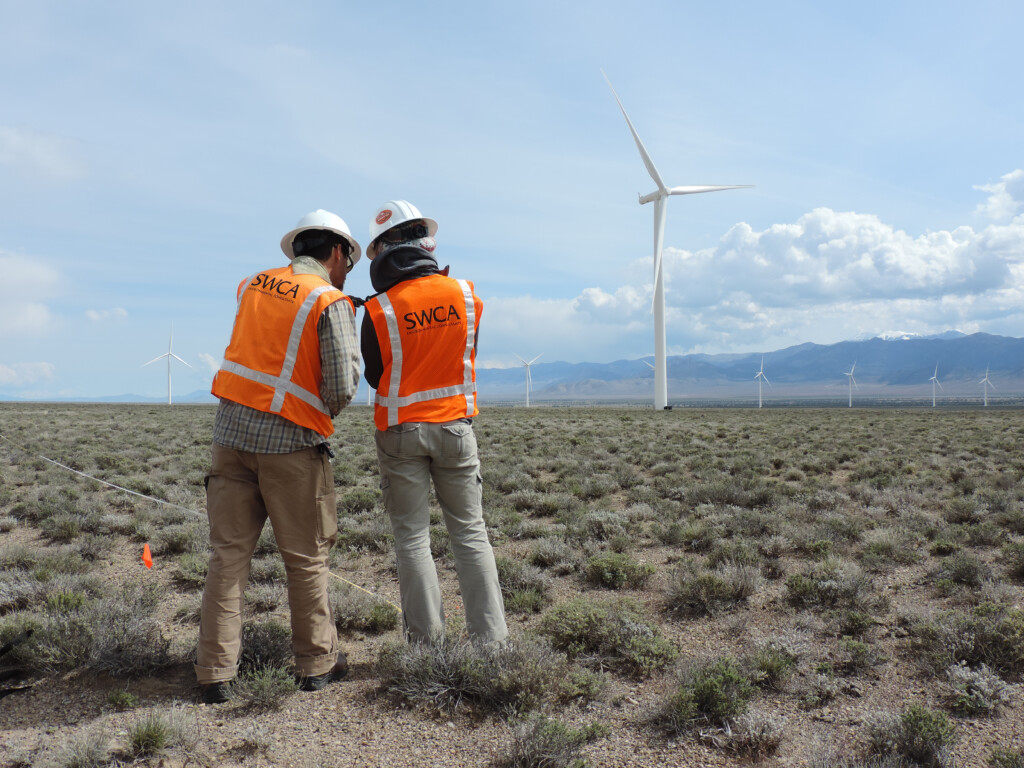
From the experts we hire, to the clients we partner with, our greatest opportunity for success lies in our ability to bring the best team together for every project.
That’s why:
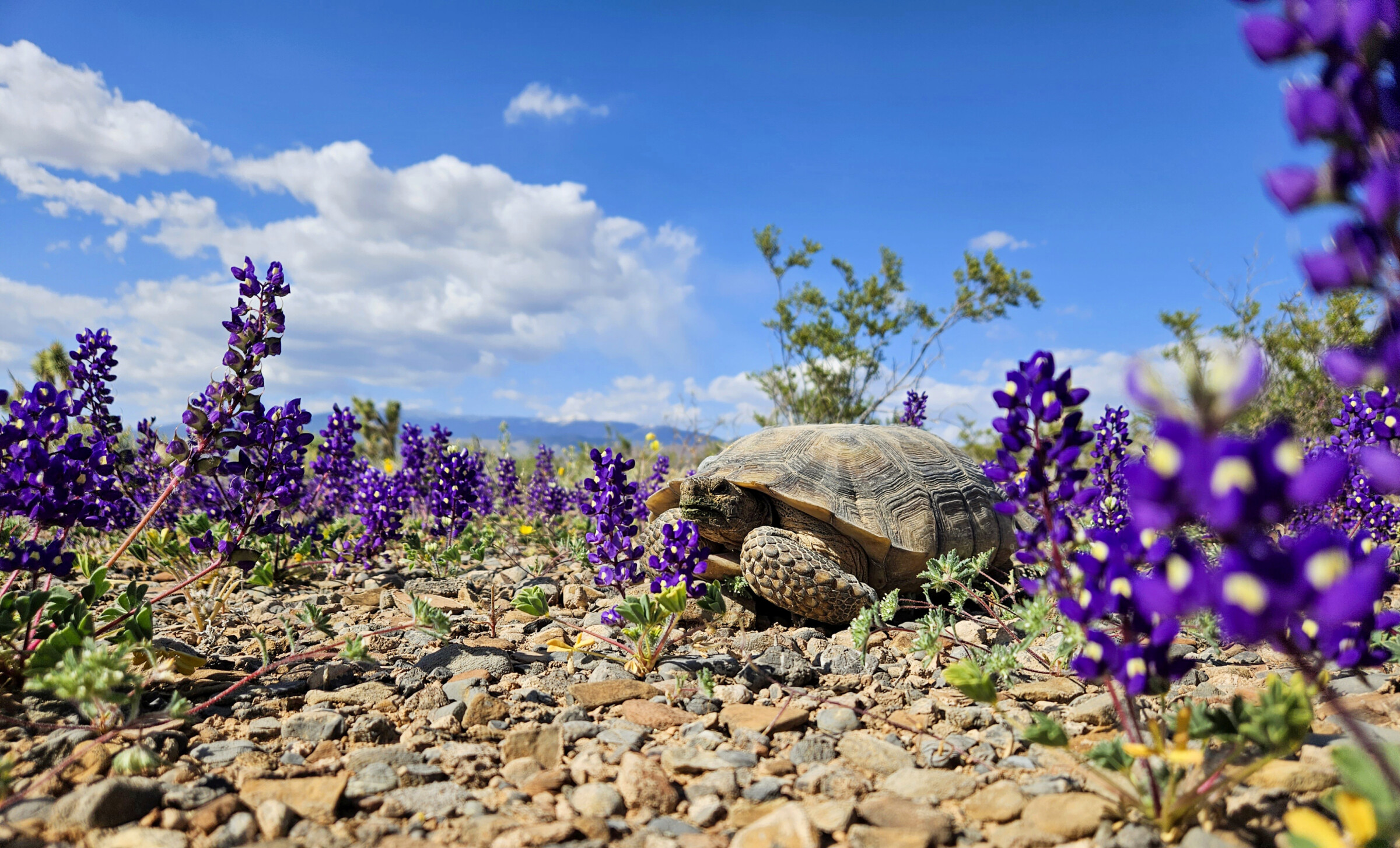
At SWCA, sustainability means balancing humanity’s social, economic, and environmental needs to provide a healthy planet for future generations.
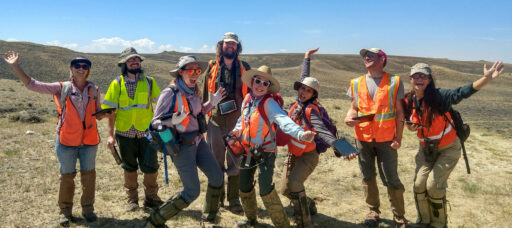
SWCA employs smart, talented, problem-solvers dedicated to our purpose of preserving natural and cultural resources for tomorrow while enabling projects that benefit people today.
At SWCA, you’re not just an employee. You’re an owner. Everyone you work with has a stake in your success, so your hard work pays off – for the clients, for the company, and for your retirement goals.
Stories of SWCA: Paul Burnett
Dani Ryder began her journey with SWCA as a summer 2025 intern in Colorado, where she had the opportunity to connect with some of the local staff. She now serves as a Marketing Assistant, focusing on internal communications and sharing stories from across the company. Originally from Boulder, Colorado, Dani is a student at the University of Arizona, majoring in journalism with a minor in marketing, and is set to graduate in spring 2026.


Stories of SWCA is a new monthly series highlighting the people behind our work. Each feature explores an employee’s background and career journey—what brought them to SWCA, what drives them, and how their work contributes to our mission and impact.
Before heat maps and probability models, Paul Burnett’s career began with bear spray, backcountry surveys, and undocumented wilderness.
In 2002 at the Colorado State University, Paul helped launch a field school outside Yellowstone National Park, working in areas where “nothing had ever been recorded before.” The program is still running today and has logged more than 275,000 artifacts. This experience not only cemented his passion for fieldwork but also sparked his commitment to mentoring others in the field.
Let’s meet Paul.
Paul’s path to SWCA was straightforward, if not a bit unconventional. After graduate school in 2004, he called a few contacts to let them know he was job hunting. One of them was Scott Slessman, now SWCA’s Chief Growth Officer, whom Paul had known in college. “Scott was like, ‘Heck yeah, let’s go.” That was basically his interview.
Within a year of joining SWCA in 2004, Paul was leading excavations on a major Wyoming pipeline project. The site contained “more butchered elk than almost any other site in the lower 48,” he says. “That really got me on this track of doing science and consulting on big projects.”
Then came an unexpected twist. After breaking a bone in his driving foot, Paul began working remotely from his Fort Collins garage from 2004 to 2015. A pool table topped with plywood became a lab bench. At one point, half a dozen team members worked out of the space, including Chris Millington (now in Pasadena) and Naomi Ollie (now Cultural Lead in Sheridan, Wyoming.) “We’d do science all day, then close the computers, and hang out. It was a really fun culture.” That garage chapter helped lay the foundation for SWCA’s growing cultural resources team in Fort Collins.
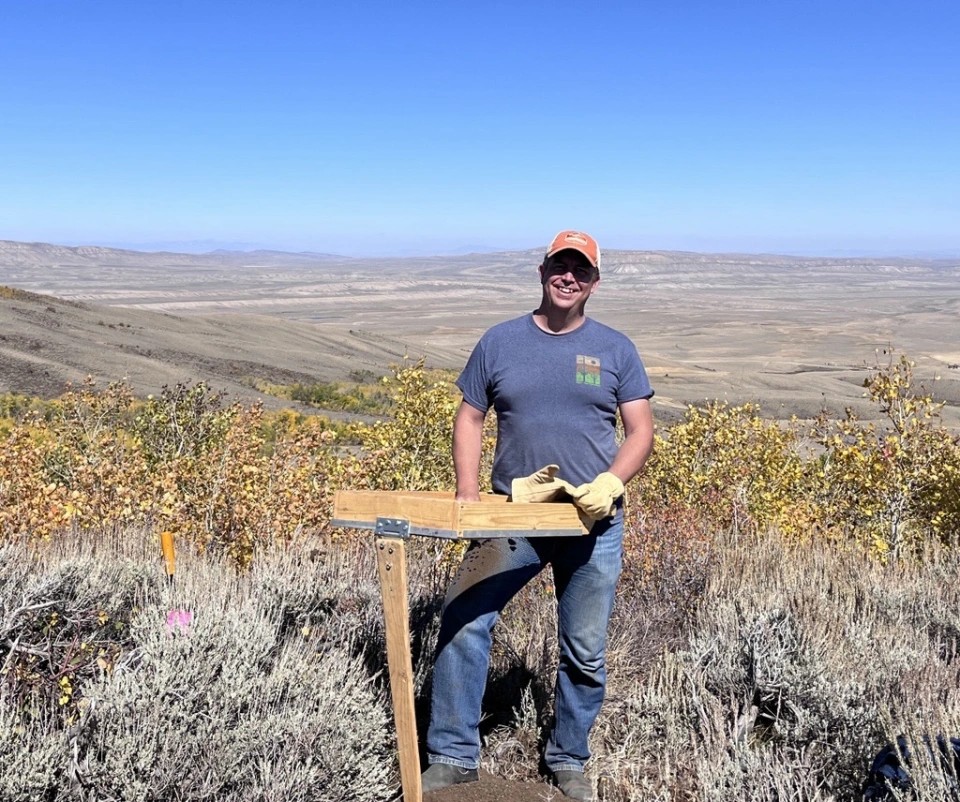
Paul Burnett using a sifter out in the field.
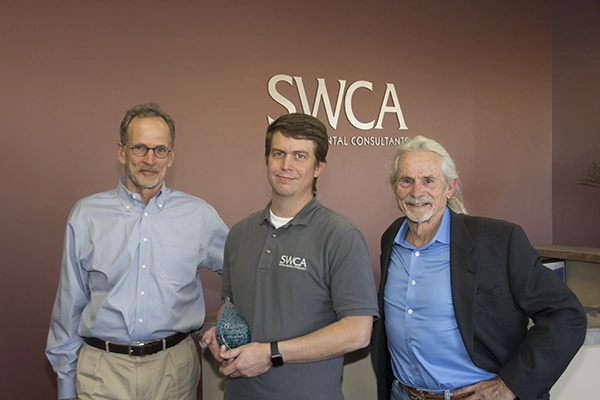
Paul Burnett is first recipient of the Stephen W Carothers Award.
As the company expanded, so did Paul’s career. He moved from team lead to regional leadership roles and later transitioned into a Technical Director position within the first month of 2023. “What shifted for me was realizing you can do cutting-edge science and bring value to clients at the same time.” Paul said. His work has been recognized with both the Lawrence S. Semo Achievement Award and the Stephen W. Carothers Scientific Merit Award.
In fall 2023, SWCA created a new role for a Senior Cultural Resources Technical Director in Field Services. Identifying a need to strengthen engagement with field staff across regions. Paul was hired into this position, followed soon after by Justin Streit, who became our first Senior Natural Resources Technical Director for Field Services. Paul explained:
“The goal wasn’t to audit or critique. It was to observe and identify where we could help.”
Today, as Senior Cultural Resources Technical Director – Field Services, Paul travels across regions working alongside field crews, and works on delivering technical solutions for these teams. For him, employee ownership means ensuring everyone is heard.
“My focus is on field staff, improving the field experience, and giving our field staff, who are core to SWCA’s success, a bigger voice and stronger connections across our organization.”
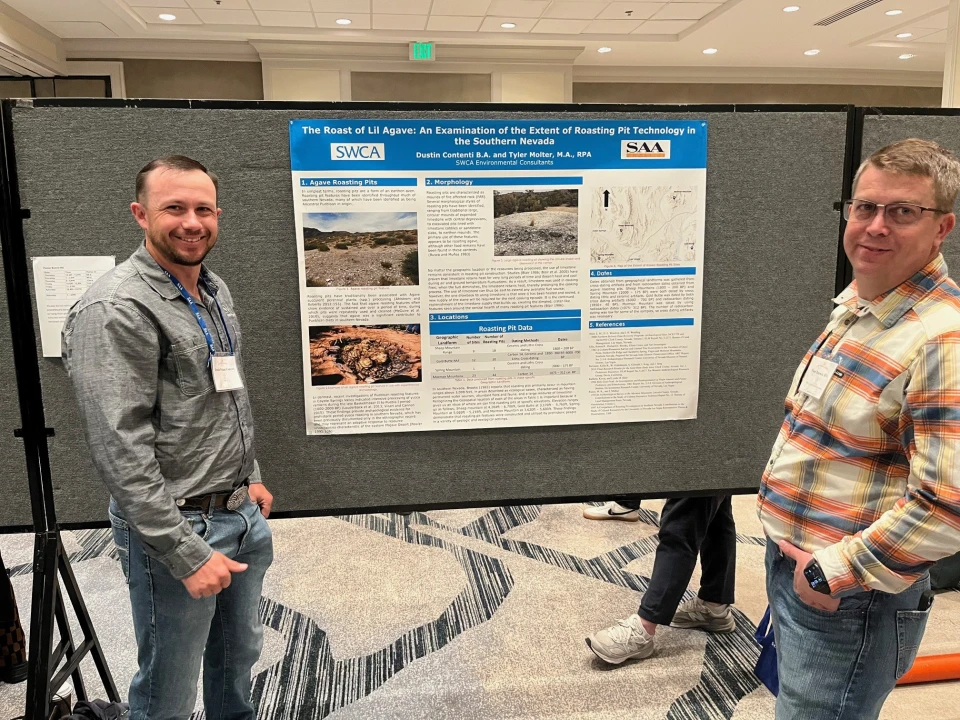
Dustin Contenti poster with Paul Burnett at 2025 SAA Annual Meeting in Denver.