

2026
Comparably’s Best Company Outlook
* Providing engineering services in these locations through SWCA Environmental Consulting & Engineering, Inc., an affiliate of SWCA.


From the experts we hire, to the clients we partner with, our greatest opportunity for success lies in our ability to bring the best team together for every project.
That’s why:

At SWCA, sustainability means balancing humanity’s social, economic, and environmental needs to provide a healthy planet for future generations.
SWCA employs smart, talented, problem-solvers dedicated to our purpose of preserving natural and cultural resources for tomorrow while enabling projects that benefit people today.

At SWCA, you’re not just an employee. You’re an owner. Everyone you work with has a stake in your success, so your hard work pays off – for the clients, for the company, and for your retirement goals.
Site Selection Is a Permitting Decision: Energy, Water, and Land Alignment
Some of the most consequential permitting decisions are not made during the permitting process. They depend on site selection, but that is rarely viewed through the permitting lens.

Ross is a recognized expert in infrastructure permitting with over a decade of experience in project, program, and policy development across federal, state, tribal, and local governments. His work focuses on improving the efficiency and transparency of complex permitting processes while advancing environmental stewardship and meaningful public engagement. Ross helps clients navigate evolving regulatory landscapes by translating policy developments into practical permitting and project delivery strategies.

Kayla Shockley serves as SWCA’s Power and Energy Business Lines Director, steering nationwide energy strategy and driving business growth across renewable energy, transmission, oil and gas, and mining market sectors. With over 17 years of environmental consulting and permitting experience, she has managed complex, multidisciplinary projects across all phases of development. Kayla excels at developing innovative solutions that support client objectives while ensuring regulatory compliance.

Carlos Escalante serves as SWCA’s Senior Generation Business Line Director, bringing over 33 years of experience in renewable energy projects across the nation. His expertise primarily lies in natural resource management, encompassing tasks such as wetland delineations, securing United States Army Corps of Engineers (USACE) 404/Section 10 permits, NEPA compliance, Section 7 coordination, project management, and client engagement.




The data center development cycle moves fast. Capital is committed, land is optioned, and announcements are made, often before the regulatory picture is fully understood. This can lead to costly challenges: redesigns, unexpected mitigation measures, and agency re-consultation.
The good news is that most of these outcomes are avoidable. Not by slowing down, but by asking better questions earlier. Site selection is a primary stage where permitting risk is introduced or reduced.
What follows is a framework for asking these important questions prior to significant capital investment.
A site screen answers the question: Does this site work? A site strategy answers a harder question: What will this site require, and do we have the timeline, the relationships, and the resources to deliver it?
Most developers conduct site screens, but fewer conduct site strategies. The gap between the two is often where projects get into trouble. Typically, it is not that the site was obviously wrong. It’s just that full regulatory picture didn’t come into focus until after the commitment. Constraints may include, but are not limited to wetlands that weren’t mapped, Tribal consultation obligations that weren’t anticipated, air quality designations that change the permitting pathway, or a water source that looks available on paper but is legally constrained or physically vulnerable in ways that only become clear when you dig into the regulatory record.
The goal of pre-commitment diligence is to understand what each site might require, so that go/no-go decisions are made with as much available information as possible, project designs reflect real constraints, and the regulatory strategy is built into the project from the start rather than retrofitted after the fact.
Power availability is often one of the first questions developers ask about a site. It should also be one of the last questions they think they’ve answered, because availability and achievability are not the same thing.
A substation may exist within an acceptable distance. Transmission capacity may appear to be present. But the path from available power to delivered power runs through interconnection queues, utility coordination processes, and in many cases federal regulatory jurisdiction. Each of these has its own timeline and its own set of constraints.
Interconnection queue position matters enormously. In markets like Northern Virginia, PJM queue backlogs have extended some project timelines by years. The move toward behind-the-meter generation, gas turbines, fuel cells, and other on-site generation sources, has emerged in part as a response to those constraints. But behind-the-meter generation introduces its own regulatory complexity: air quality permitting, fuel supply infrastructure, potential FERC jurisdiction, and in some cases federal environmental review, depending on project configuration and land status.
Substation proximity is a necessary but insufficient condition for site viability. What matters is whether the transmission infrastructure required to serve the project can be permitted, financed, and constructed within the project’s timeline. That question requires regulatory analysis, not just desktop power mapping.
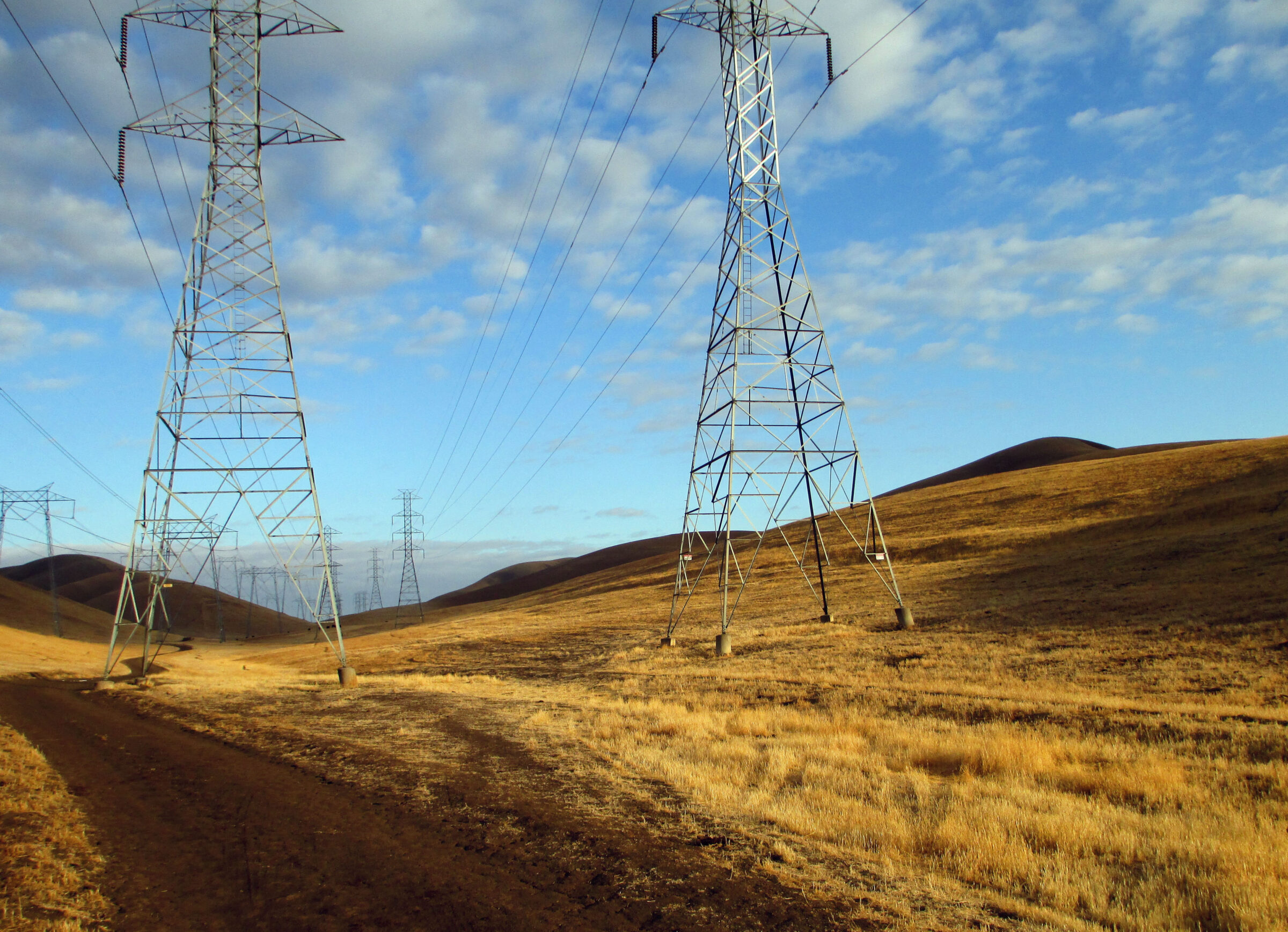
Transmission lines and towers at a confidential site in California.
Water is the constraint that data center developers most consistently underestimate, not because they ignore it, but because they conflate physical presence with regulatory and physical reliability.
Cooling demand at hyperscale is significant. A large campus may require millions of gallons per day. More than water’s presence, the questions are whether it can be legally accessed in the volumes required, whether that access is defensible under state water rights law, and whether the source itself is physically reliable over the project’s operational lifetime.
That last dimension is increasingly important. Aquifer depletion, multi-year drought cycles, and intensifying competition for water from municipal, agricultural, and industrial users are changing the long-term viability of sites. Some sites that are viable today may not be viable in ten years. This is not a speculative risk. It is a documented trend in most western markets and in growing data center corridors across the Southeast and Mid-Atlantic. No permit resolves a physical availability problem. If the source disappears, the project is no longer viable.
State water rights regimes vary significantly and add another layer of complexity. Prior appropriation states in the West operate under a fundamentally different legal framework than riparian rights states in the East. Some states have enacted or are considering additional regulatory requirements specifically targeting data center water consumption. Understanding the regulatory regime, and where it is likely to move, should be a key site selection input, not a permitting afterthought.
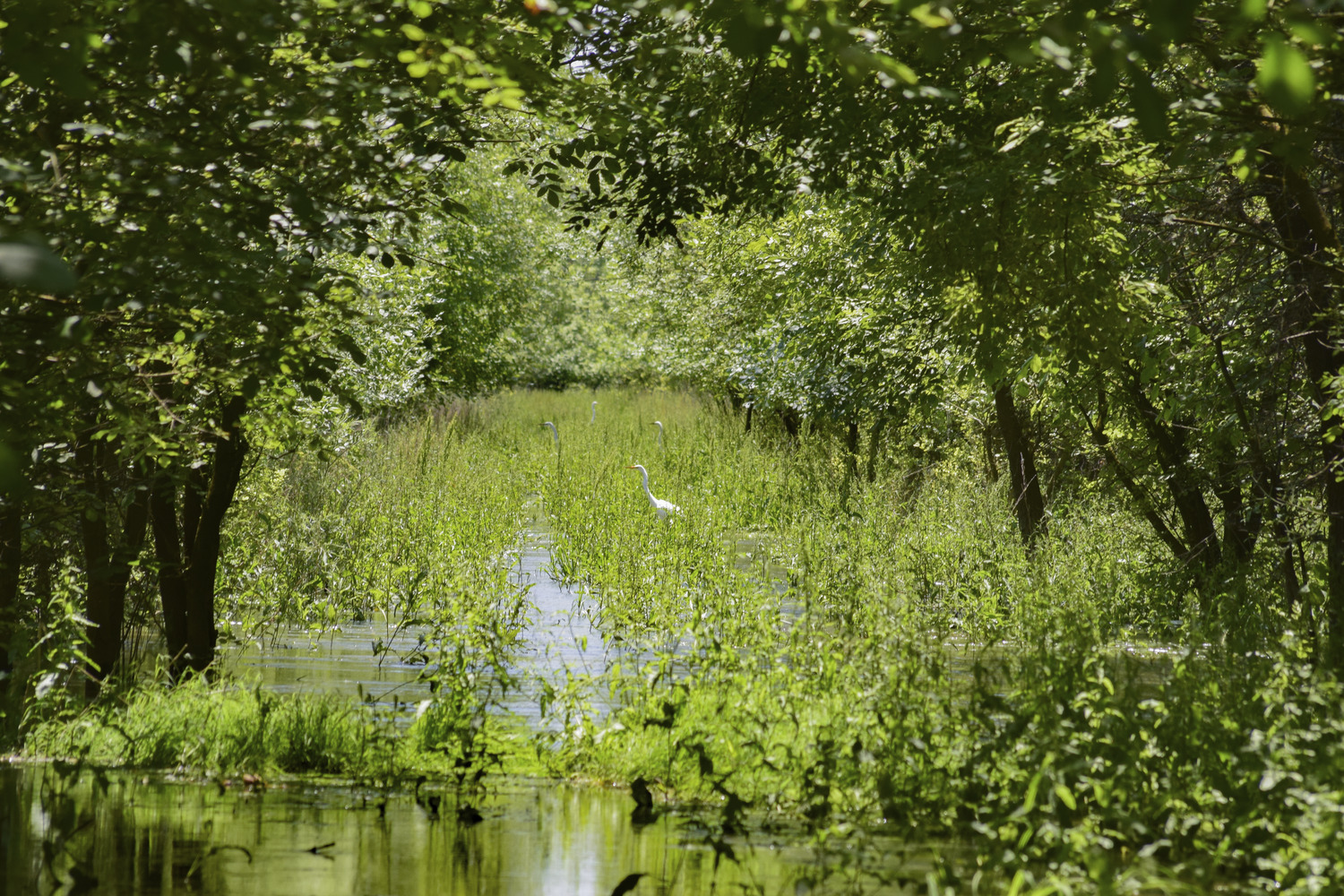
Great egrets wading in flood waters on a wetland restoration project.
Environmental desktop review is the foundation of site-level permitting diligence. Before a shovel touches the ground, before a site is committed, there is a significant amount that can be known about what the ground will require.
Wetlands, floodplains, and jurisdictional waters are among the most common sources of project constraint and cost escalation. The presence of Waters of the United States on or adjacent to a site triggers U.S. Army Corps of Engineers jurisdiction and, depending on impact magnitude, could require individual permit review rather than the streamlined nationwide permit process. Identifying these resources at the desktop level, before committing to a site, allows the project team to design around them, sequence the acquisition to avoid the most constrained portions of a site, or make an informed decision about whether the mitigation burden is acceptable.
Biological and cultural resource sensitivity varies enormously by geography and is not always obvious from a map. Desktop review identifies proximity to listed species habitat, critical habitat designations, migratory corridors, and known cultural and historic resource areas. The significance of this work is not just regulatory; it is strategic. A site that appears clean on a real estate screen may carry biological or cultural constraints that add months to an environmental review timeline or require consultation with resource agencies that have their own processes, timelines, and documentation standards.
In western markets, wildfire risk has become a first-order siting consideration. Proximity to high fire hazard severity zones affects permitting and triggers additional resilience requirements in some jurisdictions. It can also shape long-term operational liability, insurance availability, and infrastructure design standards. Western developers who aren’t building wildfire risk into their site screens are working with an incomplete picture.
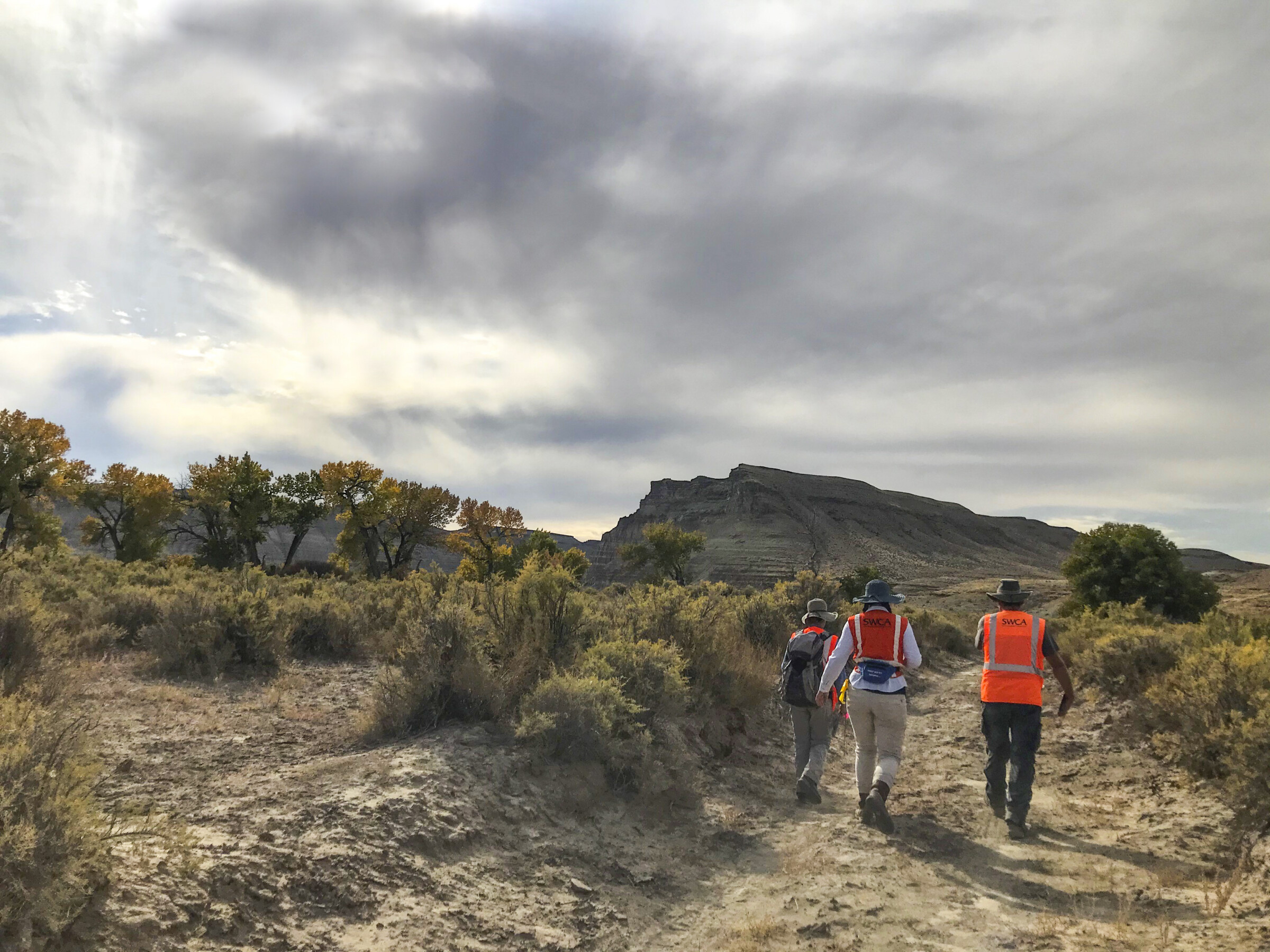
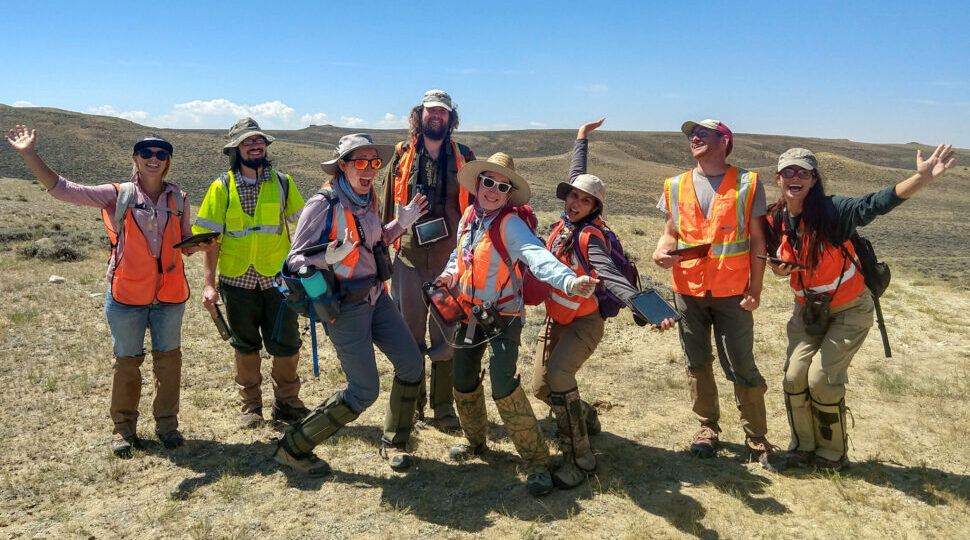
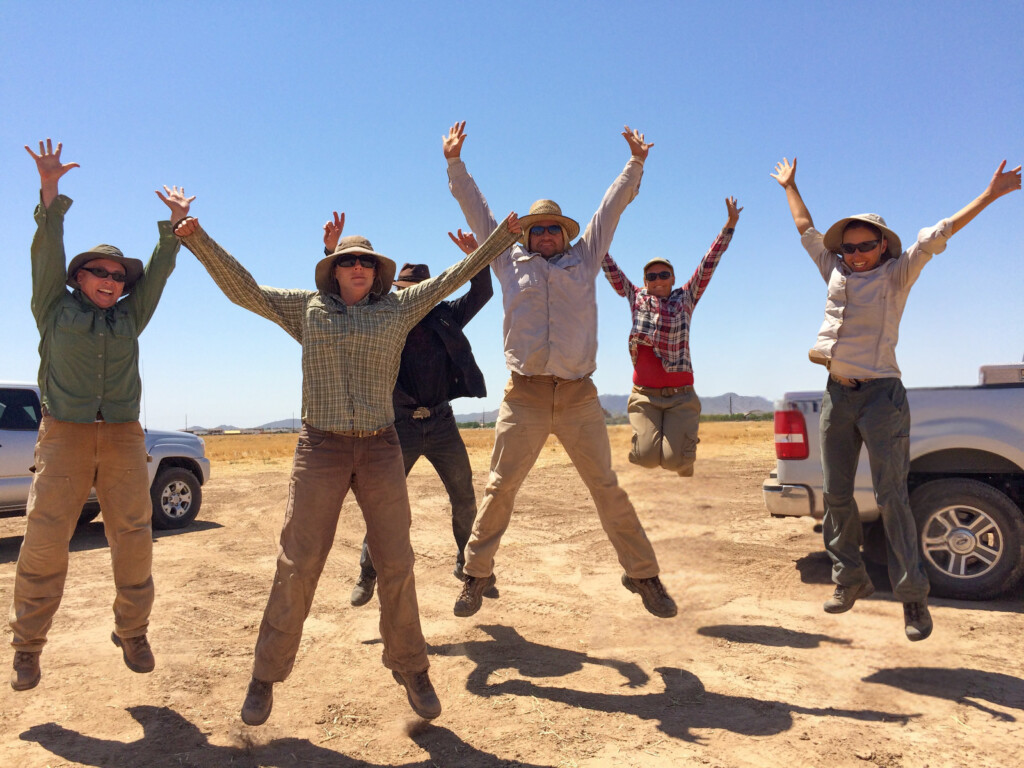
SWCA staff heading back to the trucks after a long day of fieldwork.
Tribal consultation is not a permitting step. It is a relationship, and like all relationships, it is substantially easier to build before you need something than after.
Federally recognized Tribes exercise sovereign authority and government-to-government consultation under Section 106 of the National Historic Preservation Act, the National Environmental Policy Act, and other federal statutes which carry specific procedural requirements and timelines. If not anticipated early, these obligations can compress an otherwise manageable regulatory schedule into a critical path constraint. Desktop review can identify Tribal land adjacency, treaty areas, and known traditional use areas that signal potential consultation obligations. But engagement requires more than identification.
Tribal nations may have independent interests in a proposed project that extend well beyond the formal consultation process. Early informal engagement—before applications are filed and designs are locked—creates the opportunity for genuine dialogue that can shape the project and build credibility with Tribal governments. Developers who approach Tribal engagement as a compliance checkbox routinely discover that their task is more complex than they anticipated.
Community engagement follows the same logic. Environmental justice screening at the site selection stage—for example, assessing community demographics, proximity to existing industrial development, history of environmental burden, and organizational capacity—can help developers understand the context that their project will enter. With this understanding, the project team can design an engagement strategy that is appropriate to that community. Projects that arrive in communities without that understanding, particularly in communities with histories of industrial development and limited input on land use decisions, are increasingly finding organized opposition waiting for them.
Foreign funding disclosure requirements and evolving ESG frameworks are adding additional dimensions to community and stakeholder engagement that are increasingly relevant at the site selection stage. Knowing those requirements in advance, and understanding how they interact with local political dynamics, is part of a complete site picture.
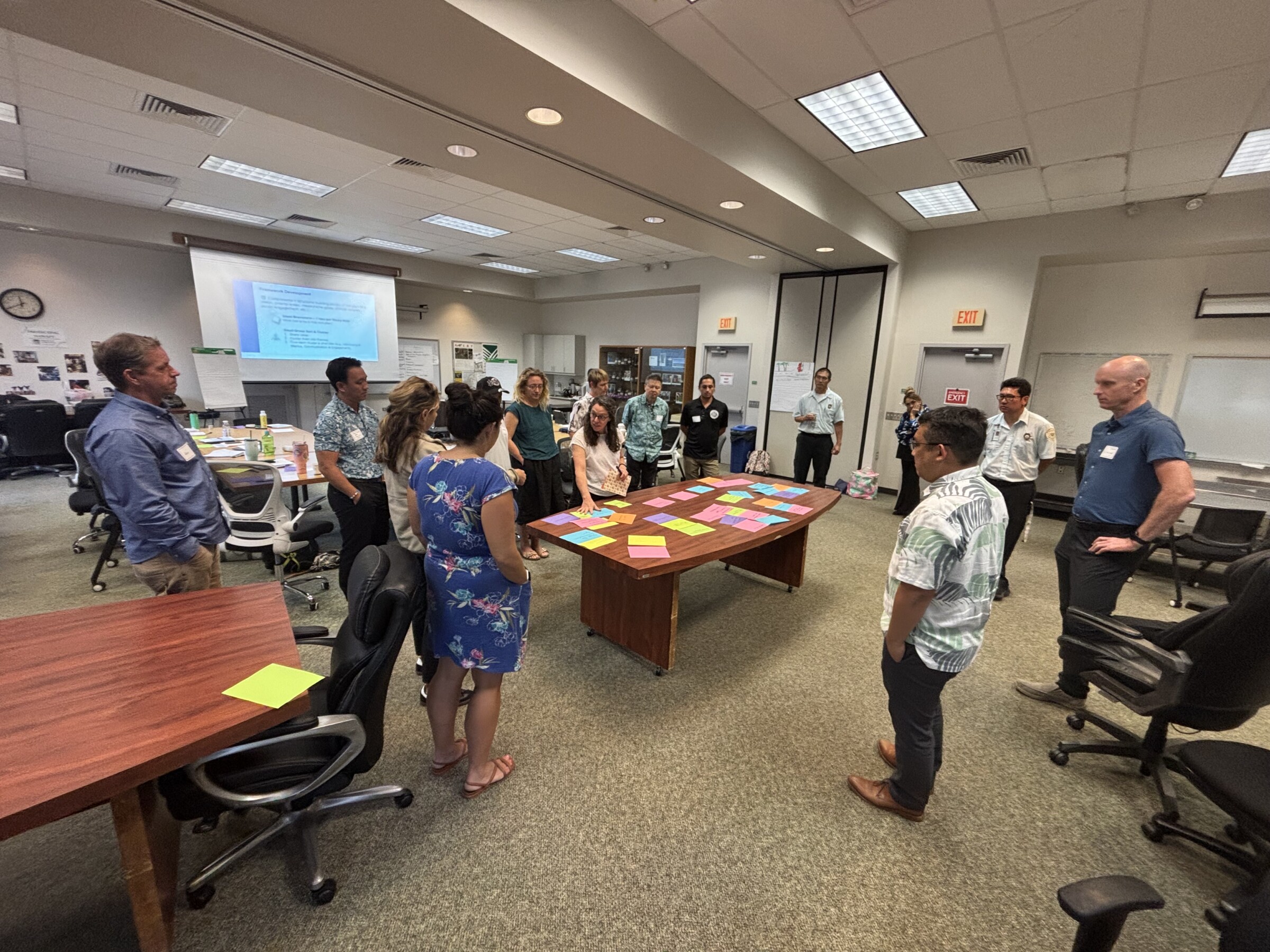
SWCA facilitates an in-person stakeholder meeting as part of a strategic planning process.
Air quality designation is one of the most consequential and least-discussed site selection variables in data center development. Whether a site is located in an attainment or non-attainment area for criteria pollutants directly shapes the permitting pathway, the regulatory burden, and the cost of bringing generation and backup power online.
On-site and backup generation, which are increasingly common as behind-the-meter solutions, introduce emissions that must be permitted. The critical question at the site selection stage is whether the anticipated generation configuration will trigger major source thresholds under the Clean Air Act’s Prevention of Significant Deterioration or New Source Review programs. Projects that cross those thresholds face substantially more complex permitting processes, longer timelines and, in non-attainment areas, offset requirements that can be difficult and expensive to satisfy.
Cumulative airshed loading is an emerging concern in concentrated data center markets. In corridors where multiple large facilities are being developed in proximity, like Northern Virginia, regulators and communities are beginning to assess the aggregate impact of the data center clusters on air quality. Developers who conduct only project-level air quality screening may find themselves navigating a regulatory environment that has shifted by the time they file permits.
State and local air quality variability makes jurisdiction-specific desktop screening essential. A generation configuration that is straightforwardly permittable in one state may require substantially more complex review in another. California represents the most distinct regulatory environment with CEQA, CARB, and local air district authorities creating a layered permitting landscape that requires early, jurisdiction-specific analysis. Understanding where a site falls in that landscape before committing capital is materially different from discovering it afterward.
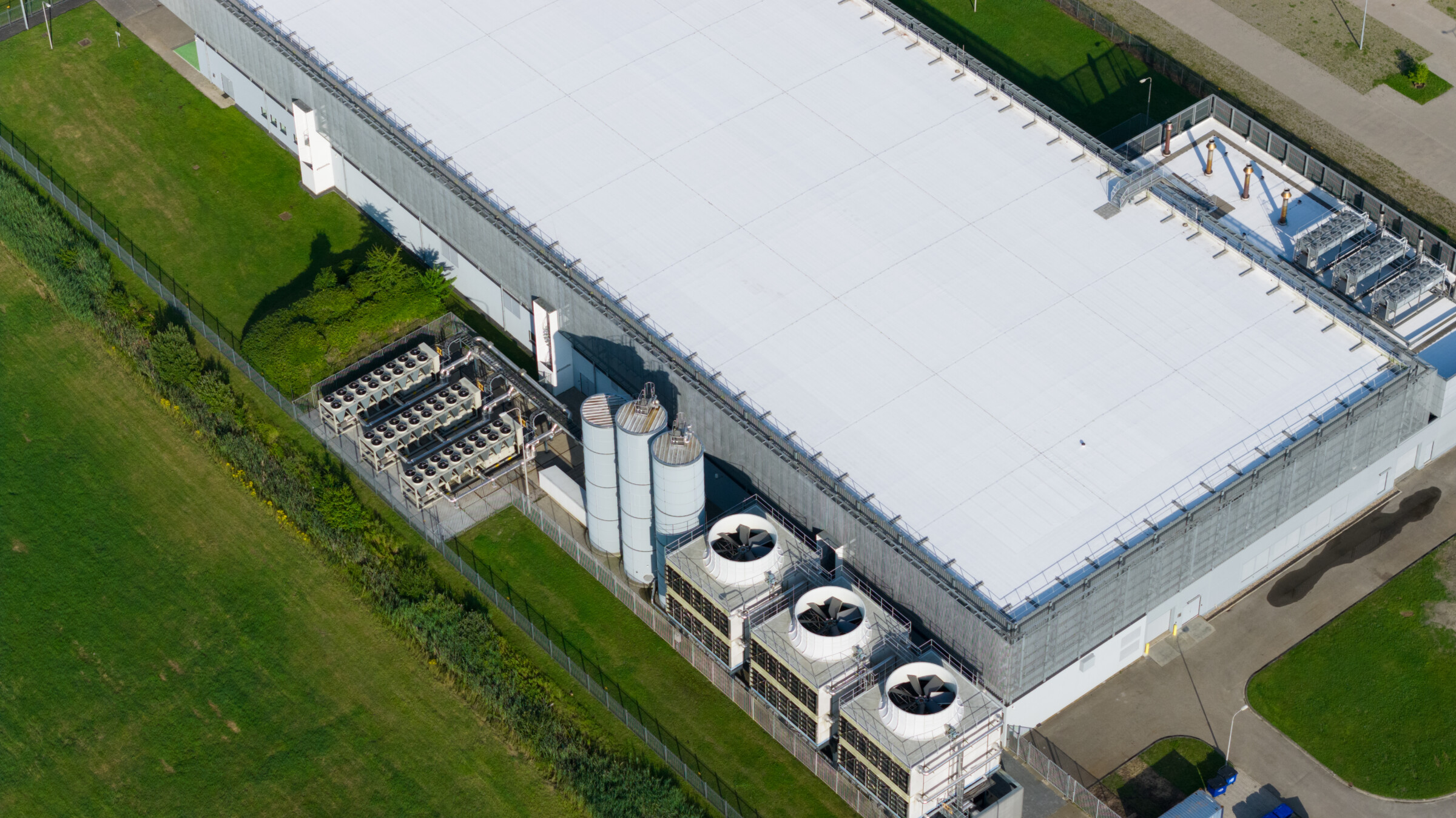
Aerial view of a data center.
A site selection can benefit greatly from taking the time to identify which agencies will have authority over a project and what their current posture looks like.
Federal, state, and local agency postures vary by project type, geography, and the specific resources an infrastructure a project will affect. Political posture matters as much as regulatory authority. An agency that is currently experiencing permitting backlogs, staffing constraints, or leadership transitions will process applications differently than one operating at full capacity with an established data center review framework. Understanding those dynamics before committing to a site allows the project team to build realistic timelines, identify where pre-application engagement will pay the highest dividends, and sequence their regulatory strategy accordingly.
Incentive structures require careful analysis. State and local tax incentives for data center development are widely available and frequently influence siting decisions. But incentives and regulatory burden can work at cross purposes. Some of the most aggressive incentive programs exist in jurisdictions that have also enacted the most demanding permitting and transparency requirements. In addition to the economic benefit, a complete site analysis should examine the regulatory environment that comes with it.
Developers can do a lot to protect their budget and schedule by treating permitting risk as a scored variable within the site comparison process rather than a separate concern to be addressed afterwards.
That means assigning relative weight to environmental desktop findings, water availability and regulatory risk, air quality designation, Tribal and community engagement complexity, jurisdictional processing capacity, and interconnection achievability, alongside traditional concerns (real estate, power, and cost variables). Sites that score well in terms of real estate and power but carry significant, unresolved permitting risk are not the same as sites that score well across the full range of concerns.
Portfolio site strategy follows from this logic. Developers who screen more sites, and screen them more rigorously, are better positioned to identify the sites that offer genuine regulatory advantage. Though it may look like an inefficient use of resources at first glance, opening options across a portfolio of sites in various stages of diligence is a competitive posture.
SWCA’s role in this process is as an upstream strategic partner. We bring regulatory intelligence, environmental expertise, Tribal and community engagement capability, and jurisdictional knowledge into the site selection process before capital is committed. And we carry that integrated perspective through every subsequent phase of project delivery. To connect with our data center permitting experts, see the contact information in the author profiles accompanying this article.