

2026
Comparably’s Best Company Outlook
* Providing engineering services in these locations through SWCA Environmental Consulting & Engineering, Inc., an affiliate of SWCA.


From the experts we hire, to the clients we partner with, our greatest opportunity for success lies in our ability to bring the best team together for every project.
That’s why:

At SWCA, sustainability means balancing humanity’s social, economic, and environmental needs to provide a healthy planet for future generations.
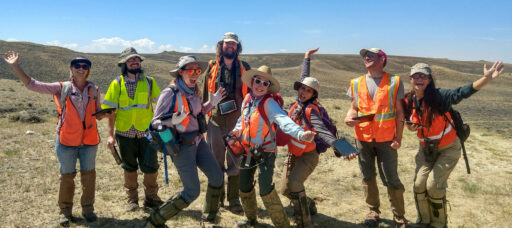
SWCA employs smart, talented, problem-solvers dedicated to our purpose of preserving natural and cultural resources for tomorrow while enabling projects that benefit people today.

At SWCA, you’re not just an employee. You’re an owner. Everyone you work with has a stake in your success, so your hard work pays off – for the clients, for the company, and for your retirement goals.
Bridging the Gaps: Cross Agency and Stakeholder Coordination for Permitting Success
Most permitting problems are not about individual agencies. They’re about what happens between them.

Ross is a recognized expert in infrastructure permitting with over a decade of experience in project, program, and policy development across federal, state, tribal, and local governments. His work focuses on improving the efficiency and transparency of complex permitting processes while advancing environmental stewardship and meaningful public engagement. Ross helps clients navigate evolving regulatory landscapes by translating policy developments into practical permitting and project delivery strategies.

Kayla Shockley serves as SWCA’s Power and Energy Business Lines Director, steering nationwide energy strategy and driving business growth across renewable energy, transmission, oil and gas, and mining market sectors. With over 17 years of environmental consulting and permitting experience, she has managed complex, multidisciplinary projects across all phases of development. Kayla excels at developing innovative solutions that support client objectives while ensuring regulatory compliance.

Carlos Escalante serves as SWCA’s Senior Generation Business Line Director, bringing over 33 years of experience in renewable energy projects across the nation. His expertise primarily lies in natural resource management, encompassing tasks such as wetland delineations, securing United States Army Corps of Engineers (USACE) 404/Section 10 permits, NEPA compliance, Section 7 coordination, project management, and client engagement.




Large data center projects don’t fail in permitting because a single agency says “no .” They may run into a political “no” that plays out within community hearings (more on that below). But when permits stall in typical agency processes, it’s usually because multiple agencies are waiting on something different with little coordination between them – the system doesn’t encourage coordination. It’s also typical that the project team is managing each process as if it existed in isolation. The result is a timeline that has nothing to do with what any individual permit processing time would suggest, and that’s because delays don’t add up, they multiply.
The developers who move projects through permitting most effectively understand something that others learn the hard way: coordination is not an administrative task. It is a regulatory strategy. And like all strategies, it must be built before it’s needed, not assembled in response to a crisis.
Most permitting failures are not the result of a single decision. They are the product of accumulated delays, processes engaged in the wrong order, relationships that weren’t established before they were needed, and applications filed before the groundwork was in place to support them.
The most common mode of failure treats permitting as a sequential process when multiple steps should be engaged in parallel. A project team waits for one agency’s approval before engaging the next, treating each permit as a discrete transaction rather than an interdependent element of a larger system. This extends the timeline far beyond what the individual permit processing times would suggest.
The cascade effect compounds this. When a NEPA document slips because baseline data wasn’t collected early enough, every downstream permit that depends on that document is at risk of slipping with it. The Army Corps Section 404 authorization, ESA Section 7 consultation, state water quality certification, all queue behind it. The project doesn’t just lose the time the NEPA review slipped. It loses all the time those downstream processes would have been running in parallel.
Poor application quality is the most avoidable mode of failure. Agencies that receive incomplete or poorly prepared applications don’t simply ask for more information, but they pause their internal clocks. Requests for additional information reset timelines, trigger additional public comment periods in some jurisdictions, and consume the goodwill of agency staff who might otherwise have been willing to work through issues informally. A well-prepared application is not just a regulatory requirement. It is a relationship management tool.
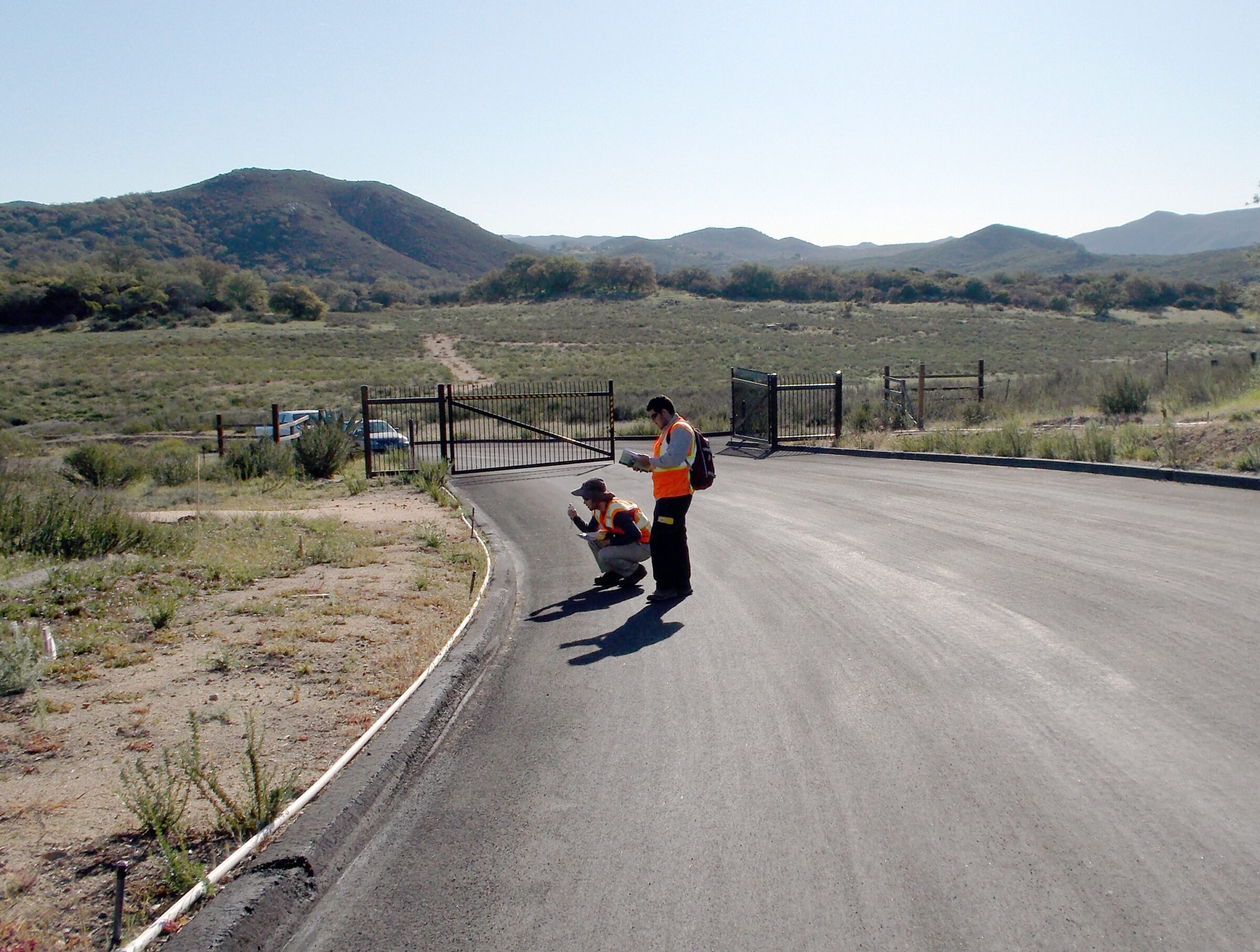
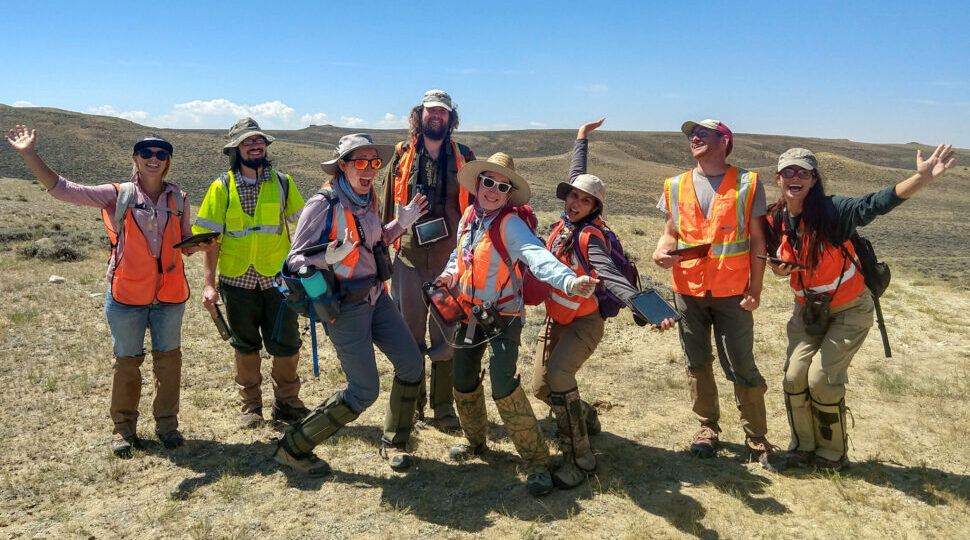
SWCA team members collecting data out in the field.
Before a coordination strategy can be built, the full regulatory stack must be mapped. For large scale data center projects that stack is more complex than most project teams anticipate.
At the federal level, the Army Corps of Engineers has jurisdiction over impacts to Waters of the United States, including wetlands. The U.S. Fish and Wildlife Service and NOAA Fisheries administer the Endangered Species Act. The Federal Energy Regulatory Commission has jurisdiction over certain interconnection agreements and energy infrastructure. The Department of Energy and the Bureau of Land Management are increasingly relevant as data center development expands onto or adjacent to federal lands. The U.S. Forest Service may be implicated by transmission corridors or access routes. Each agency has its own statutory mandate, its own review timeline, and its own internal culture. None of them coordinate their processes automatically.
State Historic Preservation Offices and Tribal Historic Preservation Offices are not federal agencies, but they are essential actors in the Section 106 consultation process under the National Historic Preservation Act. Section 106 touches approximately 120,000 projects each year, and it runs parallel to NEPA, not as a subprocess of it. Projects that treat Section 106 as a NEPA subtask routinely discover that SHPO and THPO consultation extend well beyond the NEPA schedule. Critically, while SHPOs and THPOs have 30 days to respond to formal findings and determinations, there is no regulatory clock on consultation itself and the steps that identify historic properties, assess effects, and resolve adverse effects can take considerably longer, particularly when cultural resources are complex or contested.
Federally recognized Tribes occupy a distinct position in the regulatory stack. Their authority is sovereign, not advisory. Government-to-government consultation is a legal requirement under multiple federal statutes, and Tribes engage those obligations through their own deliberative process and on their own timeline. Projects that engage Tribes early, genuinely, and with respect for their sovereign authority consistently achieve better outcomes than those that treat Tribal consultation as a procedural step.
State and local jurisdictions add a layer of complexity that varies enormously by geography. Some states have consolidated permitting processes for large infrastructure projects. Others maintain fragmented authority across multiple agencies with overlapping jurisdictions. Local governments retain authority over land use, zoning, and in many cases water and air quality permitting that is not preempted by state or federal law. Political posture toward data center development varies significantly across jurisdictions, and that posture shapes how agencies exercise their discretionary authority in ways that don’t show up in any statute or regulation.
When it comes to strategy, not all permits are equal. The critical path in a complex permitting process is defined by the approvals that take the longest, carry the most downstream dependencies, and offer the least flexibility in timing. Identifying those approvals and building the coordination strategy around them is the core discipline of permitting management.
For most large-scale data center projects, the long pole in the tent is one of three things: federal environmental review under NEPA, Tribal consultation, or utility interconnection. These processes share common characteristics. They cannot be compressed simply by allocating more resources to them. NEPA timelines are governed by statutory requirements, public comment periods, and agency processing capacity. Tribal consultation is governed by the Tribe’s own deliberative process. Interconnection timelines are governed by queue position and utility operational constraints.
The implication is not just that these processes should be started early, but that the decisions that affect their scope and complexity need to be made before they start. A project that enters NEPA review without complete baseline data, a defined alternatives analysis strategy, and pre-established agency relationships will take longer than one that arrives prepared. Moreover, that difference is not recoverable once the process is underway.
Established under the Fixing America’s Surface Transportation Act (December 2015) and extended to qualifying data center projects under Executive Order 14318 (July 2025), FAST-41 offers a transparency and coordination mechanism worth understanding. Under EO 14318, the Executive Director of the Federal Permitting Improvement Steering Council may designate a qualifying project as a “transparency project” within 30 days of agency identification and publish it on the federal Permitting Dashboard along with a schedule for expedited review. Designation as a “covered project” creates additional accountability mechanisms for agency processing timelines. It is not a guarantee of timeline compression and there are many instances where data center developers should not pursue coverage under FAST-41, but it is a tool worth evaluating for projects of sufficient scale and complexity.
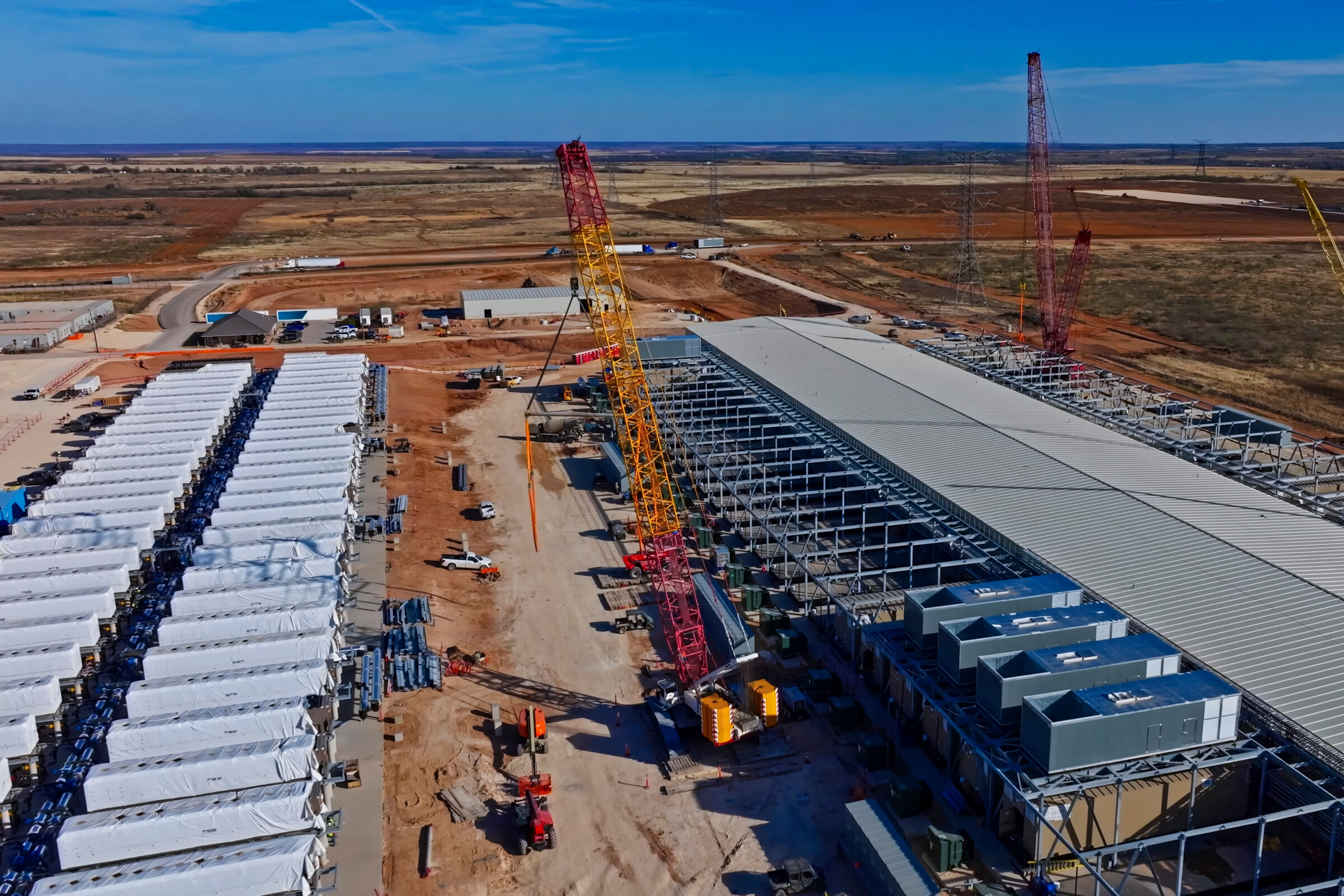
Aerial view of data center construction with BESS batteries and red cranes
Few investments pay higher dividends in a complex permitting process than meeting with the agencies that will review the project before an application is filed. Pre-application meetings serve multiple purposes simultaneously. They introduce the project to agency staff before it arrives as a formal application. They surface potential concerns early enough to be addressed in project design. They establish a point of contact within the agency. And they signal that the applicant is organized, prepared, and capable of managing a complex project.
The credibility established in pre-application engagement is not abstract. Agency staff who have met the project team, understand the project, and believe the applicant is competent and transparent process applications differently than those who encounter a project for the first time through a submitted document. That difference shows up in the quality of informal communication during review, the willingness of staff to flag issues before they become formal deficiency notices, and the speed with which follow-up requests are handled.
Credibility is also lost in specific and predictable ways. When applications are filed before the project is ready; commitments are made in pre-application meetings that don’t appear in the application itself; baseline data is incomplete or inconsistent with what was represented informally; or agency staff discover that representations made to them were inaccurate (even if inadvertently), they extend less benefit of the doubt to everything that follows. That loss of credibility is difficult to recover, and it not only affects the current project but future projects in the same jurisdiction.
The difference between being known by an agency and being trusted by one is built over years of consistent, credible delivery. It is one of the least visible but most consequential assets an environmental consulting partner brings to a project.
Community concerns that escalate into organized opposition have become a direct permitting risk for data center projects. This is not a reputational concern to be managed by communications staff after the fact, but is the cause of permit denials, project delays, and in some cases outright project cancellation.
The Georgia and North Dakota examples from the introduction of this series illustrate the pattern clearly. In both cases, the problem wasn’t the project. It was how the project entered the community. Developers who secured land under NDAs, announced projects without prior engagement, and arrived in communities with no established relationships found organized opposition waiting for them. The regulatory consequences were significant: moratoriums, new review requirements, and project-level scrutiny that added months to timelines that were already under pressure.
Early understanding of the organizations and individuals with an interest in the project is the foundation of an effective engagement strategy. Not every entity has equal standing or influence, and each will have different interests. Some have formal standing in regulatory processes: Tribal governments, adjacent landowners, downstream water users. Others have political influence without formal standing: elected officials, community organizations, environmental advocacy groups, and individual leaders. Understanding community interests and roles before engagement begins allows the project team to sequence outreach appropriately to avoid surprising community members and decision makers. Early understanding also facilitates direct communication, versus allowing news to travel informally by word of mouth.
Inaccurate information about a project’s resource requirements and community impacts can circulate widely and quickly in today’s environment, often before the developer has had an opportunity to respond. The most effective counter is not reactive correction. It is proactive, transparent engagement. Developers who publish clear and accurate information about their projects, engage openly with the community, and make commitments they can document and verify will earn more trust from the community. As a result, they will be more resilient than those who treat project information as proprietary until disclosure is required.
Environmental justice considerations add complexity that is increasingly consequential. As federal EJ frameworks have been scaled back under the current administration, local EJ organizations are more attentive than ever to potential threats in their communities. California, Massachusetts, and several other states have maintained or strengthened their state level EJ requirements. In those jurisdictions, community engagement is not just a strategic choice; it is a regulatory obligation. And the adequacy of that engagement will be evaluated by agencies and, potentially, by courts.
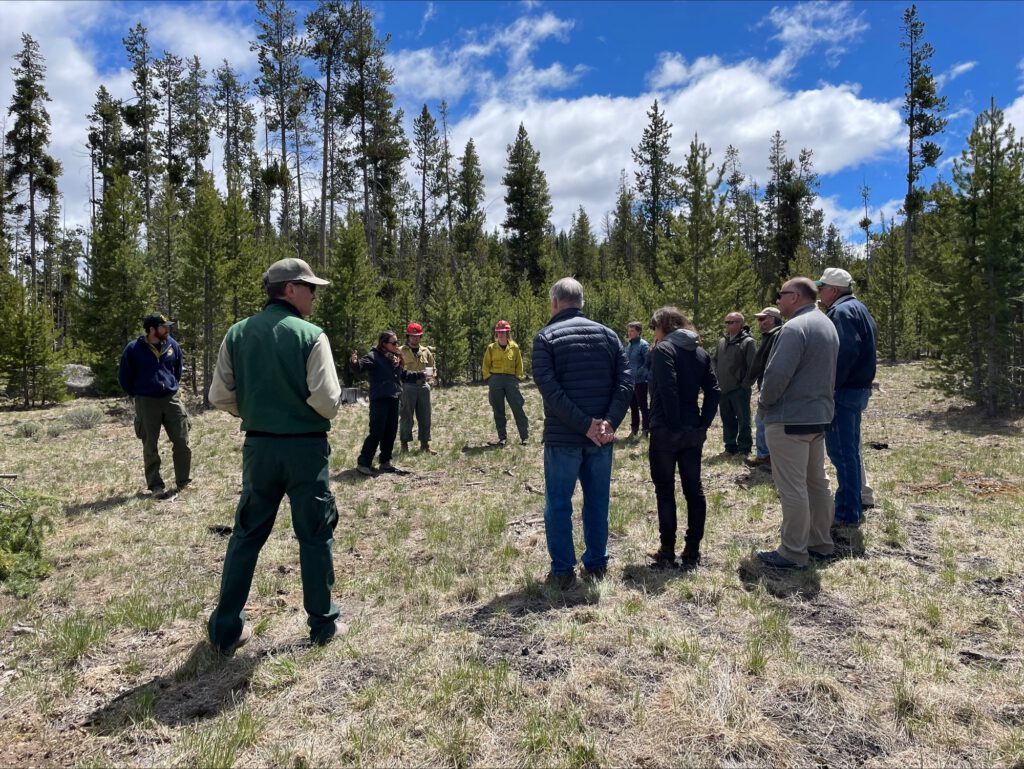
Community meeting and wildfire planning
Even well managed permitting processes encounter conflicts between agencies with overlapping jurisdictions, between federal and state requirements that point in different directions, and between mitigation obligations and operational realities.
The most common source of interagency conflict in data center permitting is overlapping jurisdiction over the same resource. A wetland impact may require authorization from both the Army Corps under Section 404 and a state agency under the state’s own wetlands statute, and the two agencies may have different standards for adequate mitigation. A cultural resource may be subject to a Section 106 consultation with the SHPO as well as an independent Tribal consultation, with the two processes producing different conclusions about significance and the appropriate response.
Navigating these conflicts requires a clear understanding of which agency’s requirements take precedent, where there is room for negotiation, and where there isn’t. Interagency coordination mechanisms such as joint review processes, memoranda of agreement, and programmatic agreements under Section 106 can resolve conflicts before they become project-halting disputes. When they can’t, escalation through agency leadership or the Advisory Council on Historic Preservation may be appropriate.
The judgment about when to escalate and when to absorb is one of the most consequential calls in complex permitting. Escalation can resolve a conflict that informal coordination cannot, but it also consumes political capital, can harden agency positions, and may produce solutions that create new problems elsewhere in the stack. The threshold should be high: reserved for situations where informal efforts are genuinely exhausted and the stakes justify the cost.
Absorbing a conflict, accepting a mitigation requirement or design modification that resolves an agency concern without challenging it, is often the right answer, particularly for constraints that affect a portion of the project but don’t threaten its fundamental viability. The discipline is in distinguishing between conflicts worth escalating and those better absorbed and making that judgment early enough that the response doesn’t become reactive.
The developers who navigate complex multi-agency permitting most effectively are rarely doing it alone. The relationships, the regulatory intelligence, and proactive communication that make this kind of orchestration possible are built over years of consistent delivery across federal, Tribal, state, and local permitting environments. That is what SWCA brings to every project — not just expertise in individual permits, but the ability to manage the full stack.
SWCA Environmental Consultants supports data center developers, utilities, and infrastructure investors across the full project lifecycle — from early-stage site strategy through construction delivery and operations. Our integrated approach combines environmental planning, permitting execution, and infrastructure alignment to reduce regulatory risk and improve project delivery.