

2026
Comparably’s Best Company Outlook
* Providing engineering services in these locations through SWCA Environmental Consulting & Engineering, Inc., an affiliate of SWCA.


From the experts we hire, to the clients we partner with, our greatest opportunity for success lies in our ability to bring the best team together for every project.
That’s why:
At SWCA, sustainability means balancing humanity’s social, economic, and environmental needs to provide a healthy planet for future generations.
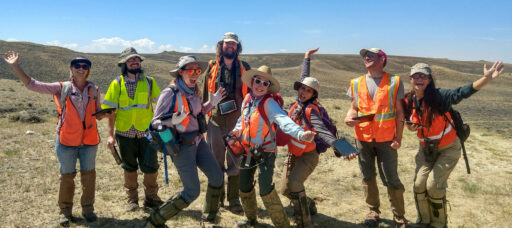
SWCA employs smart, talented, problem-solvers dedicated to our purpose of preserving natural and cultural resources for tomorrow while enabling projects that benefit people today.

At SWCA, you’re not just an employee. You’re an owner. Everyone you work with has a stake in your success, so your hard work pays off – for the clients, for the company, and for your retirement goals.
Habitat and Hydrology: Ecosystem Restoration in Ohio
Ross is a licensed water resources engineer in seven states with over 10 years of experience. His experience includes stream and wetland restoration, dam removal, watershed assessments, feasibility studies, green infrastructure, stormwater design, and hydrologic and hydraulic modeling.
Vince is a content developer at SWCA, where he helps subject matter experts tell their stories. An engaging storyteller and translator of technical information, he loves communicating the significance of his colleagues’ work.


The U.S. Fish and Wildlife Service estimates that Ohio has lost 90% of its original wetlands; 5 million acres have been reduced to just 483,000. This loss of original wetlands far exceeds the average for the contiguous United States, which is closer to 50%.
“Restoring these systems is long-term work,” says Ross St. Clair, senior restoration engineer at SWCA Environmental Consultants. “Ohio lost a tremendous amount of wetland habitat over time, and getting those functions back takes thoughtful, site-specific work.”
In 2025, SWCA finished three ecosystems restoration projects across Ohio.
Together, these projects restored over 25 acres of wetlands, 30 acres of prairie, 40 acres of forests, and 2,050 linear feet of stream and riparian habitat. Just as importantly, they are expected to improve water quality and support more diverse native habitats over time.
But that is only part of the story. These projects also enhance how the sites are used and experienced, whether that involves hunting, fishing, foraging, hiking, or other ways of engaging the environment.
We recently talked with SWCA’s Ross St. Clair about the significance of these projects.
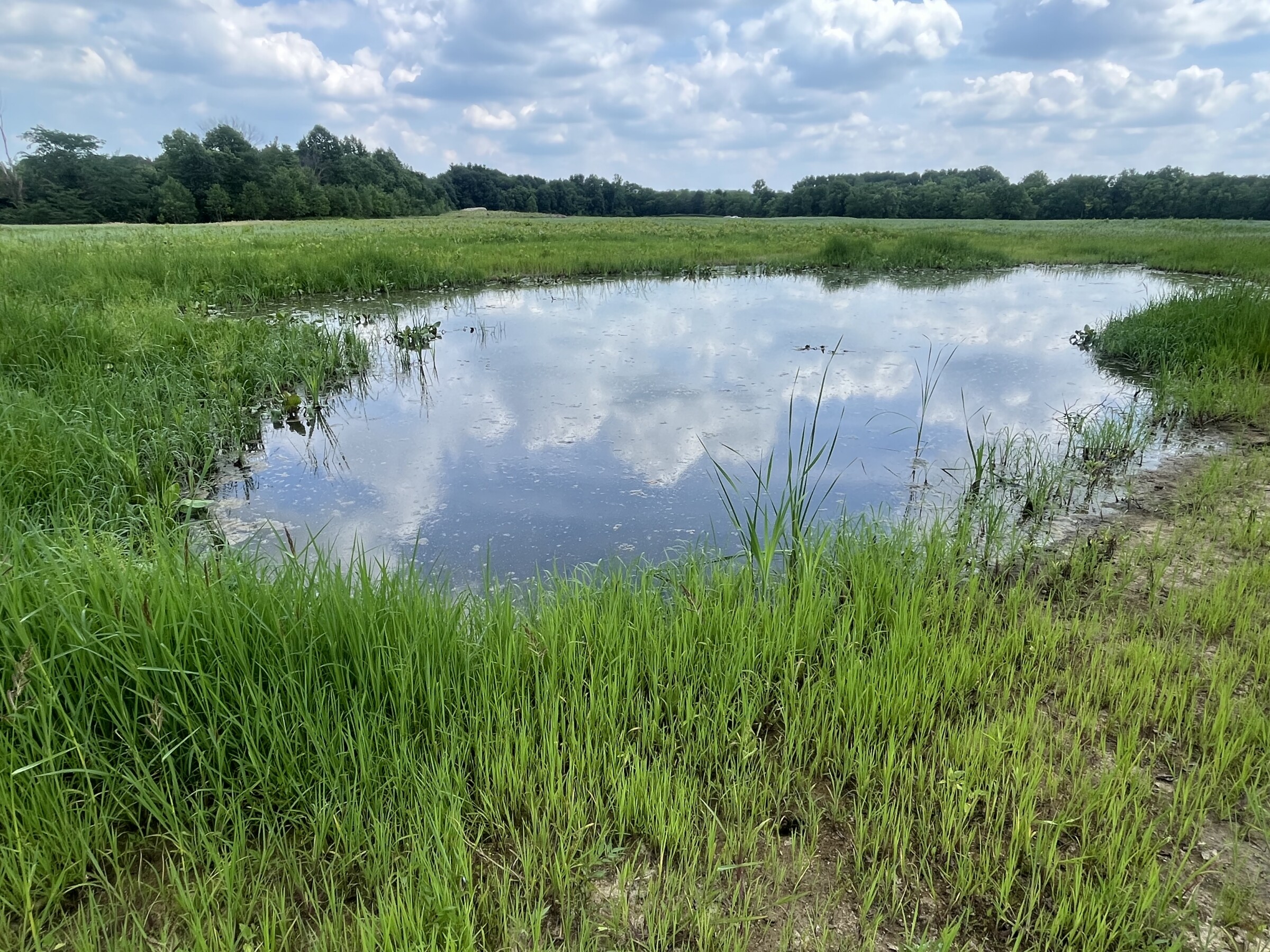
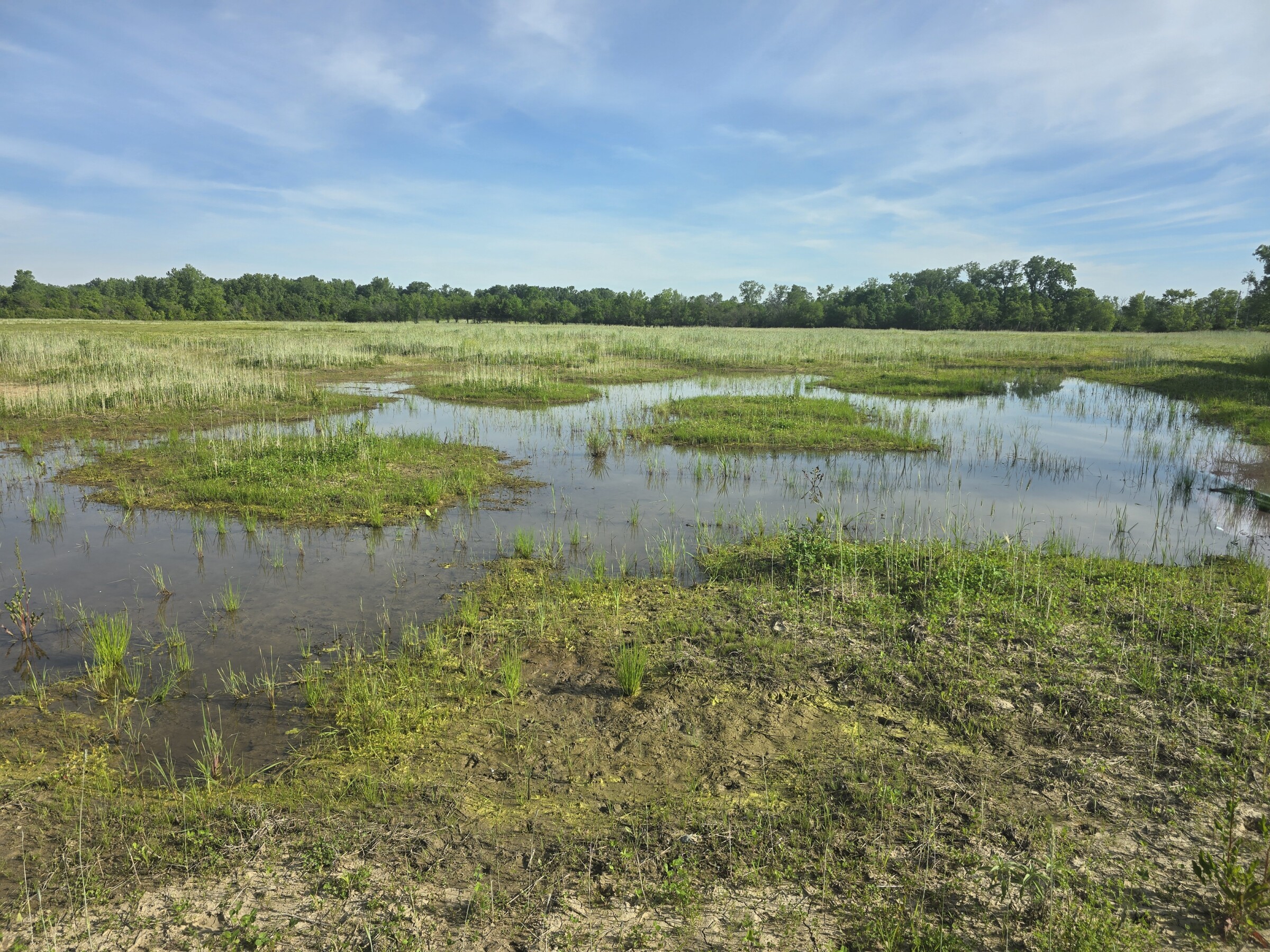
A restored wetland replaces an inactive agricultural field at the HWSA’s restoration of the Laskey Family Nature Preserve.
ROSS: Ohio has lost a large share of its original wetlands, and when those systems are gone or degraded, we lose habitat, biodiversity, and some of the natural water-quality benefits those areas used to provide.
Historically, Ohio had a diverse mix of prairies, forests, wetlands, and stream systems. A lot of that landscape has been changed by agriculture, development, and industry.
A big part of our restoration work is first understanding what has changed over time, such as altered drainage, urban runoff, unstable stream systems, compacted soils, sediment and nutrient loading, and pressure from invasive species. From there, we balance the reference condition we’re trying to move toward with the constraints that still exist on the site and on adjacent properties. The goal is to design restoration that improves function but also fits into the broader landscape instead of forcing something that does not belong there or will adversely impact surrounding property uses in terms of hydrology.
Ross: Wetlands are important because they hold and filter water. They slow down runoff, allow sediment and nutrients to settle out, and help clean the water before it reaches larger bodies of water. When that filtering function is lost, nutrients like nitrogen and phosphorus can move downstream in higher concentrations and contribute to water-quality problems.
A lot of our restoration work in Ohio comes back to that basic question of water—where it comes from, how it moves through a site, where it gets stored, and what condition it is in when it leaves. In agricultural areas, drainage has changed that system pretty significantly. You see agricultural ditches and tile drains everywhere. Those systems are important for farming because they move water off the land, but they can also short-circuit the storage and filtering that used to happen naturally.
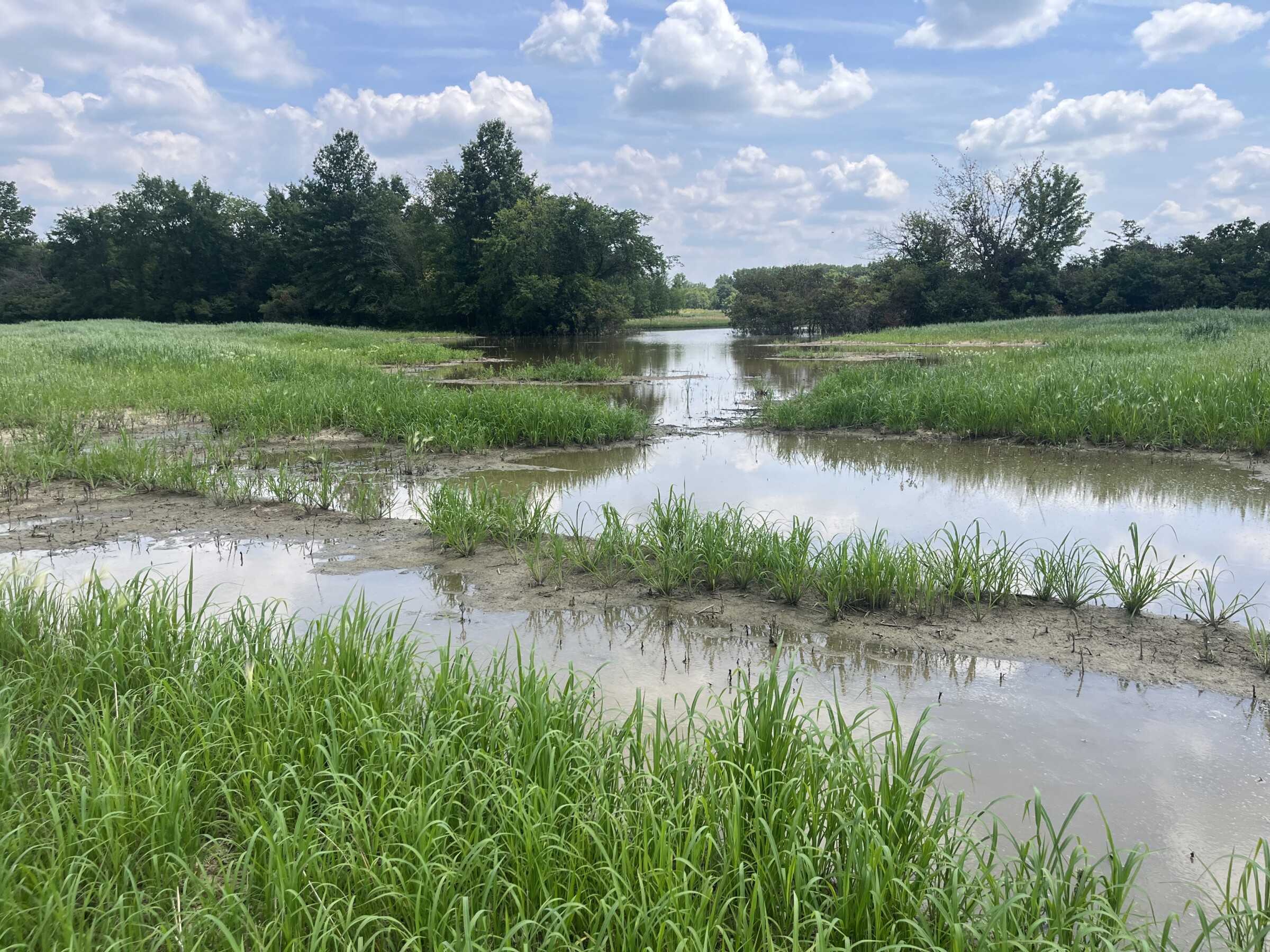
Restored wetlands at the HWSA site improve water storage and filtration, increase native habitat, and support human activities, like hunting, fishing, and foraging.
Ross: We usually start by looking at what the site is telling us—topography, soils, drainage patterns, existing vegetation, and surrounding land use. From there, the design is about restoring more natural hydrology but doing it in a way that still works with the broader landscape. We have to make sure we are not creating adverse flooding impacts for surrounding properties or cutting off reasonable drainage for upstream landowners. The approach is different on every project, but the goal is the same: improve function while making sure the restoration fits the site and the properties around it.
The contrast between our work at HWSA and Packer Creek can help illustrate this.
We recently finished restoring several unique habitats at the Laskey Family Nature Preserve in northwest Ohio for HWSA. The preserve included 26 acres of degraded woods and 29 acres of old agricultural fields. At HWSA, what made the project interesting is that we approached it almost like a wildlife management plan as much as a wetland restoration plan. We started with a practical set of questions: “What wildlife are we trying to support here to enhance the intended recreational uses of the site? What habitats support that wildlife? And how do we restore this altered site to create a high quantity and quality of that habitat? That helped drive the design. The property is used for hunting, fishing, foraging, and wildlife viewing, so we were not just thinking about wetland acreage on paper. We were thinking about the species and habitat conditions the owners wanted to see more of and working backward from there. Because the site had been farmed, that also meant understanding altered drainage, locating and disabling key portions of the tile drainage system, and using the site’s topography and soils to place emergent wetlands, ephemeral wetlands, prairie, and tree/shrub plantings in the right areas. In the process, we still met the water-quality, water-quantity, and habitat-zone restoration goals—slowing water down, storing more onsite, improving nutrient filtration, and increasing native habitat diversity. But the design also spoke directly to how the client uses the site, creating better cover, food sources and habitat variety for wildlife while making the property more functional for hunting, fishing, foraging, and time outdoors.
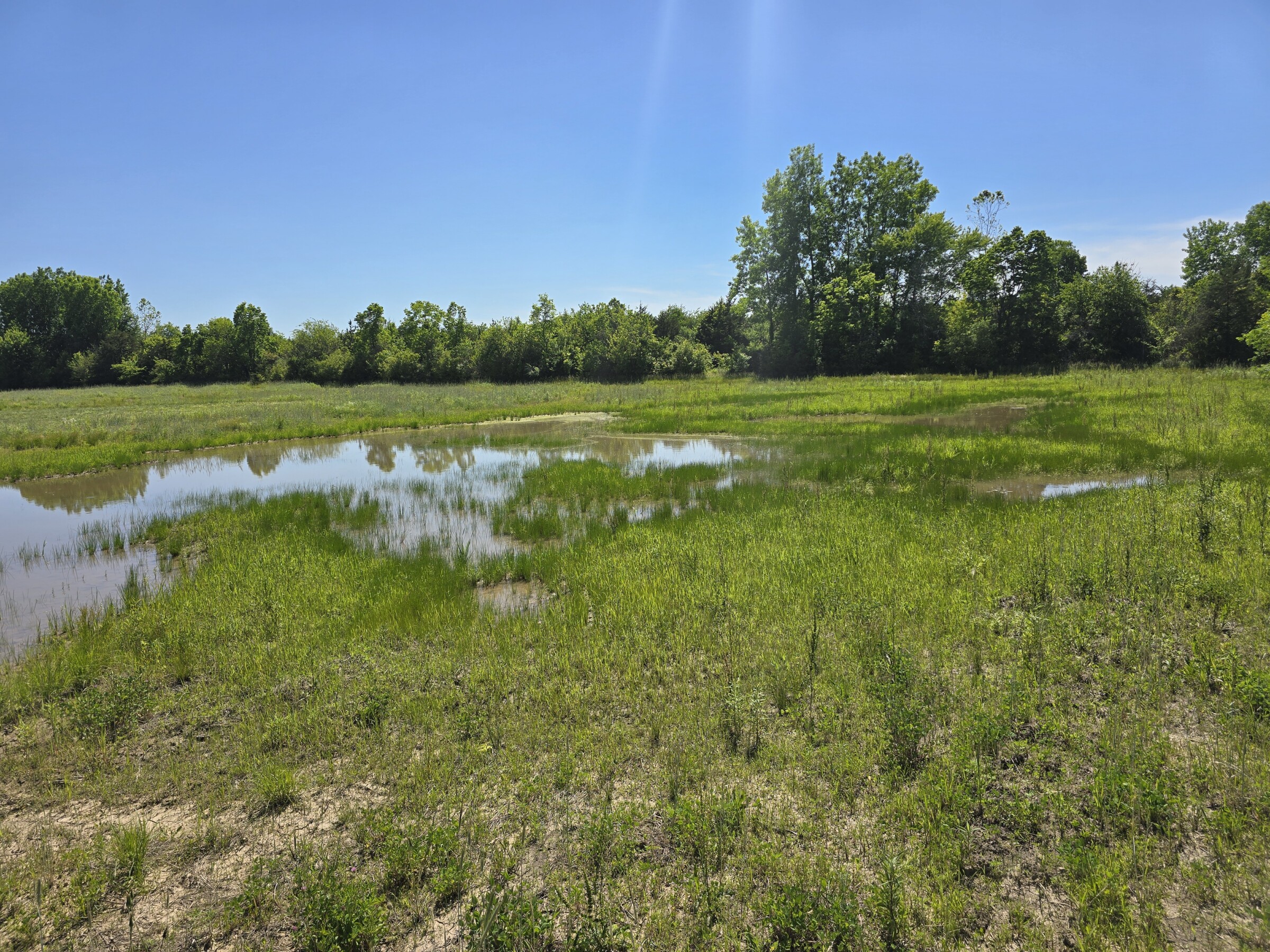
New growth springs up in a restored wetland at Sycamore State Park.
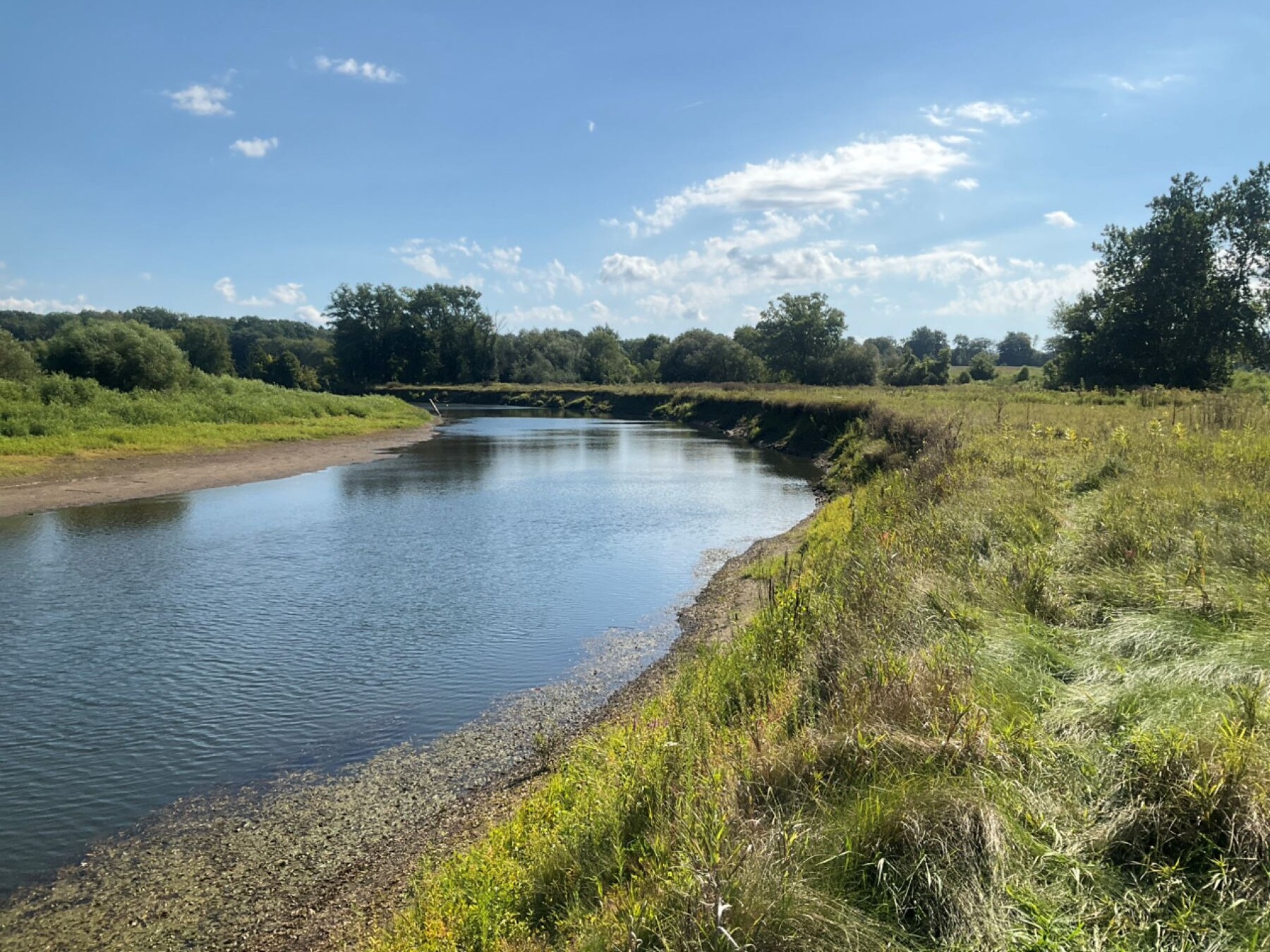
Though it’s not far from the HWSA site, our work on the Packer Creek Stream Restoration was quite different. Like HWSA and Sycamore State Park, Packer Creek included invasive species removal and native riparian planting. But stream restoration brings a different set of issues because you’re working with flowing water, active erosion, and a narrow corridor where small changes can make a big difference. At Packer Creek, we reworked the channel and adjacent floodplain corridor rather than just armoring isolated problem spots. That included reconnecting the channel with its floodplain, adding large woody material in targeted areas, and installing rock structure to enhance bedform for stability and habitat diversity. We also removed a small low-head dam that had interrupted the stream’s natural connectivity. Removing that obstruction, along with restoring the channel form and riparian corridor, helped improve aquatic movement, added habitat complexity, and made the system better able to absorb and recover from higher-flow events. That’s not everything that went into these projects, but it gives you a sense of why restoration can’t be one-size-fits-all.
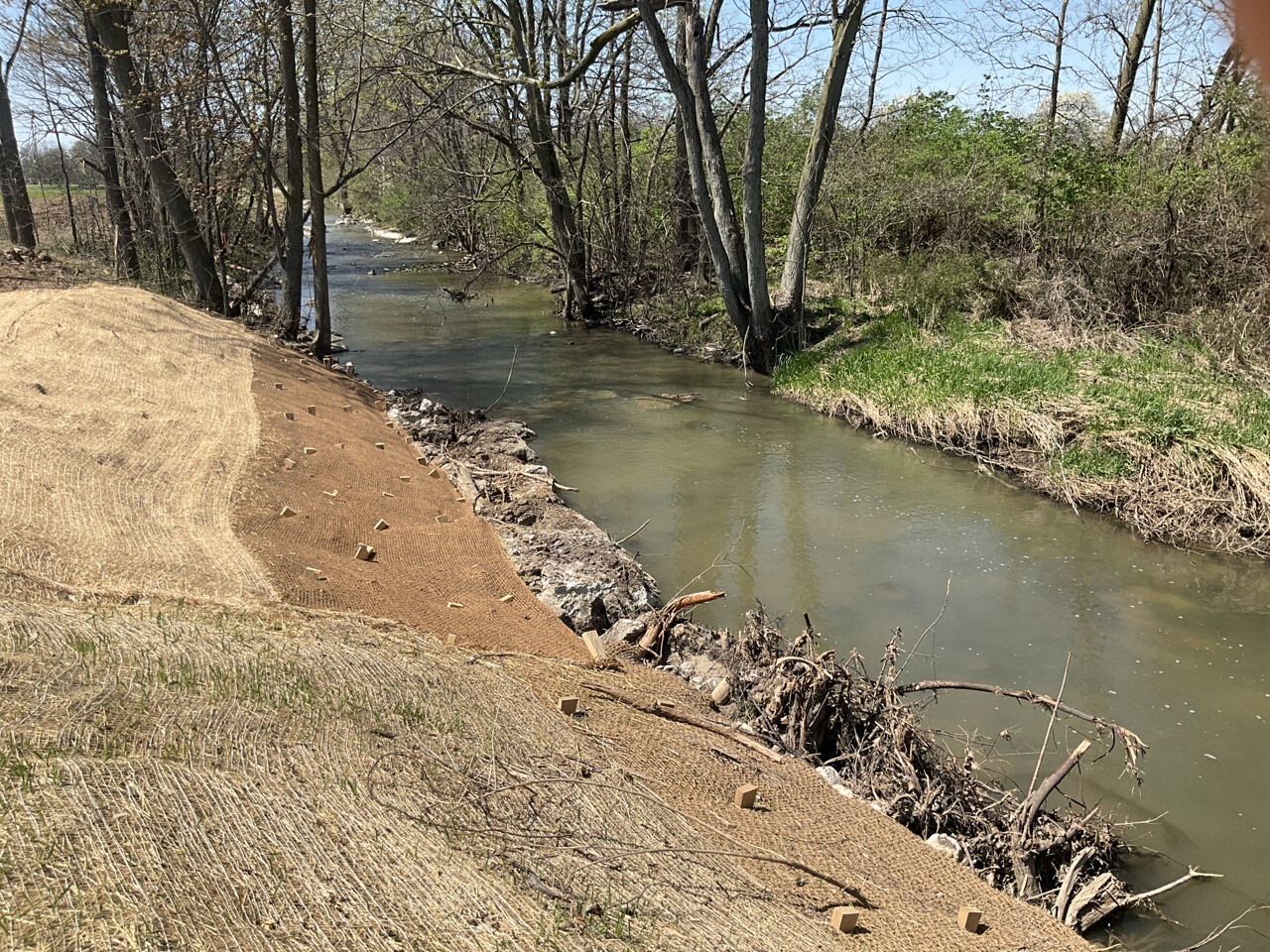
A regraded, stabilized bank along Packer Creek will better hold up to higher-flow rain events.
Beyond quantitative targets about how many acres of wetlands, prairies, or forest a project team aims to restore, it is critical to consider the site’s larger context as well as how it will be used now and in the future. Private landowners, conservation groups, parks systems, and governmental agencies will have different answers to these kinds of questions but considering them will help the project team hone its approach to the project at hand.