
2026
Comparably’s Best Company Outlook
* Providing engineering services in these locations through SWCA Environmental Consulting & Engineering, Inc., an affiliate of SWCA.


From the experts we hire, to the clients we partner with, our greatest opportunity for success lies in our ability to bring the best team together for every project.
That’s why:

At SWCA, sustainability means balancing humanity’s social, economic, and environmental needs to provide a healthy planet for future generations.
SWCA employs smart, talented, problem-solvers dedicated to our purpose of preserving natural and cultural resources for tomorrow while enabling projects that benefit people today.

At SWCA, you’re not just an employee. You’re an owner. Everyone you work with has a stake in your success, so your hard work pays off – for the clients, for the company, and for your retirement goals.
Construction Compliance: Supporting Grid Expansion without Slowing Project Delivery
Seth has over 15 years of experience with natural resources management and specializes in linear utility projects. He has provided environmental review, permitting, and construction compliance for numerous pipeline projects.

Michelle has more than 20 years of experience in construction and operations compliance management, NEPA document preparation, and stormwater monitoring services. She specializes in permit compliance and coordination of inspection services for linear projects.

Chad is the Compliance Services Director for SWCA’s Rocky Mountain-Plains region. He has valuable experience in natural resources, both as a director and a senior project manager focusing primarily on federal land development projects and energy infrastructure.

Josh has more than 10 years of experience implementing environmental compliance for large-scale energy development projects that include complex federal, state, and local permits for erosion and sediment pollution control and wetland and water body impacts.

Taylor is currently a Lead Civil Engineer for SWCA, specializing in environmental permitting and compliance. He manages multidisciplinary teams, oversees complex engineering projects, and serves as a technical leader within the organization. With over 10 years of experience, Taylor is a licensed Professional Engineer in 19 states and has led project teams across the eastern United States. His expertise spans stormwater permitting, erosion and sediment control, site civil design, and regulatory compliance. He is also certified in erosion and sediment control and serves as a safety liaison, bringing proven technical and operational excellence to every project.






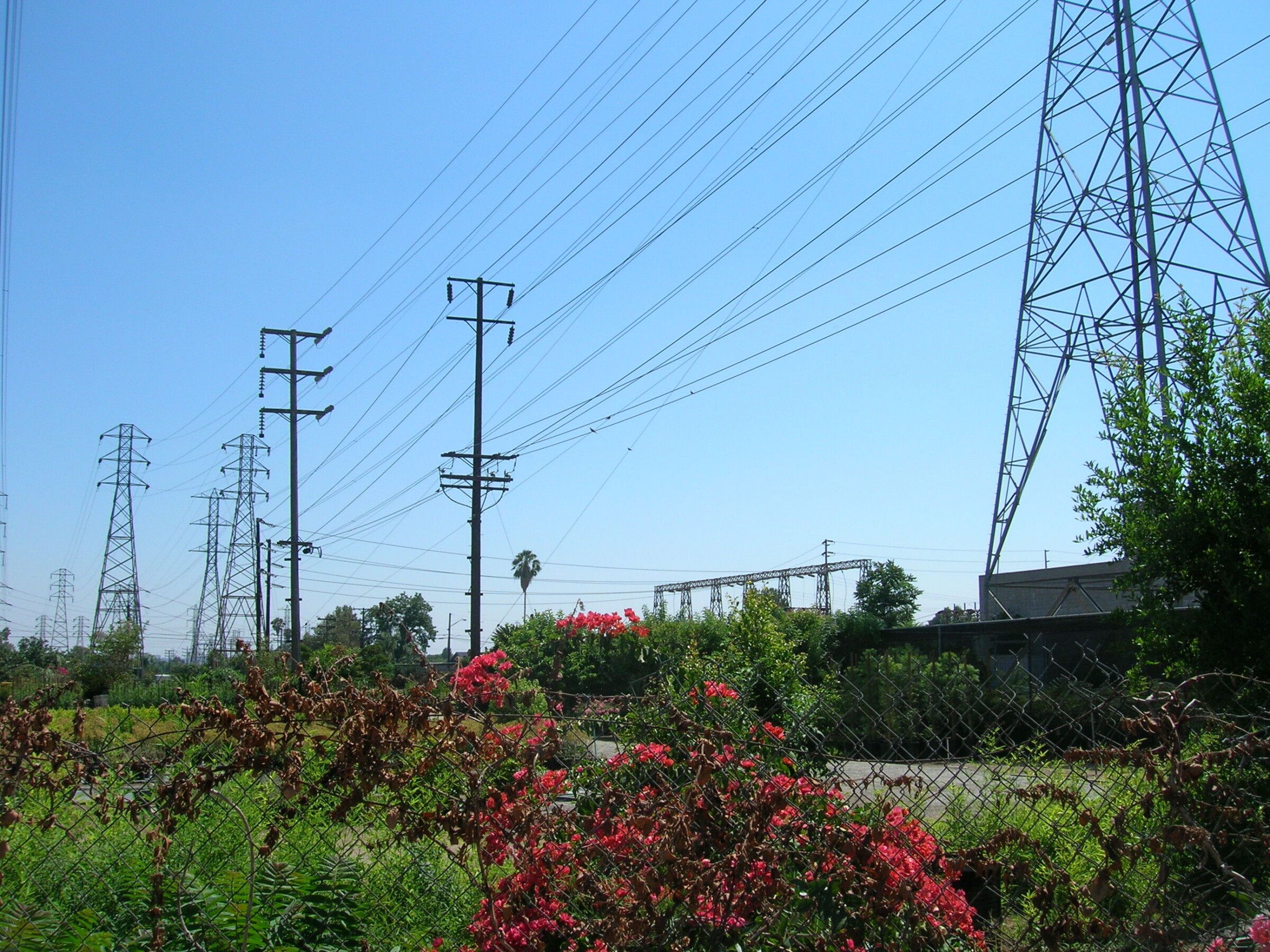
The United States’ electric grid is growing at a fast pace. According to a report from S&P Global Market Intelligence, if the ten largest transmission lines planned for the next decade stay on schedule, “high-voltage transmission expansion will accelerate to roughly 1,000 circuit miles per year through 2032—a 70% increase from the pace of expansion during 2011–2023.” All the same, that pace remains too slow. The U.S. Department of Energy estimates that the transmission system for the contiguous United States needs to double by 2050 to meet increasing demand.
What is pushing this growth?
In short, this growth is a structural issue that will not be abating anytime soon. Electric transmission projects are responding to increasing demand with larger, longer and more geographically complex systems.
To help teams strategize around this growth, SWCA is sharing a series of technical blogs on the development lifecycle of transmission projects. The first article covered operations and maintenance plans. This one describes how to get more out of the construction compliance process. In the coming weeks, additional articles will discuss NEPA for transmission projects and competitive transmission proposals.
As demand increases, construction teams working in the transmission space face heightened environmental and permitting scrutiny, more demanding documentation expectations from federal and state agencies, regulatory uncertainty, and persistent labor shortages, especially among experienced field staff.
On highly regulated linear infrastructure projects, construction compliance is often viewed as a risk—a potential bottleneck that slows progress. It can be. However, when integrated early and managed collaboratively, effective construction compliance can improve coordination, speed problem-solving, reduce rework and help keep construction moving.
How can construction compliance speed solutions on transmission projects?
It is largely about how compliance is integrated into daily construction planning. The quality of the partnership between the construction team and the compliance team is what turns compliance from an apparent “risk” into a project asset.
The following strategies can help project teams strengthen partnerships, manage compliance risk more effectively and support construction progress.
An experienced field team is important, but field expertise works best when it is supported by clear communication, practical planning, and timely decision-making.
A strong environmental consultant helps their construction partner refine the schedule while it is still being developed. Early in the project, the compliance consultant should articulate a clear interpretation of permit conditions. This means distinguishing requirements from guidance and translating those requirements into actionable, field‑ready tasks. Assigning these tasks to specific environmental, engineering, or contracting staff provides clarity on how compliance work fits into the schedule and identifies where more time may be needed. In turn, it gives compliance staff a deeper understanding of the construction schedule, its pain points and its drivers, enabling them to respond more effectively as inevitable challenges arise.
Involving the compliance team in the development of the construction schedule also creates the opportunity to integrate both teams more tightly. The compliance team will better understand and adapt to the construction team’s way of communicating with clients, subcontractors and consultants. They will perceive how their work fits into the bigger picture, which helps set expectations on communication protocols and clarifies what issues that warrant escalation.
When the compliance team is included early as a trusted advisor, it can optimize the schedule and integrate compliance needs with the scheduling team’s other constraints (materials availability, sequencing needs, etc.). The result is not just about avoiding constraints; it’s about creating an approach that can manage the unknown, lower risk and decrease schedule uncertainty.
The project approach and schedule establish the basic framework for compliance throughout the project, but what keeps the project going forward is effective communication.
Data sharing platforms. Current data sharing platforms, such as Fulcrum, Power BI, Smartsheet and SharePoint, help compliance teams provide real-time visibility into issues on-site as they are uncovered. At SWCA, we have designed systems that help compliance information flow from the field to the client in a consistent, transparent way. These tools are tailored to project and client needs, but their general flow is similar across many large linear projects.
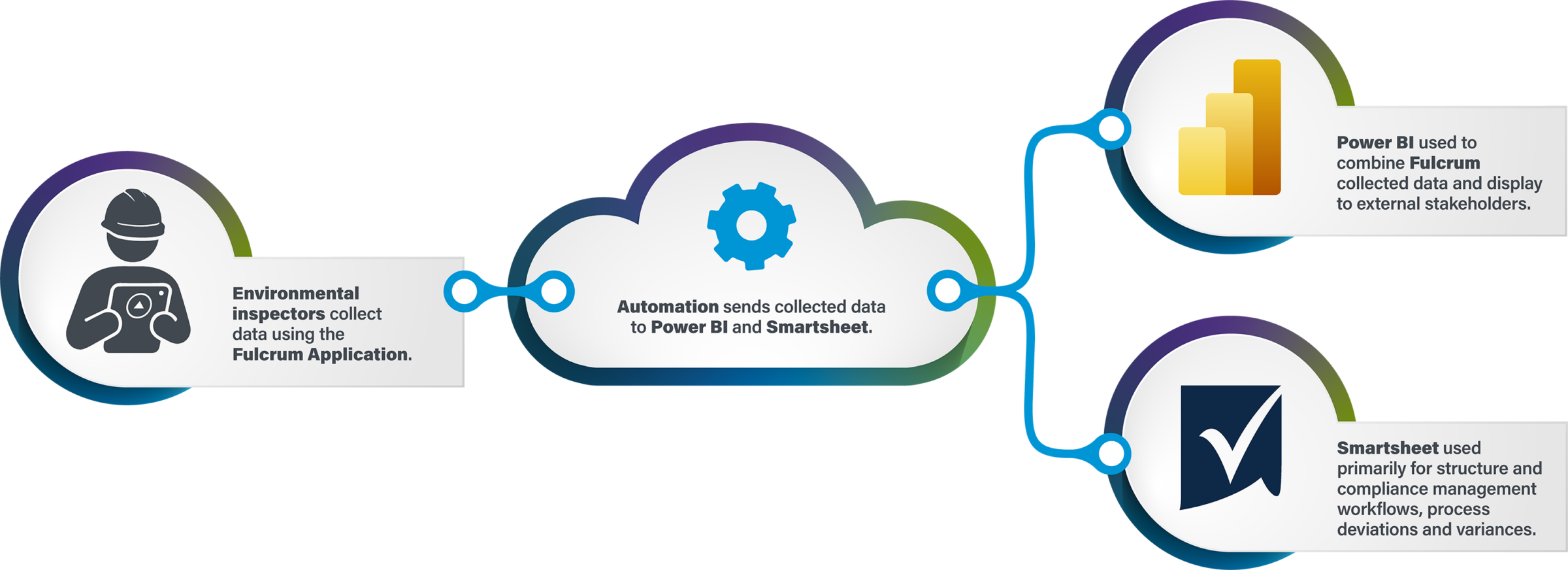
The first step begins in the field with Fulcrum. Field inspectors use SWCA-provided iPads to capture data, photographs, GPS coordinates, and inspector notes. This information feeds directly into Smartsheet and Power BI, which we treat as “compliance hubs” for our projects. Smartsheet automates workflows, assigning corrective actions, sending reminders, and tracking deadlines. We layer Power BI dashboards on top of these workflows to give managers and clients an immediate view of each item’s compliance status, enabling them to recognize trends and diagnose recurring issues. This becomes a living construction compliance scorecard that is updated daily. It turns compliance from a reactive process into a proactive system.
In short, these data sharing platforms give teams real-time visibility into issues as they are uncovered, helping ensure that emerging issues are immediately documented and shared with key decisionmakers on-site and off, whether they sit on the construction team, the compliance team or within an agency. In our experience, these platforms can reduce reporting time by up to 40% compared to internal project data; support daily, weekly, and monthly updates; and build defensible, auditable records. They also allow clients to choose the level and timing of agency access, supporting efficient review and approval of actions.
Mutual Understanding. Fostering proactive communication across disciplines and teams involves building a common language that the compliance and construction teams can speak. It helps if your compliance team, from the field level up to senior leadership, speaks construction.
With an intimate understanding of and respect for the construction process, the compliance team should anticipate their partners’ needs. Compliance teams should ask questions to help avoid costly delays. For instance, if you’re bringing in transmission towers, “Is the tractor trailer going to be able to make that tight turn on the approved access road or will you need more space?” Experience and understanding of the construction process will enable your consultant to foster interdisciplinary discussions that result in effective solutions.
At the same time, the compliance team should explain the relevant background of regulatory requirements to construction partners in a digestible way. Regulations can be dense and interpreted differently depending on region, agency, and field office, so the compliance team needs to distill that information into practical direction. An inspector can assign relevant field tasks, but if the team does not understand why the tasks matter, deficiencies are more likely to persist.
Siloed teams, unclear decision-making structures and delayed reporting increase the risk of noncompliance. They create avoidable schedule disruptions and can contribute to costly delays, penalties, license issues or contractual disputes. With the right communication practices and data systems, project teams can reduce those risks and improve the likelihood of delivering transmission projects safely, efficiently and with fewer surprises.
If you have questions about how to keep your electric transmission project on track and in compliance, please contact one of our experts.
See Beyond Policy Change to What Matters for Your Project
Regulatory Radar is a subscription intelligence service that scans the policy horizon for changes that could affect planning, permitting, schedules, and risk, then turns those signals into clear takeaways and practical next steps.