
2026
Comparably’s Best Company Outlook
* Providing engineering services in these locations through SWCA Environmental Consulting & Engineering, Inc., an affiliate of SWCA.


From the experts we hire, to the clients we partner with, our greatest opportunity for success lies in our ability to bring the best team together for every project.
That’s why:

At SWCA, sustainability means balancing humanity’s social, economic, and environmental needs to provide a healthy planet for future generations.
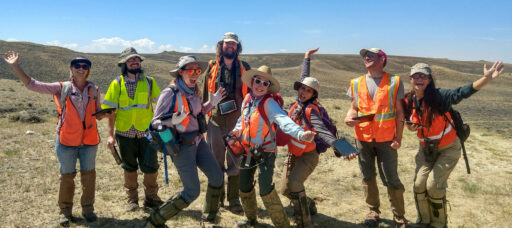
SWCA employs smart, talented, problem-solvers dedicated to our purpose of preserving natural and cultural resources for tomorrow while enabling projects that benefit people today.
At SWCA, you’re not just an employee. You’re an owner. Everyone you work with has a stake in your success, so your hard work pays off – for the clients, for the company, and for your retirement goals.
Working Together to Preserve the Past and House the Future: Construction Monitoring and Cultural Resources Documentation
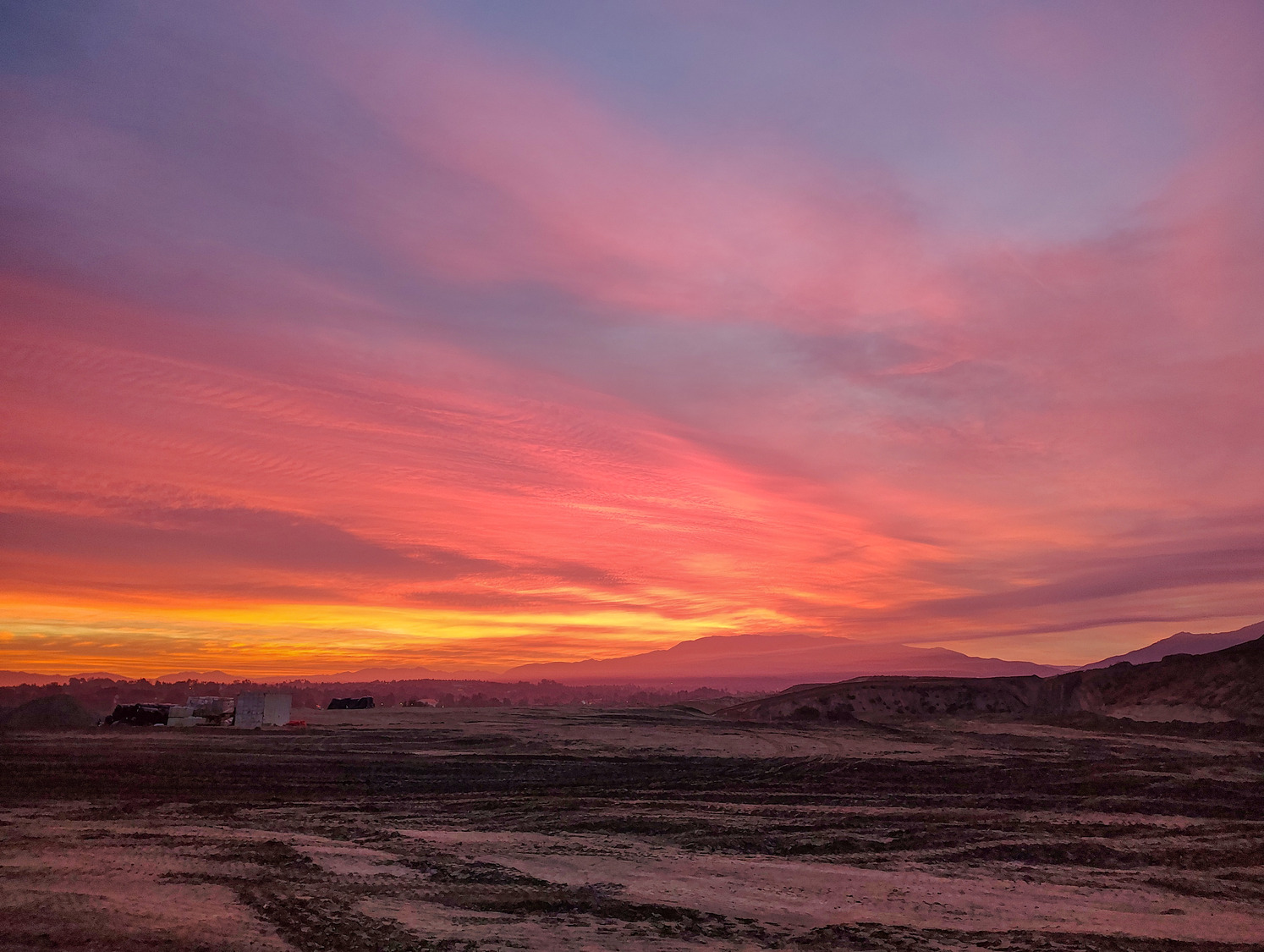
Note: Owing to the cultural sensitives involved in this project, client, Tribe, and place names have been omitted.
Known for its wineries, golf courses, desert resorts, and historic downtown, a Southern California city is experiencing a growing demand for new housing.
SWCA’s client, a community builder, is responding to that demand with a planned community that will bring thousands of units of housing, parks and other public amenities close to the city’s historic center. But accommodating future growth in a place that is rich with history requires nuance and sensitivity.
Some of Southern California’s native Tribes have made their home in this valley for at least 10,000 years. Bedrock mortars, stone tools, pottery and other cultural resources belonging to them have been found across a multi-county area, attesting to their long residence and enduring connection to the land as a whole.
Our client recognized that the development was located within an area that was culturally sensitive. Upon encountering unanticipated discoveries during initial site preparation, they enlisted SWCA’s Cultural Resources Team to assist in the development of guidance documents for the management of the Tribe’s cultural resources. These documents sought to address the treatment of any pre-contact cultural resources belonging to the Tribe that were encountered in the development area.
“In many respects, SWCA’s role is to act as a mediator between the needs of the project and the wishes of the Tribe,” says SWCA Cultural Resources Director Kyle Knabb. “There is always a tension between how a Tribe thinks of their traditional land and what is officially recognized by the government. These agreements help navigate that.”
By proactively establishing an agreed upon way of approaching the land and caring for the Tribal resources, the developer, city, and Tribe have worked out a strategy to address the Tribe’s concerns regarding their cultural heritage while creating much-needed housing.
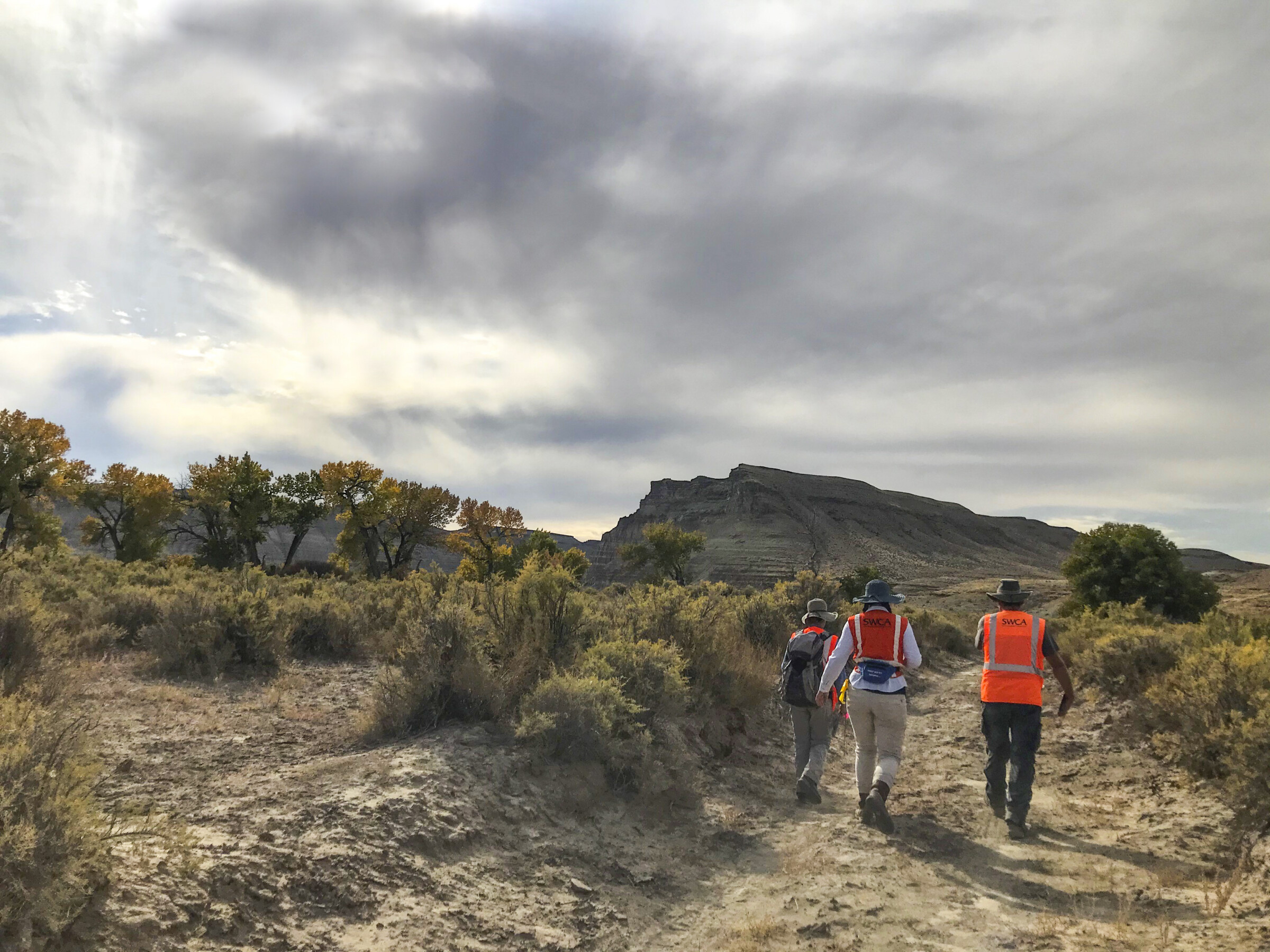
SWCA’s field team has spent the past 18 months providing construction monitoring on the site while it undergoes a process of controlled grading. Like many construction sites, one of the first steps at this project is to reshape the land to manage drainage issues around the new buildings. What’s different about controlled grading is that it takes a slower, more methodical approach. The soil is removed from the site in thinner layers to safeguard any of the Tribe’s cultural resources that surface, so they can be observed and recovered, undamaged.
“The pace of the work is demanding,” Knabb observes. “Anything that is found needs to be immediately documented—describing the object and recording its location—before turning it over to Tribal partners on site. Unlike many cultural resources projects, we will not conduct extensive lab work and object analysis.” Given this and the need to minimize any disruption of the construction process, speed and accuracy are essential.
This is compounded by the nature of the site. It is not only characterized by steep inclines and sharp descents, but it is exposed to extreme weather. The team worked in thick fog, pouring rain, and extreme heat.
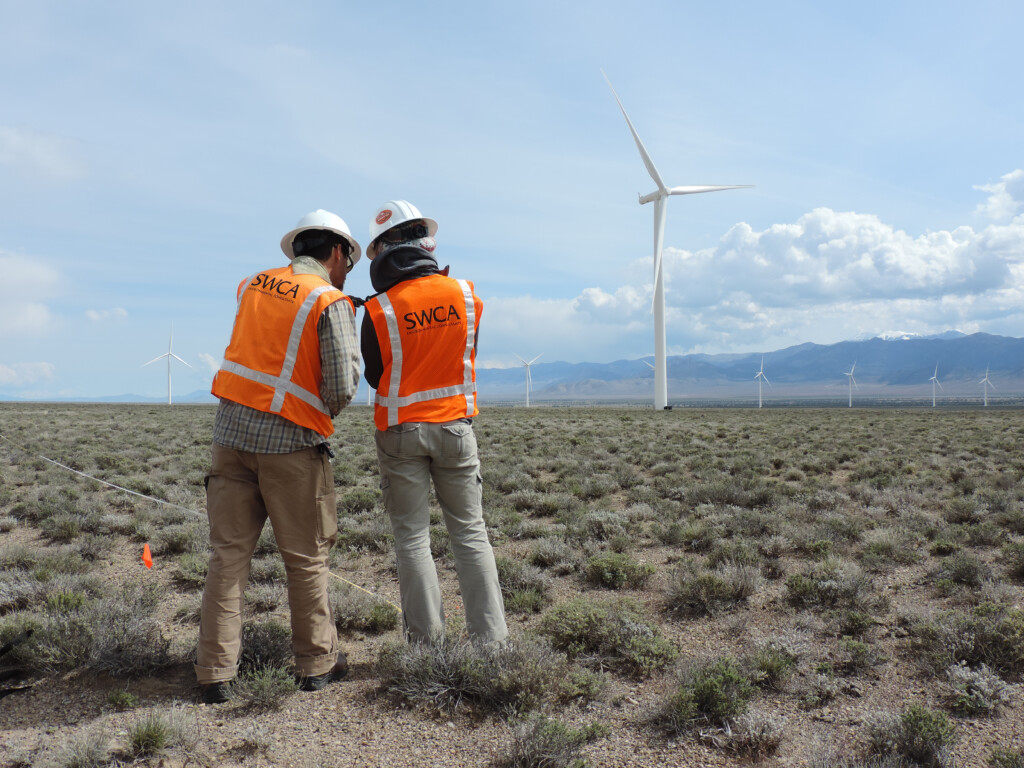
“Fortunately, SWCA’s field team has honed its process. Working closely with our onsite Tribal partners, the field team identifies and documents Tribal resources in ArcGIS Field Maps, enabling us to quickly collate all finds,” says Knabb. “And they’ve done so without any safety incidents, which reflects our fundamental commitment to the safety of our employees.”
After a year and a half of onsite construction monitoring, SWCA’s fieldwork is paused while the developer builds on the now-readied portion of the site. This will give the field teams a break from daily observation while SWCA organizes the information gained thus far into a report for the client and their partners. As future phases of site development begin, SWCA’s team will return to the field.
SWCA will be responsible for producing a report about what was found, but a core tenant of the project is that these cultural resources belong to the Tribe, so any discussion of them is their prerogative.
In the meantime, SWCA’s work is enabling our client to begin expanding housing options for the city’s residents.
See Beyond Policy Change to What Matters for Your Project
Regulatory Radar is a subscription intelligence service that scans the policy horizon for changes that could affect planning, permitting, schedules, and risk, then turns those signals into clear takeaways and practical next steps.