

2026
Comparably’s Best Company Outlook
* Providing engineering services in these locations through SWCA Environmental Consulting & Engineering, Inc., an affiliate of SWCA.


From the experts we hire, to the clients we partner with, our greatest opportunity for success lies in our ability to bring the best team together for every project.
That’s why:

At SWCA, sustainability means balancing humanity’s social, economic, and environmental needs to provide a healthy planet for future generations.
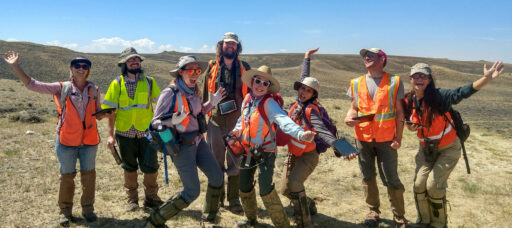
SWCA employs smart, talented, problem-solvers dedicated to our purpose of preserving natural and cultural resources for tomorrow while enabling projects that benefit people today.

At SWCA, you’re not just an employee. You’re an owner. Everyone you work with has a stake in your success, so your hard work pays off – for the clients, for the company, and for your retirement goals.
From Observation to Action: Engineering Thoughtful Environmental Solutions
Siena joined SWCA in 2021, helping bring the company’s voice to life through thoughtful, creative content as a Marketing Content Developer. She collaborates with teams across the world to turn big ideas into clear, engaging stories for social media, the web, and beyond. Whether she’s writing a headline or planning a campaign, she keeps environmental insight and integrity at the center of every piece—one carefully-crafted pun at a time.

In environmental consulting, the projects are rarely one-size-fits-all. Every project carries its own set of complexities, balancing natural systems, regulatory frameworks, and stakeholder interests. For Matt Daniels, senior engineering director and river restoration practitioner, and Blake Holcomb, principal civil engineer—two leaders whose expertise spans decades in the field—navigating these challenges is second nature. Their career paths, while distinct, converge in a shared philosophy: thoughtful, science-based solutions guided by collaboration and a deep understanding of both the land and the communities they serve.
Matt Daniels’ journey began with a fascination for how natural systems function; a curiosity rooted in understanding the engineering of landscapes themselves. “I’ve always been curious about how rivers, landscapes, and ecosystems interact,” he says. That curiosity drove him into hands-on fieldwork, where observation became a natural engineering study. “When you’re out in the field, you see things that no map or model can fully capture. That perspective shapes the recommendations I make,” Matt explains.
Early in his career, he focused on identifying subtle hydrological and ecological patterns that influence restoration and infrastructure planning. From mapping stream morphology to assessing river stability, his fieldwork provided the raw data and context necessary for designing effective environmental engineering solutions. Over time, these experiences translated into strategic engineering thinking. Today, Matt integrates field-derived insights with advanced modeling and assessment techniques to guide complex environmental engineering plans, ensuring that every aspect of the plan respects natural processes while meeting client objectives.
“Understanding the landscape isn’t just about observation; it’s about engineering solutions that work with the system, not against it,” Matt says. His approach exemplifies the value of combining field knowledge with the technical rigor of environmental engineering, bridging observation, analysis, and applied problem-solving.

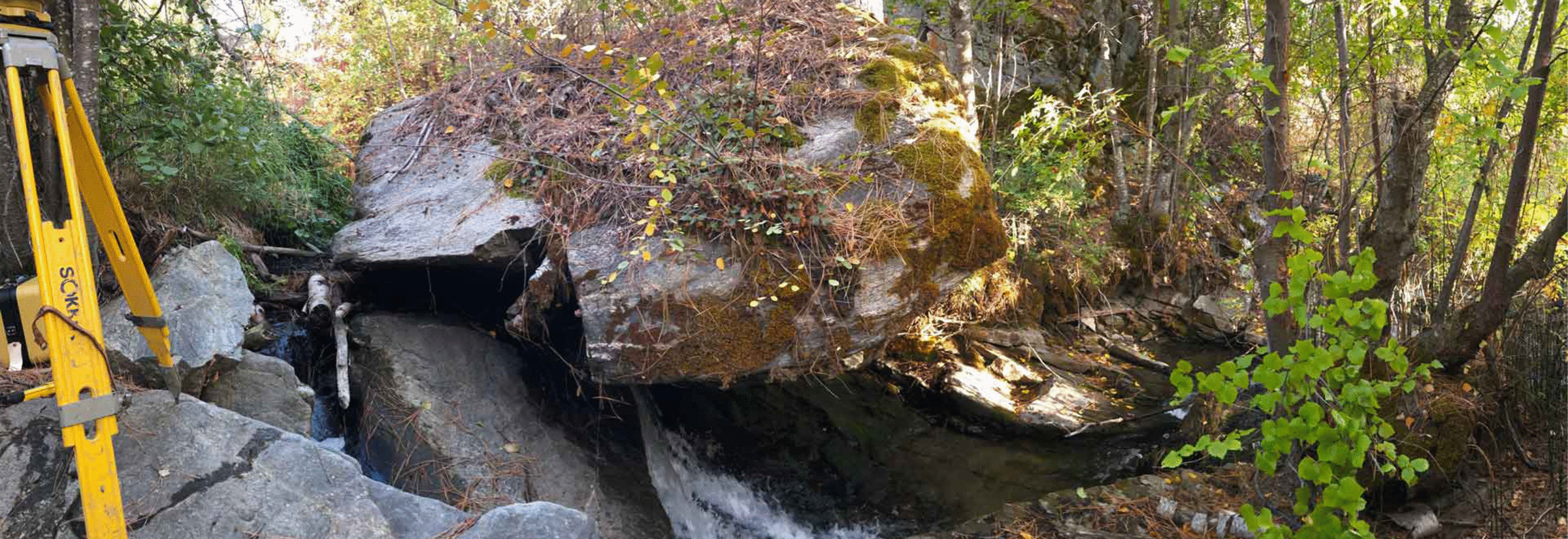
Large wood placement for Steelhead habitat restoration on Lolo Creek along the historic Lewis and Clark Trail in Idaho
Blake Holcomb’s path complements data-driven expertise, focusing on the engineering and technical interpretation of environmental systems. “Our engineering team enjoys the challenge of taking detailed data and turning it into actionable strategies,” Blake says. “It’s one thing to understand the science; it’s another to translate it into solutions that are feasible for clients and protective of natural and cultural resources.”
From the start, Blake honed his skills in regulatory engineering, resource management, and compliance analysis. He has worked extensively on designing permitting strategies, evaluating project feasibility, and integrating scientific data into technically sound solutions. By leveraging GIS, hydrological models, and environmental assessments, he turns complex datasets into actionable plans that mitigate environmental risk while meeting regulatory requirements.
Blake emphasizes collaboration and integration across disciplines. “Working with our interdisciplinary team, who brings field observations and practical insight, allows me to align engineering analyses with what’s really happening on the ground,” he notes. His method ensures that regulatory considerations, technical modeling, and ecological engineering are fully coordinated. By combining quantitative analysis with a deep understanding of environmental regulations, Blake ensures that every project is technically sound, compliant, and implementable. “I want to make sure that what we model, permit, and design will work on the ground,” he notes.
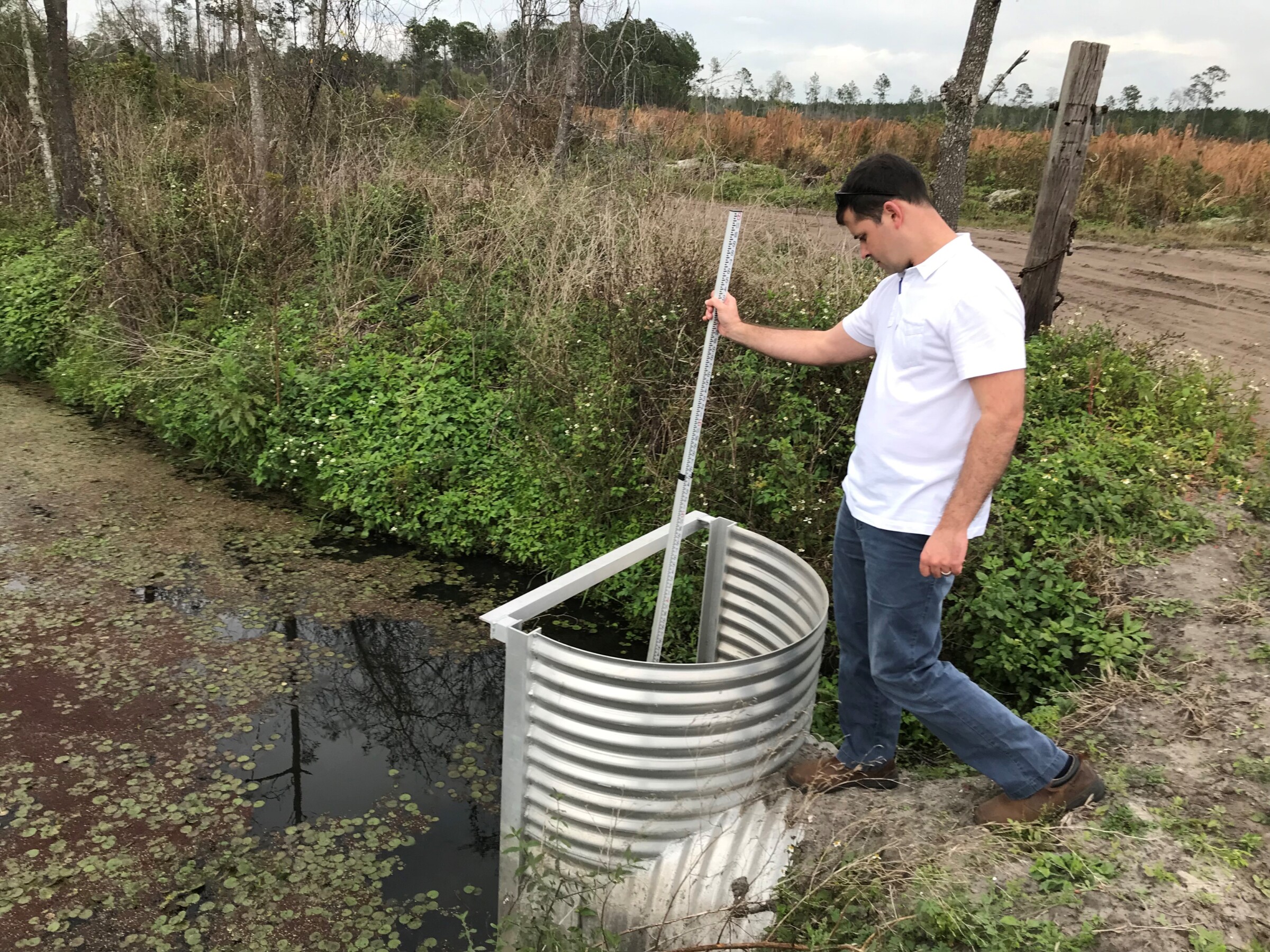
Blake measuring surface water level depths at a solar facility in Putnam County, Florida
Designing projects that endure while supporting ecosystems is central to both Matt’s and Blake’s work. Matt studies flow dynamics, sediment transport, and landscape connectivity to create ecological uplift. He explains, “I’m always asking, how can we work with the geomorphic setting rather than against it?”
Blake complements these insights with technical validation. “We use GIS, hydrologic modeling, and regulatory guidance to make sure what we propose is feasible and protective,” he says.
Engineering considerations like erosion control, stormwater management, and adaptive monitoring are embedded into every project, ensuring solutions remain functional as conditions evolve.
Blake and Matt both stress that modern environmental and civil engineering are inherently collaborative. Matt notes, “The best solutions come when engineers, biologists, and planners all understand the system from different angles.” Field observations feed into engineering designs, regulatory insights shape implementation strategies, and ongoing monitoring ensures adaptive management.
Blake adds, “You can’t just design in isolation. Understanding surveys, field conditions, and the regulatory context is critical to making a design that works in practice.” Their combined approach reflects SWCA’s philosophy of integrating diverse expertise across offices and disciplines to achieve resilient, implementable solutions.
For both Matt and Blake, fostering the next generation of engineers is a natural extension of their work. They emphasize the value of guiding newer professionals while remaining open to fresh ideas.
Matt reflects, “I try to give people room to learn in the field, to make observations and think critically about what they’re seeing. It’s one of the best ways to grow as an environmental professional.” He stresses that hands-on experience is crucial for developing a grounded understanding of how natural systems interact with engineering solutions.
Blake says, “I focus on helping others understand the regulatory and technical side, but also on encouraging them to see how their work fits into the bigger picture. Mentorship isn’t just teaching; it’s building confidence to make informed decisions.”
By sharing both technical guidance and strategic perspective, they equip emerging engineers to tackle complex, multidisciplinary challenges with confidence.

Shoreline restoration project using driftwood and a wetland buffer at a boat-in camp site on Lake Spokane, Washington
Both Matt and Blake view professional growth as an ongoing process that blends technical skills, field experience, and innovative thinking.
Blake notes, “I’m constantly learning from the data, from projects, and from people within our engineering team. Every project gives me something new to consider.” His approach underscores the importance of integrating analytical rigor with practical insights.
Matt echoes the sentiment, saying, “There’s always something to learn from collaboration, whether it’s noticing patterns in the landscape or understanding how small changes affect the overall system.” By embracing continuous learning, they ensure their engineering solutions remain adaptive, resilient, and responsive to evolving environmental and regulatory contexts.
Through decades of experience, Matt Daniels and Blake Holcomb have developed complementary approaches to environmental and civil engineering, Matt focused on observation of natural processes and Blake on technical analysis and regulatory strategy. While they don’t always work side by side, their combined perspectives reflect the OneSWCA approach: interdisciplinary, thoughtful, and grounded in both science and practical application.
Whether mentoring the next generation, refining complex project designs, or navigating ever-changing regulatory landscapes, they demonstrate that excellence in engineering comes from curiosity, collaboration, and a willingness to keep learning. Matt says, “I’m excited for the future of restoration. We’re just getting started. The momentum and progress are happening locally and starting to converge globally on standards as the industry matures.” Blake concludes, “The goal is always to turn data into decisions that protect natural and cultural resources while achieving practical, implementable results.”
Together, their insights exemplify a philosophy that shapes SWCA’s work across offices and disciplines: engineering solutions that are resilient, adaptive, and informed by both experience and innovation.
Learn more about Engineering Services and careers at SWCA.