
2026
Comparably’s Best Company Outlook
* Providing engineering services in these locations through SWCA Environmental Consulting & Engineering, Inc., an affiliate of SWCA.


From the experts we hire, to the clients we partner with, our greatest opportunity for success lies in our ability to bring the best team together for every project.
That’s why:
At SWCA, sustainability means balancing humanity’s social, economic, and environmental needs to provide a healthy planet for future generations.
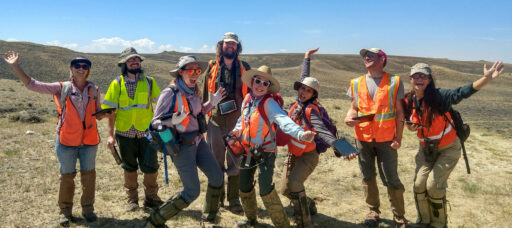
SWCA employs smart, talented, problem-solvers dedicated to our purpose of preserving natural and cultural resources for tomorrow while enabling projects that benefit people today.
At SWCA, you’re not just an employee. You’re an owner. Everyone you work with has a stake in your success, so your hard work pays off – for the clients, for the company, and for your retirement goals.
Relationships Reinforce Safety: Grand Canyon Airport Wildlife Hazard Assessment
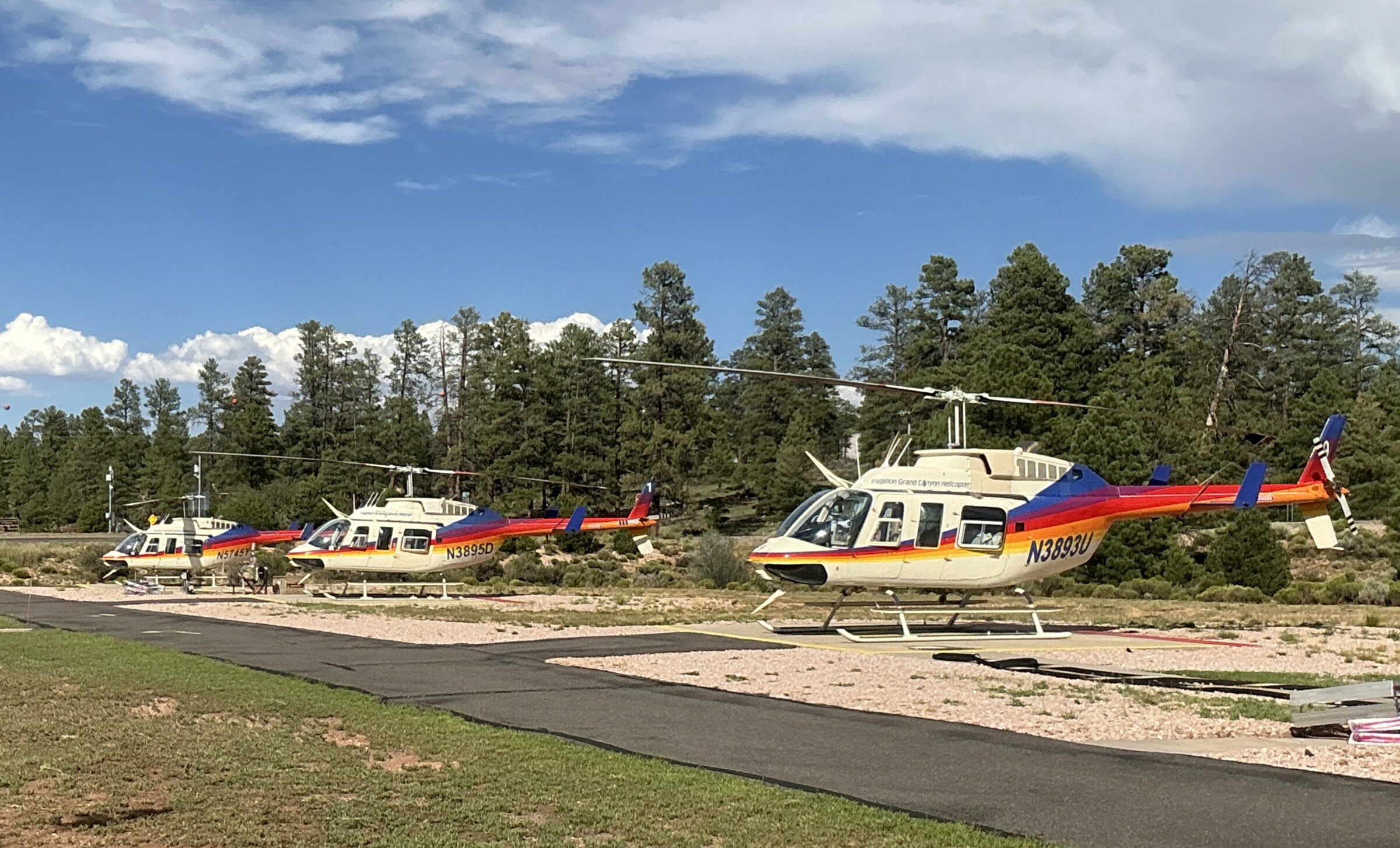
Located just seven miles from the South Rim of the Grand Canyon (and two miles from the park entrance), the Grand Canyon National Park Airport (GCN) serves scenic tours, charter flights, and general aviation traffic around Arizona’s most popular tourist destination.
As a Certified Airport for commercial service, GCN periodically needs to update its Wildlife Hazard Assessment (WHA) and Wildlife Hazard Management Plan (WHMP) to stay in compliance with the Federal Aviation Administration’s (FAA) guidance (14 CFR part 139). When the FAA recently requested an update to these documents, the Arizona Department of Transportation, which manages the airport, called SWCA Environmental Consultants.
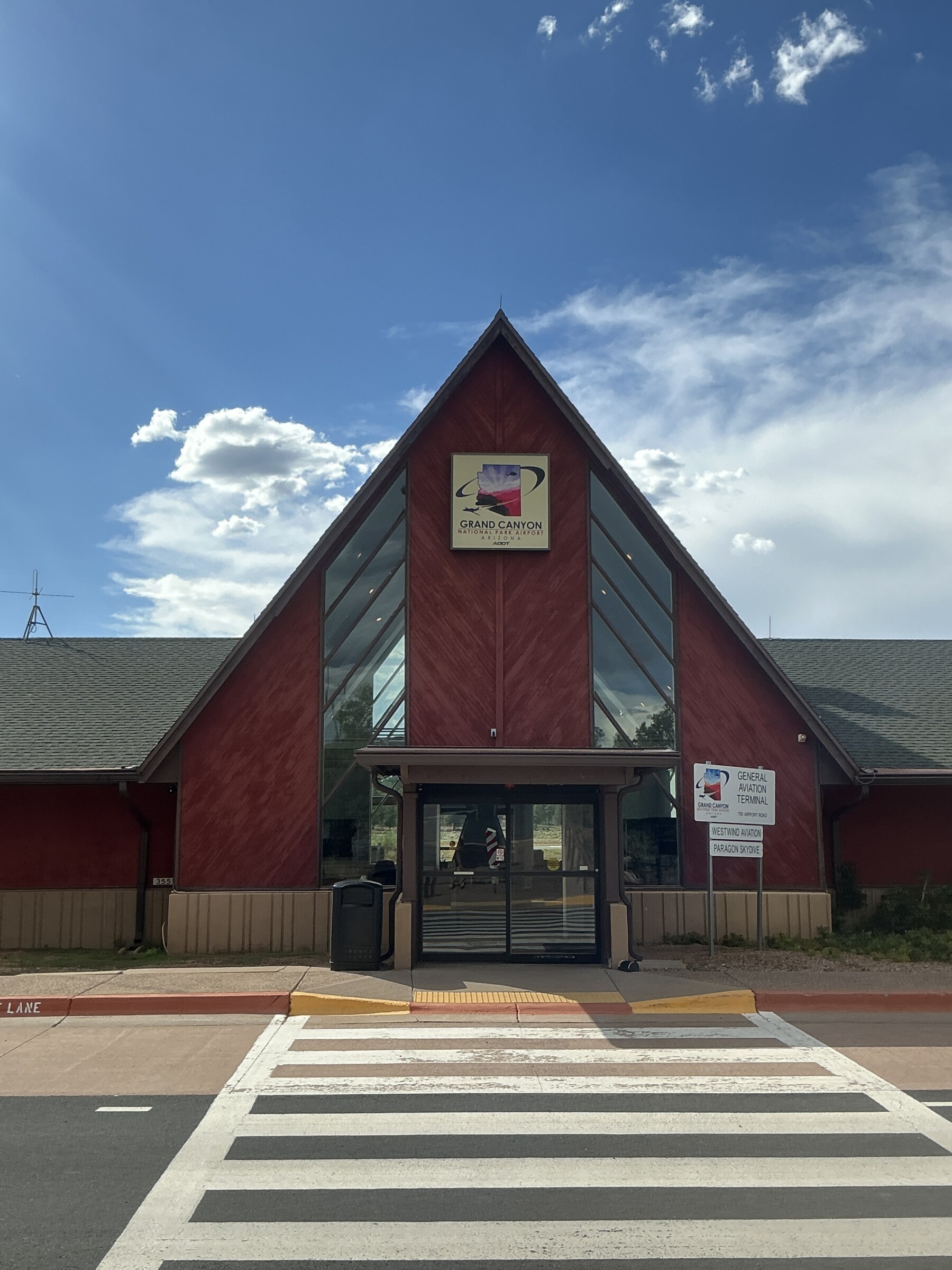
Grand Canyon National Terminal
Beyond FAA compliance, these documents help identify and mitigate risks to air traffic posed by wildlife in and around airports.
“You remember Captain Sully, right?” asks Corina Anderson, associate project biologist at SWCA, referring to Captain Chelsey “Sully” Sullenberger III. He safely landed his plane in the Hudson River after it struck a flock of Canada Geese and lost power near LaGuardia Airport in 2009. “That’s exactly the kind of incident that Wildlife Hazard Assessments and Wildlife Hazard Management Plans are trying to avoid.”
Anderson is a Qualified Airport Wildlife Biologist at SWCA, who worked with Grand Canyon National Airport to update their WHA and WHMP.
In many respects, this work is straightforward. It starts with the WHA, a yearlong study that is conducted at the airport. “You’re just basically assessing the wildlife attractants”—what will bring animals there— “and trends in wildlife movement in and around the airport,” Anderson says.
“Birds are obviously a big risk for airports, but so are coyotes, deer, and things like that, because they can damage smaller planes.”
In addition to understanding what kinds of animals are present (and when), the WHA describes the regulatory context, methods, goals, and provides a large section on recommendations. “Some of it is pretty obvious stuff,” Anderson says, “like mow the grass, repair the perimeter fence, reduce habitat for species that pose a risk, but some of it is less expected – like using pyrotechnics to scare animals away from the flight path.”
After the WHA is finalized, it is distilled into a shorter action plan, the WHMP. This is a binding document that is submitted to the FAA that describes the steps that airports will take to mitigate the risks posed by wildlife (e.g., patrolling the perimeter fence, repairing any breeches, mowing the grass, installing anti-perching devices, removing habitat, and so on).
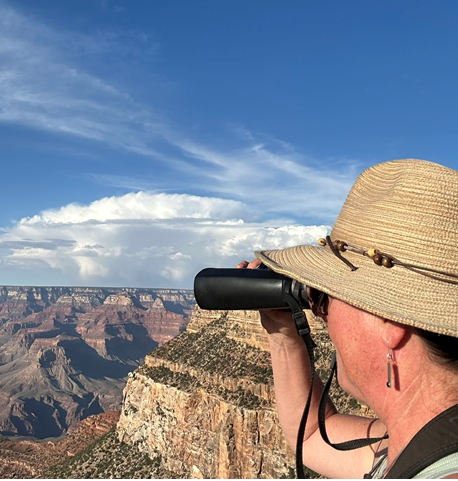
Anderson looks out across the Grand Canyon.
“Wildlife hazard management so close to a national park does involve some unique challenges,” Anderson says. “For instance, there’s a tourist town nearby (Tuyasan), and the tourists there tend to feed the ravens, so we have a lot of ravens to contend with.”
The airport must also be careful about California Condors, which have historically frequented the national park. “They seldom leave the rim of the Grand Canyon and have more or less migrated up to the Vermillion Cliffs and Zion,” Anderson says, “But along with eagles, they have elevated statutory protections, so we’ve developed training materials to help the GCN staff understand how to protect them.”
More broadly, Anderson says, “being so close to a national park invites more scrutiny, so you generally want to avoid any measures that might look like they are not respecting the park’s status as a sort of sanctuary.”
Fortunately, GCN also benefits from the dry climate. “A lot of airports are located near wetlands and streams, or they’re near the coast, which creates habitat for waterfowl,” Anderson says, “Arizona doesn’t have a lot of water, so that really does limit the attraction.”
In any case, as at any airport, effective wildlife hazard management is founded on minimizing habitat, food, and other attractants that invite animals and create risk.
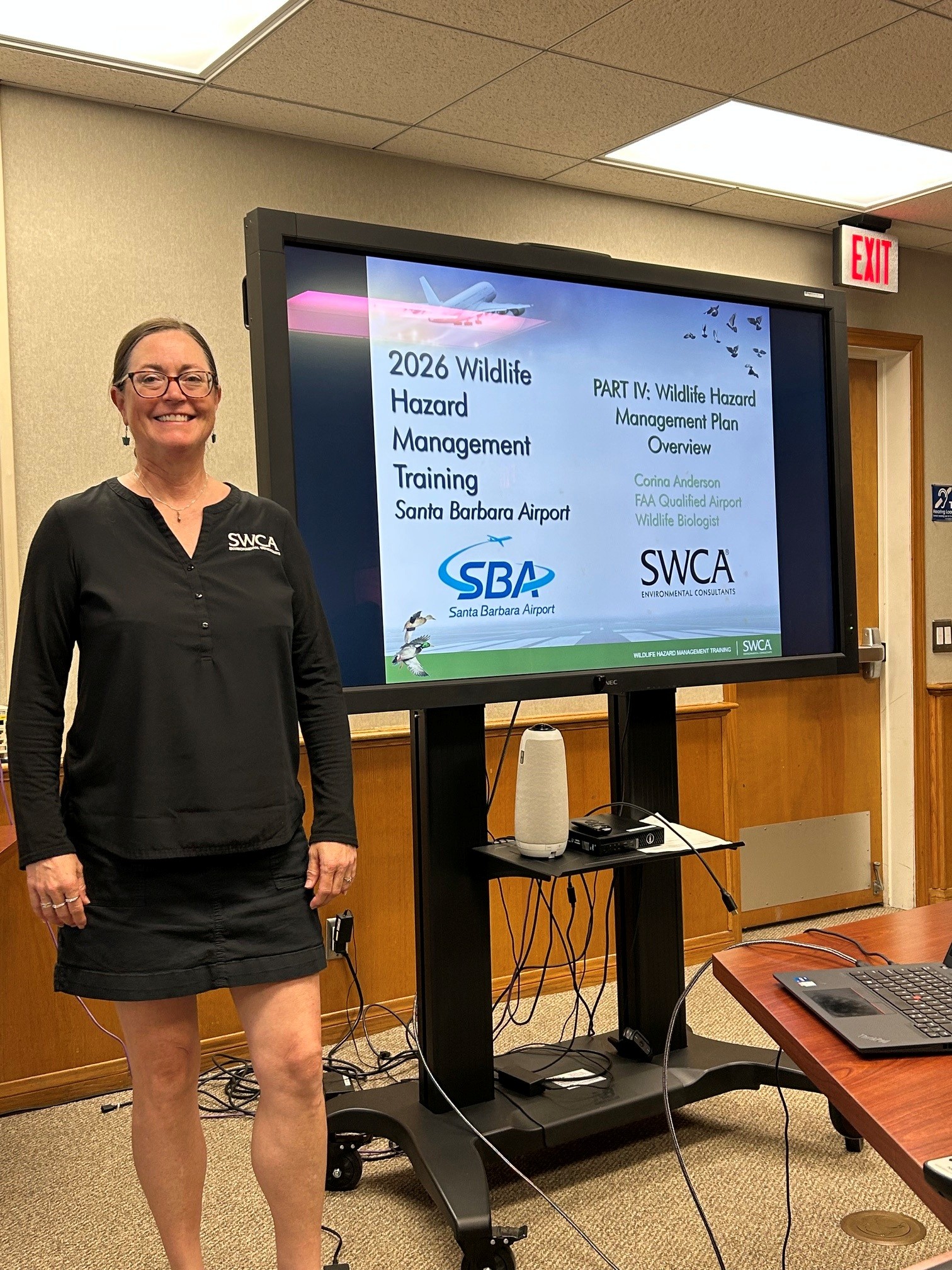
Anderson gives a similar Wildlife Hazard Management training at Santa Barbara Airport.
Since updating the assessment and management plan, Anderson has continued to work with GCN. “I personally have been providing their annual Wildlife Hazard Management Plan training, which the FAA requires of any plan like this,” she says.
“It’s a small community and a great place to work,” Anderson says, “I also used to live in the area and have personal connections to some of the people here. So, we have a great rapport.”
“My favorite part about this role in general is teaching people and sharing my passion for wildlife with them. I think it helps them cultivate their own,” Anderson says. “I think a lot of people find it really fun to talk about, which is good because I need to know what they’re seeing.”
Indeed, the stories that people share during the trainings help Anderson gain a clearer, ongoing picture of how the management plan is working and whether there are any emerging hazards. “I have the data from the wildlife strike database,” she says, “but I like to engage the staff in these conversations about what they’re seeing … People not only get excited to tell me about the fox (or whatever) they’ve seen recently, but they really help me understand the situation. And ultimately that helps keep the airport safer.”
So, in addition to refreshing the staff on the proper procedures for mitigating wildlife hazards, the training enables SWCA to collect better data and evaluate the effectiveness of the WHMP.
Ultimately, Anderson suggests, it’s the personal connection that reinforces the success of the program and helps the staff keep people safe.