


2026
Comparably’s Best Company Outlook
* Providing engineering services in these locations through SWCA Environmental Consulting & Engineering, Inc., an affiliate of SWCA.


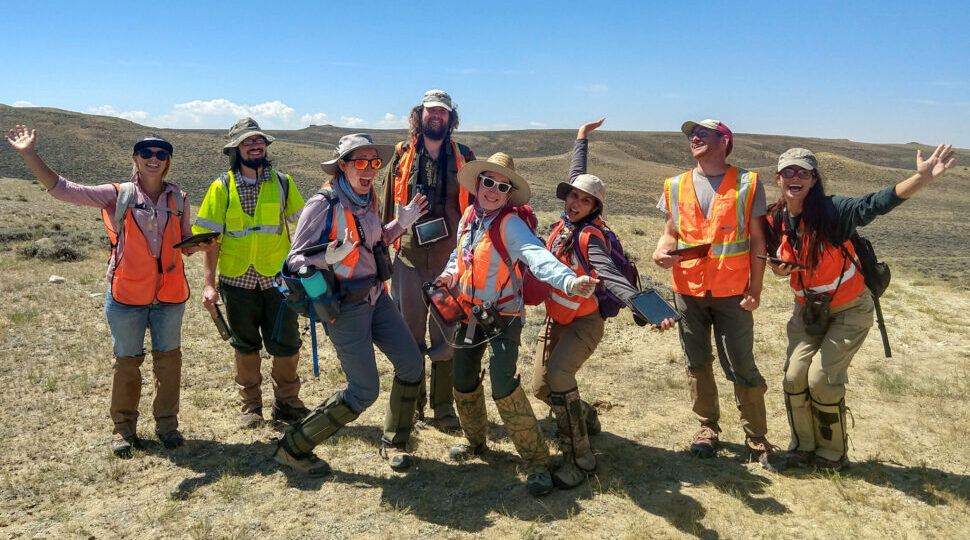
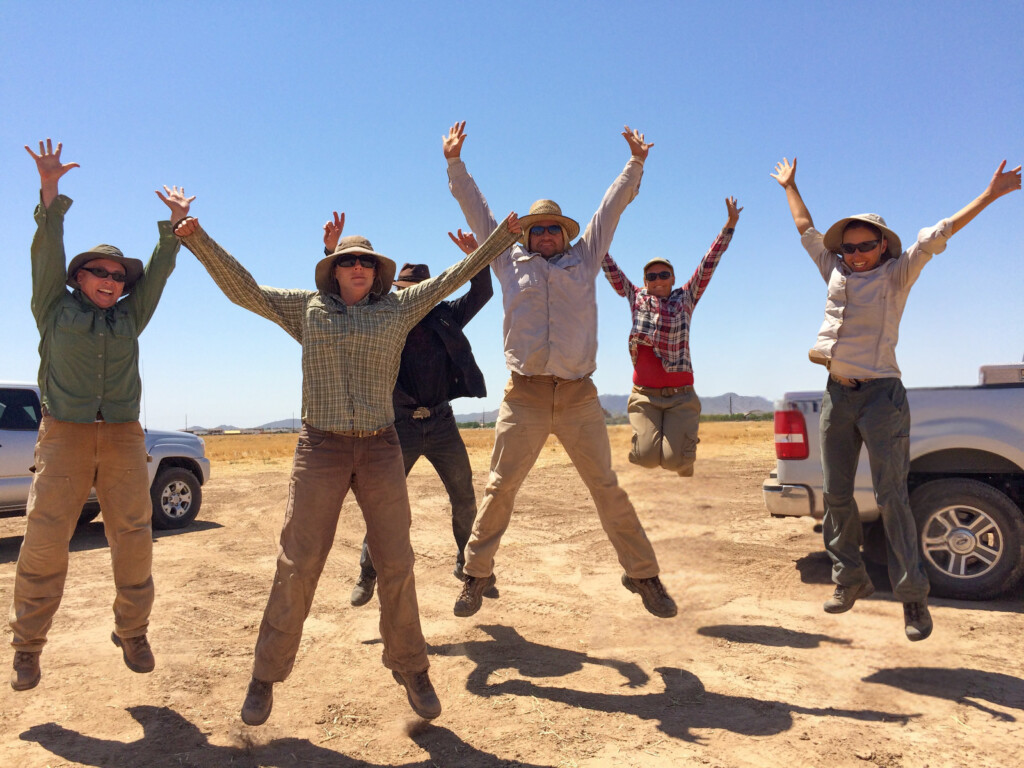
From the experts we hire, to the clients we partner with, our greatest opportunity for success lies in our ability to bring the best team together for every project.
That’s why:

At SWCA, sustainability means balancing humanity’s social, economic, and environmental needs to provide a healthy planet for future generations.
SWCA employs smart, talented, problem-solvers dedicated to our purpose of preserving natural and cultural resources for tomorrow while enabling projects that benefit people today.

At SWCA, you’re not just an employee. You’re an owner. Everyone you work with has a stake in your success, so your hard work pays off – for the clients, for the company, and for your retirement goals.
ESA "Harm" Rescission May Reach Further Than Habitat Modification

Amanda Glen is SWCA’s senior natural resources technical director for biological services and provides strategic guidance on permitting and compliance for matters involving protected wildlife, plants, and habitats. Currently managing a national practice, she has more than 25 years of consulting experience with an emphasis on the Endangered Species Act (ESA) and how compliance with the ESA influences other regulatory programs. Her wealth of experience pertaining to endangered species issues includes research, permitting, consultations, status reviews, and conservation planning. Her experience includes negotiating compliance solutions for critically imperiled species facing potential determinations of jeopardy or adverse modification of designated critical habitats. She has led efforts to delist species no longer requiring the protections of the ESA when supported by sound science, and has been involved in voluntary conservation planning to help preclude the need to list species. Amanda frequently presents at regional and national conferences on matters related to the ESA, including new listings, regulatory and policy changes, and trends in compliance strategies.


The U.S. Fish and Wildlife Service and National Marine Fisheries Service (collectively, the Services) recently took two closely related actions that could significantly affect Endangered Species Act implementation. First, the agencies rescinded the long-standing regulatory definition of “harm.” Second, they issued policy memoranda further explaining a narrower interpretation of the ESA’s prohibition on “take” (traditionally understood to include actions that directly or indirectly killed or injured listed species, including through habitat modification).
Much of the discussion surrounding these actions has focused on habitat modification. However, the larger story may be how the agencies now intend to determine when take occurs and, in turn, when take authorization is necessary or available. Because incidental take authorization has historically been a cornerstone of ESA implementation, the implications may extend beyond enforcement and affect consultation, permitting, conservation planning and project development strategies.
At the same time, these changes arrive during a period of substantial legal uncertainty. Ongoing litigation, combined with the Supreme Court’s decision in Loper Bright Enterprises v. Raimondo, means that courts rather than agencies may ultimately determine the durability of the Services’ current interpretation.
For project proponents, the result is not simply a new compliance framework. It is a new planning environment.
For decades, federal regulations defined “harm” to include certain forms of habitat modification that resulted in death or injury to listed wildlife. The Services have now rescinded those definitions.
At the same time, agency memoranda instruct staff to apply a narrower interpretation of take that focuses on affirmative actions intentionally directed at particular animals. Under this framework, the question is not simply whether an activity foreseeably affects a listed species, but whether the animal itself is the object of the action.
The practical significance of this shift may be that some activities historically analyzed through the lens of incidental take may no longer be viewed by the agencies as requiring take authorization. For project developers, the key question is how agency consultation and planning expectations evolve in practice. Early practical experience may prove as important as the policy documents themselves.
Whether the Services’ interpretation ultimately survives judicial review remains uncertain.
The agencies’ actions have already been challenged in court, and additional legal challenges are likely. More broadly, the post-Loper Bright regulatory environment places greater responsibility on courts to determine the best interpretation of statutory language. As a result, the future meaning of ESA take may be driven as much by judicial decisions as by agency guidance documents.
For many projects, that uncertainty may be more important than the immediate regulatory change itself.
Environmental compliance decisions often occur years before construction, operation, financing or asset transfer. A project entering planning today may ultimately be built under a different administration, a different agency interpretation or a different judicial understanding of the ESA.
Accordingly, project proponents may wish to evaluate not only what is required under current policy, but also how resilient their compliance strategy would be if that policy changes.
For projects requiring a federal permit, approval, funding source or other federal action, Section 7 consultation remains the primary ESA compliance framework.
One important point is what has not changed. Federal agencies and applicants must still evaluate effects to listed species and critical habitat. Biological Assessments, Biological Evaluations and consultation records will continue to analyze habitat alteration, disturbance, displacement, mortality risk, and other direct and indirect effects. A determination that take is not anticipated does not eliminate the need to evaluate those effects.
Indeed, one of the more significant consequences of the new policy may be a renewed focus on portions of Section 7 consultation that have often received less attention during the era of broad incidental take coverage.
Historically, consultation discussions frequently centered on whether take would occur and the terms and conditions necessary to authorize the take. If incidental take determinations become less central under the Services’ current approach, agencies and applicants may place greater emphasis on the technical foundations of jeopardy and adverse modification analyses.
Such a shift would be particularly important because jeopardy and adverse modification involve different questions than take. They focus on species conservation, recovery potential, and the role of designated critical habitat in supporting listed species. These analyses may become increasingly influential in determining project outcomes.
For project proponents, conservation measures may play an important role in this environment. Habitat enhancement, restoration, avoidance measures, offsetting mitigation, and other conservation commitments may help reduce adverse effects to listed species and strengthen the record supporting a finding of no jeopardy.
However, critical habitat presents a unique challenge. Unlike habitat quality more generally, critical habitat is geographically designated. While conservation actions elsewhere may provide important biological benefits, they do not necessarily replace the specific physical locations and features protected through critical habitat designations. As a result, conservation planning intended to address adverse modification concerns may require a different strategy than measures designed to offset impacts to species more broadly.
In short, consultation may continue to look familiar in many respects, but project teams should anticipate increased attention to conservation biology, recovery considerations and critical habitat effects if incidental take coverage becomes a less prominent feature of the process. In any case, agency practice will continue to evolve as projects move through consultation under the new policy.
The implications may be more pronounced for projects lacking a federal nexus.
Historically, many non-federal ESA compliance strategies revolved around determining whether incidental take could occur and whether a Section 10 authorization pathway was appropriate. Under the Services’ current interpretation, many activities that previously prompted detailed incidental take analyses may no longer be viewed as requiring take authorization.
For certain projects, this may create opportunities to reduce permitting complexity, subject to project-specific agency direction and remaining requirements; schedule benefits are not assured. For others, it may shift attention away from permit acquisition and toward broader risk-management considerations.
Factors such as financing requirements, investor expectations, public visibility, transaction diligence, environmental commitments and corporate risk tolerance may become increasingly important in determining whether and to what extent a project relies on the agencies’ current interpretation.
Projects with shorter timelines or lower regulatory sensitivity may determine that moving forward under existing agency guidance is the most practical strategy.
Projects involving substantial capital commitments, extended development horizons or stakeholders seeking high levels of regulatory certainty may reach a different conclusion. In some circumstances, maintaining biological surveys, effects analyses, conservation planning materials or other supporting documentation could help preserve flexibility if courts or future administrations take a different view of ESA implementation.
These policy changes do not diminish the biological value of conservation.
In fact, voluntary conservation measures may become an increasingly attractive tool for some project proponents.
Actions that avoid, minimize or offset adverse effects can provide benefits regardless of how future litigation is resolved. They may improve outcomes for listed species, contribute to recovery objectives, demonstrate environmental stewardship, address stakeholder concerns, support lender and investor expectations, and preserve future compliance options.
In some cases, voluntary conservation may represent a practical middle ground between fully embracing the agencies’ current interpretation and preparing for a potential regulatory reversal. However, consider carefully whether the conservation measure is an action that is likely to cause take and require Service authorization despite its beneficial purpose.
The appropriate approach will vary among projects, with conservation measures serving defined, project-specific biological or risk-management objectives.
The full impact of the Services’ new approach will depend on agency implementation, project-specific decisions and judicial review.
While the rescission of the regulatory definition of harm has attracted considerable attention, the broader implications may ultimately depend on how courts evaluate the agencies’ interpretation of take and how the Services, federal action agencies and project proponents respond to that uncertainty.
For now, the most effective compliance strategies are likely to be those that remain useful under multiple future scenarios. Some organizations may choose to take advantage of the agencies’ current implementation framework and move projects forward efficiently. Others may place greater emphasis on preserving flexibility through additional studies, conservation planning or consultation readiness.
The appropriate choice should be grounded in project-specific facts and applicable requirements. The appropriate strategy will depend on project-specific circumstances, stakeholder expectations, schedule considerations and risk tolerance.
Given the ongoing litigation and evolving legal landscape, project proponents should work closely with experienced ESA counsel before making decisions that materially affect permitting strategy, conservation commitments or long-term project development. SWCA helps evaluate biological effects and practical project options in coordination with agencies and client counsel.
See Beyond Policy Change to What Matters for Your Project
Regulatory Radar is a subscription intelligence service that scans the policy horizon for changes that could affect planning, permitting, schedules, and risk, then turns those signals into clear takeaways and practical next steps.